Department of Neurological Surgery, Weill Cornell Medicine, Cornell University, New York, New York, USA.
National University of Rosario, Santa Fe, Argentina.
Dement Geriatr Cogn Disord. 2021;50(2):143-152. doi: 10.1159/000516340. Epub 2021 May 31.
Peripheral and central nervous system inflammation have been linked to the classic symptoms of Parkinson's disease (PD) and Alzheimer's disease (AD). However, it remains unclear whether the analysis of routine systemic inflammatory markers could represent a useful prediction tool to identify clinical subtypes in patients with Parkinson's and Alzheimer's at higher risk of dementia-associated symptoms, such as behavioral and psychological symptoms of dementia (BPSD).
We performed a multivariate logistic regression using the 2016 and 2017 National Inpatient Sample with International Classification of Diseases 10th edition codes to assess if pro-inflammatory white blood cells (WBCs) anomalies correlate with dementia and BPSD in patients with these disorders.
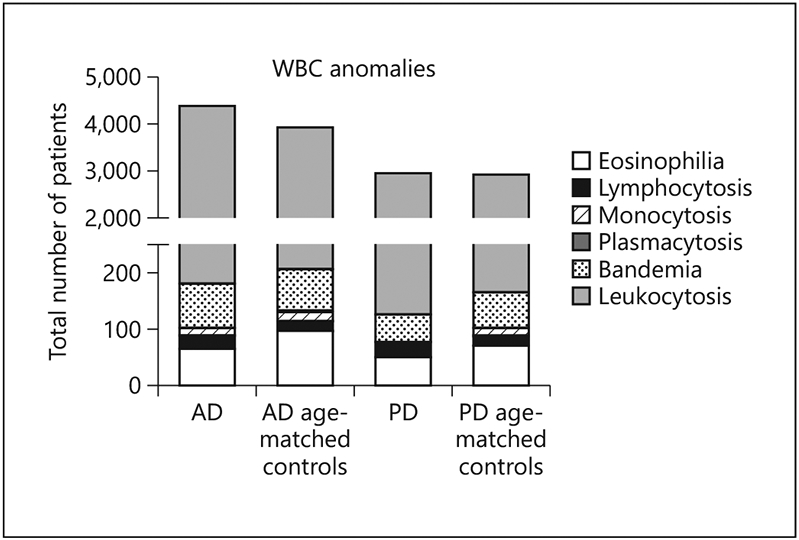
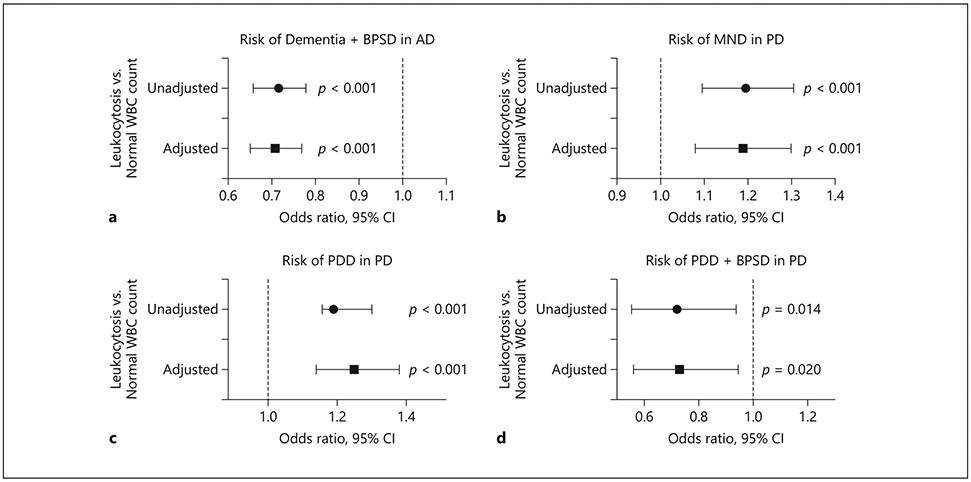
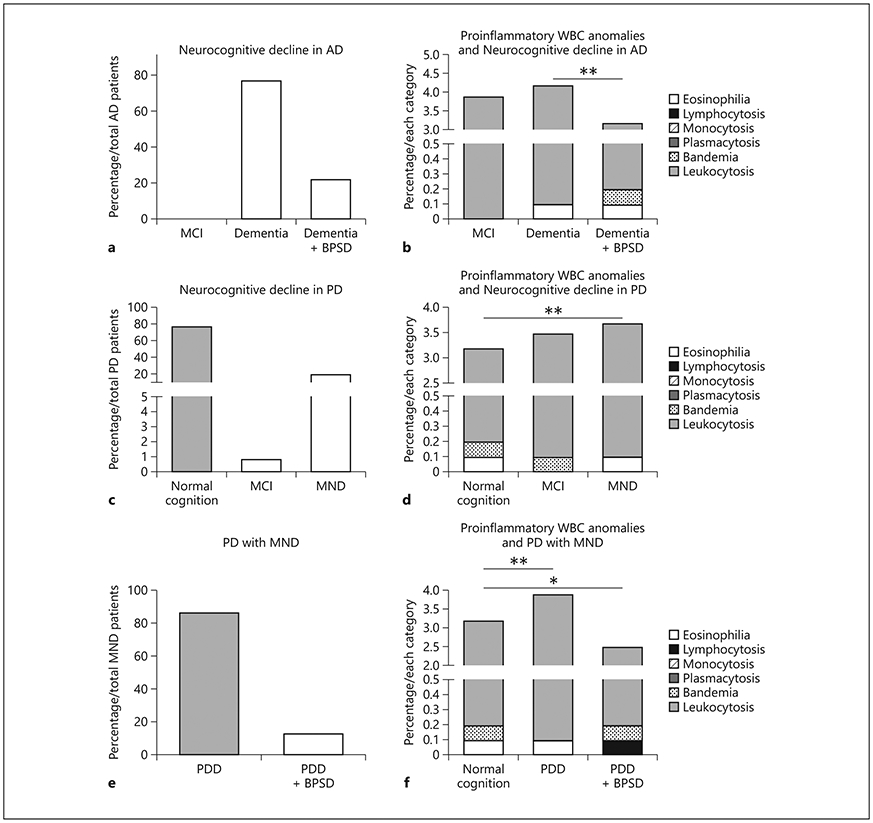
We found that leukocytosis was the most common WBC inflammatory marker identified in 3.9% of Alzheimer's and 3.3% Parkinson's patients. Leukocytosis was also found to be an independent risk factor for Parkinson's dementia. Multivariate analysis of both cohorts showed that leukocytosis is significantly decreased in patients with BPSD compared to patients without BPSD.
These results suggest a link between leukocytosis and the pathophysiology of cognitive dysfunction in both PD and AD. A better understanding of the role of systemic neuroinflammation on these devastating neurodegenerative disorders may facilitate the development of cost-effective blood biomarkers for patient's early diagnosis and more accurate prognosis.
外周和中枢神经系统炎症与帕金森病(PD)和阿尔茨海默病(AD)的典型症状有关。然而,目前尚不清楚分析常规系统性炎症标志物是否可以作为一种有用的预测工具,以识别帕金森病和阿尔茨海默病患者中具有痴呆相关症状(如痴呆的行为和心理症状[BPSD])更高风险的临床亚型。
我们使用 2016 年和 2017 年的全国住院患者样本和国际疾病分类第 10 版代码进行了多变量逻辑回归,以评估白细胞(WBC)异常的促炎标志物是否与这些疾病患者的痴呆和 BPSD 相关。
我们发现白细胞增多症是阿尔茨海默病患者中最常见的白细胞炎症标志物,占 3.9%,帕金森病患者中占 3.3%。白细胞增多症也是帕金森病痴呆的独立危险因素。对两个队列的多变量分析表明,与无 BPSD 的患者相比,BPSD 患者的白细胞增多症明显减少。
这些结果表明白细胞增多症与 PD 和 AD 中认知功能障碍的病理生理学之间存在关联。更好地了解系统性神经炎症对这些破坏性神经退行性疾病的作用,可能有助于开发具有成本效益的血液生物标志物,用于患者的早期诊断和更准确的预后。