Department of Tumor Immunology, Radboudumc, Nijmegen, The Netherlands.
Oncode Institute, Nijmegen, The Netherlands.
J Immunother Cancer. 2021 May;9(5). doi: 10.1136/jitc-2020-002032.
Predicting treatment response or survival of cancer patients remains challenging in immuno-oncology. Efforts to overcome these challenges focus, among others, on the discovery of new biomarkers. Despite advances in cellular and molecular approaches, only a limited number of candidate biomarkers eventually enter clinical practice.
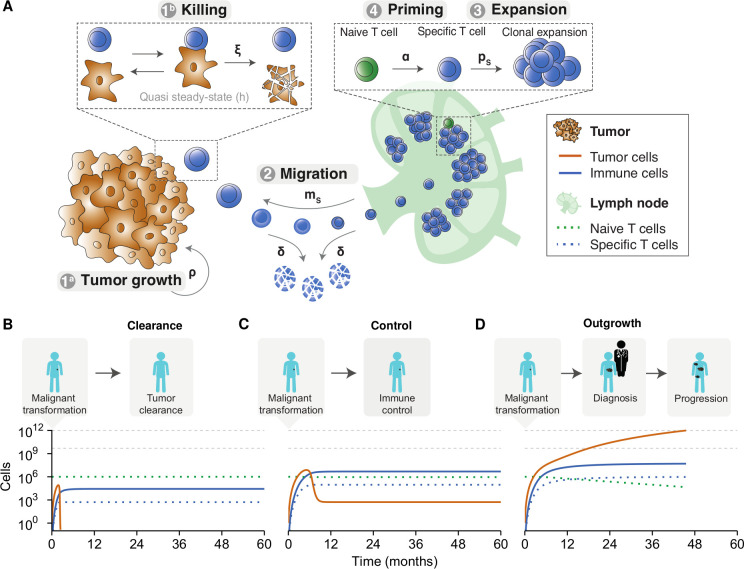
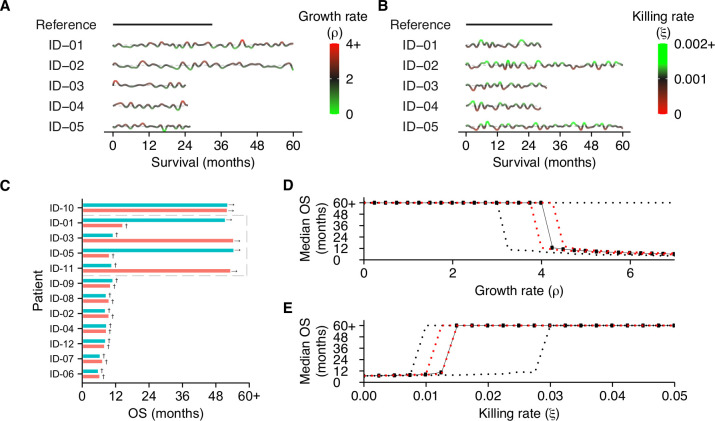
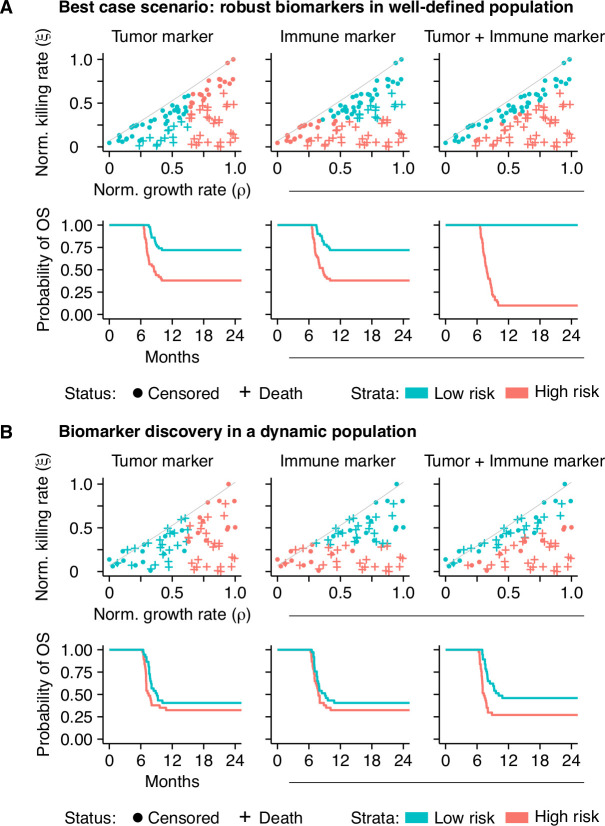
A computational modeling approach based on ordinary differential equations was used to simulate the fundamental mechanisms that dictate tumor-immune dynamics and to investigate its implications on responses to immune checkpoint inhibition (ICI) and patient survival. Using in silico biomarker discovery trials, we revealed fundamental principles that explain the diverging success rates of biomarker discovery programs.
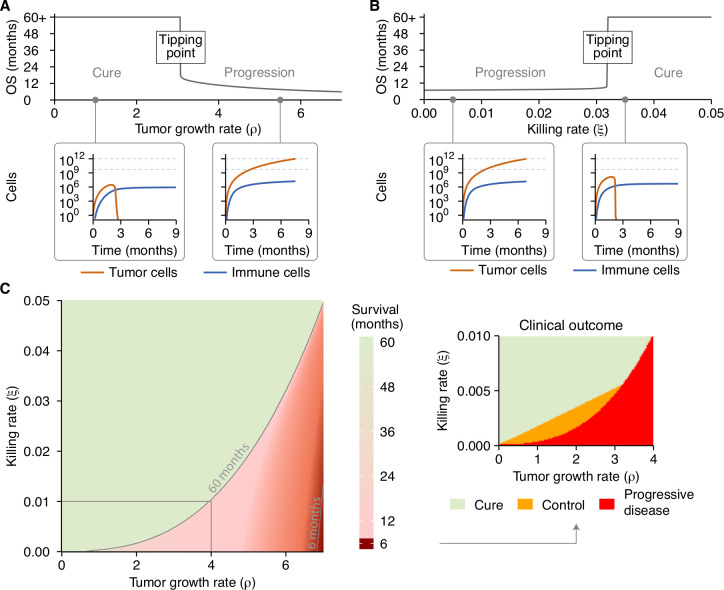
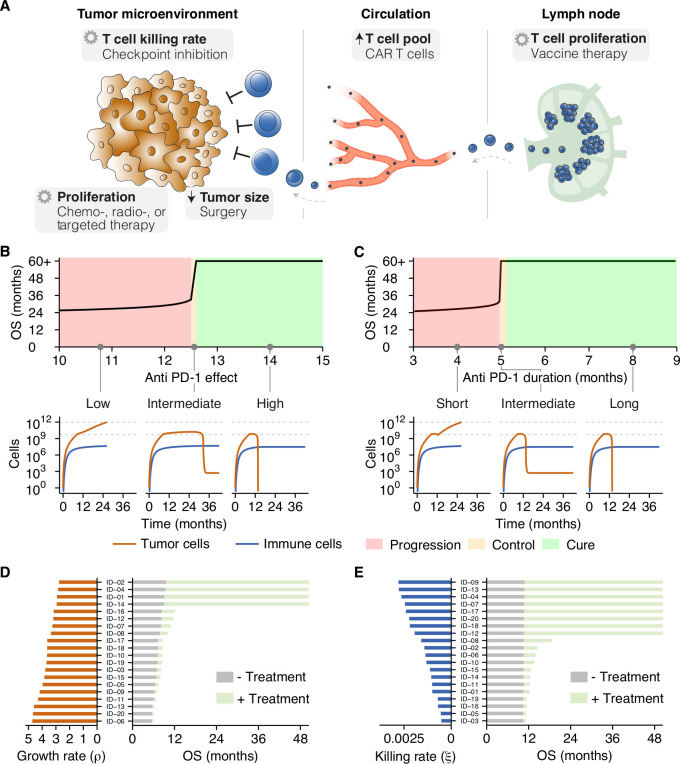
Our model shows that a tipping point-a sharp state transition between immune control and immune evasion-induces a strongly non-linear relationship between patient survival and both immunological and tumor-related parameters. In patients close to the tipping point, ICI therapy may lead to long-lasting survival benefits, whereas patients far from the tipping point may fail to benefit from these potent treatments.
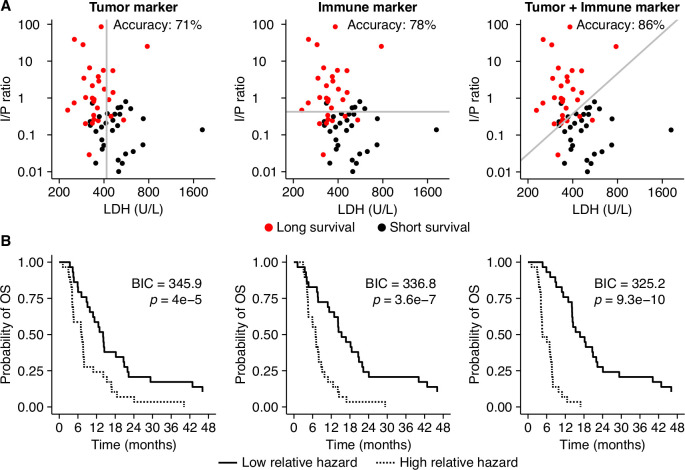
These findings have two important implications for clinical oncology. First, the apparent conundrum that ICI induces substantial benefits in some patients yet completely fails in others could be, to a large extent, explained by the presence of a tipping point. Second, predictive biomarkers for immunotherapy should ideally combine both immunological and tumor-related markers, as a patient's distance from the tipping point can typically not be reliably determined from solely one of these. The notion of a tipping point in cancer-immune dynamics helps to devise more accurate strategies to select appropriate treatments for patients with cancer.
在肿瘤免疫领域,预测癌症患者的治疗反应或生存仍然具有挑战性。为了克服这些挑战,人们致力于发现新的生物标志物。尽管在细胞和分子方法上取得了进展,但最终只有少数候选生物标志物进入临床实践。
我们使用基于常微分方程的计算建模方法来模拟决定肿瘤免疫动力学的基本机制,并研究其对免疫检查点抑制(ICI)反应和患者生存的影响。通过计算机模拟的生物标志物发现试验,我们揭示了解释生物标志物发现计划成功率差异的基本原理。
我们的模型表明,临界点——免疫控制和免疫逃逸之间的急剧状态转变——诱导了患者生存与免疫和肿瘤相关参数之间的强烈非线性关系。在接近临界点的患者中,ICI 治疗可能会带来持久的生存获益,而远离临界点的患者则可能无法从这些有效的治疗中获益。
这些发现对临床肿瘤学有两个重要意义。首先,ICI 在一些患者中诱导出显著的获益,而在另一些患者中却完全失效,这一明显的难题在很大程度上可以用临界点的存在来解释。其次,免疫疗法的预测性生物标志物理想情况下应结合免疫和肿瘤相关标志物,因为仅凭其中之一通常无法可靠地确定患者与临界点的距离。癌症免疫动力学中的临界点概念有助于设计更准确的策略,为癌症患者选择合适的治疗方法。