Bonnington Katherine E, Kuehn Meta J
Department of Biochemistry, Duke University Medical Center, Durham, North Carolina, USA.
Department of Biochemistry, Duke University Medical Center, Durham, North Carolina, USA
mBio. 2016 Oct 18;7(5):e01532-16. doi: 10.1128/mBio.01532-16.
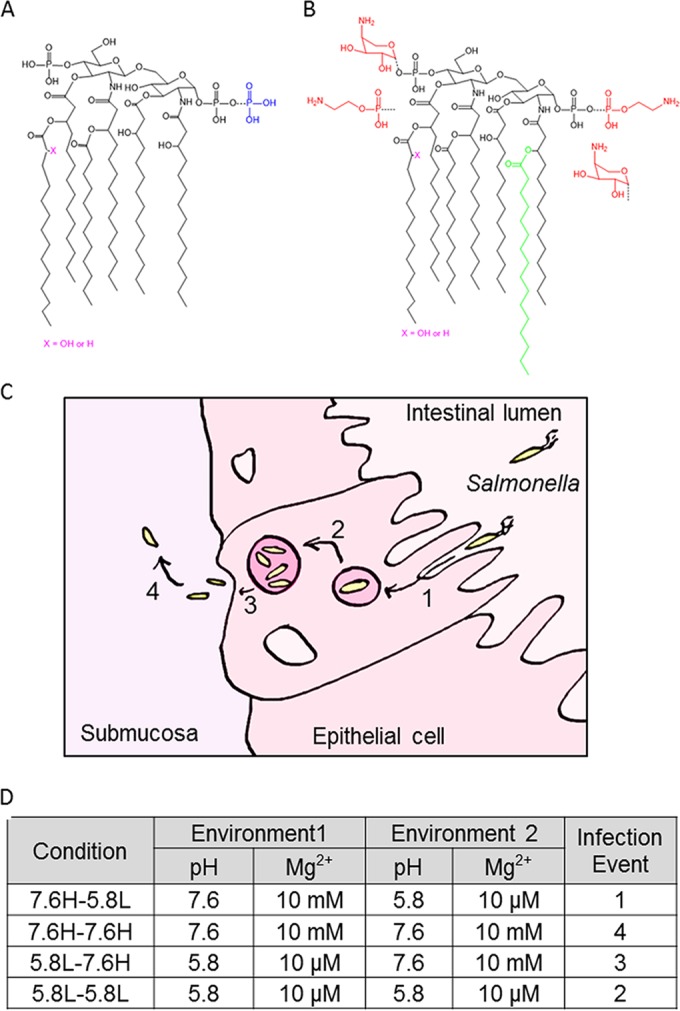
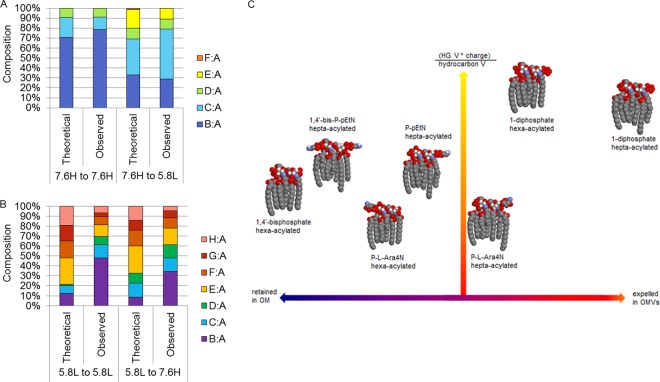
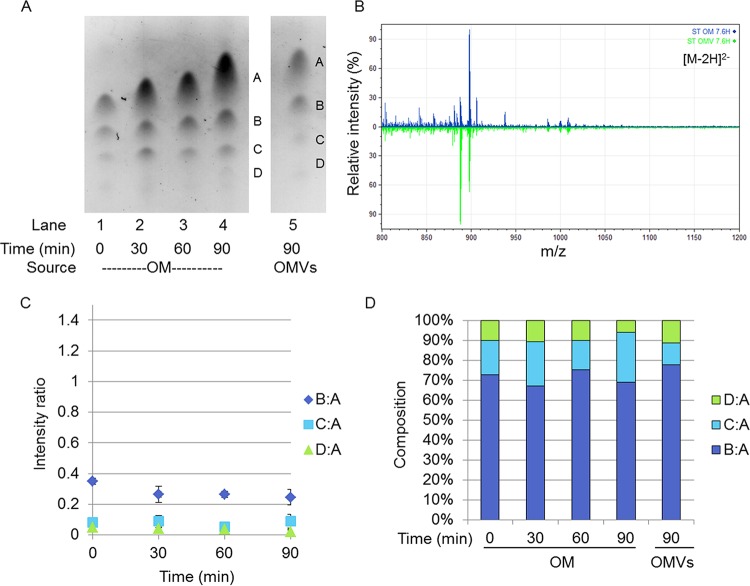
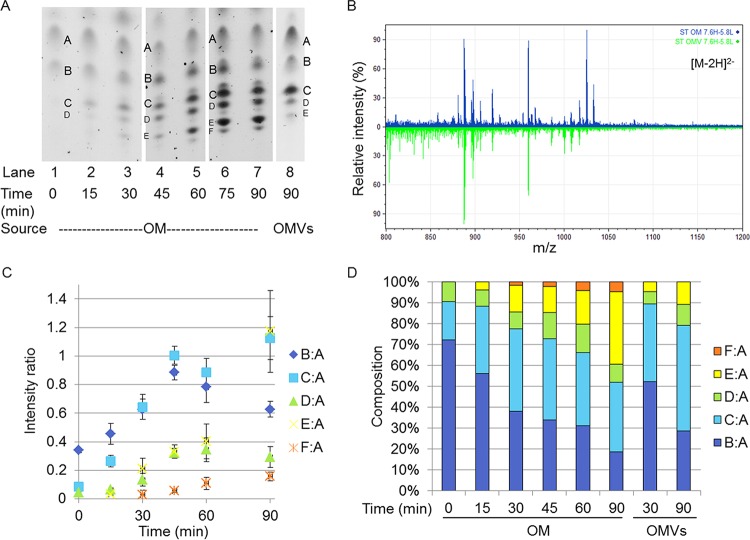
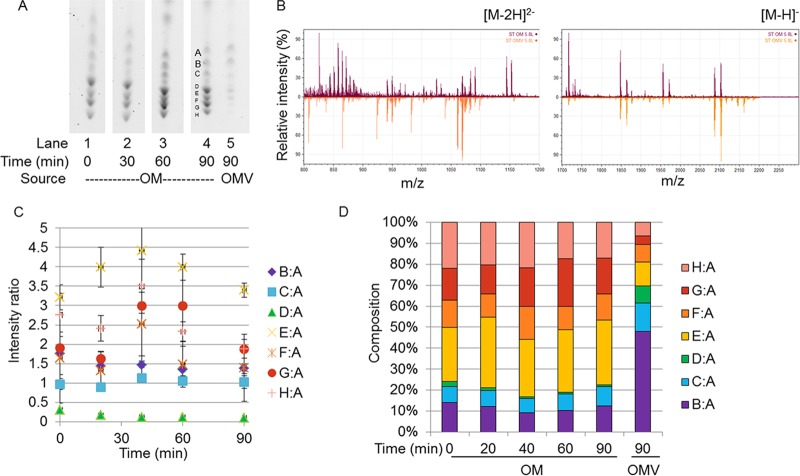
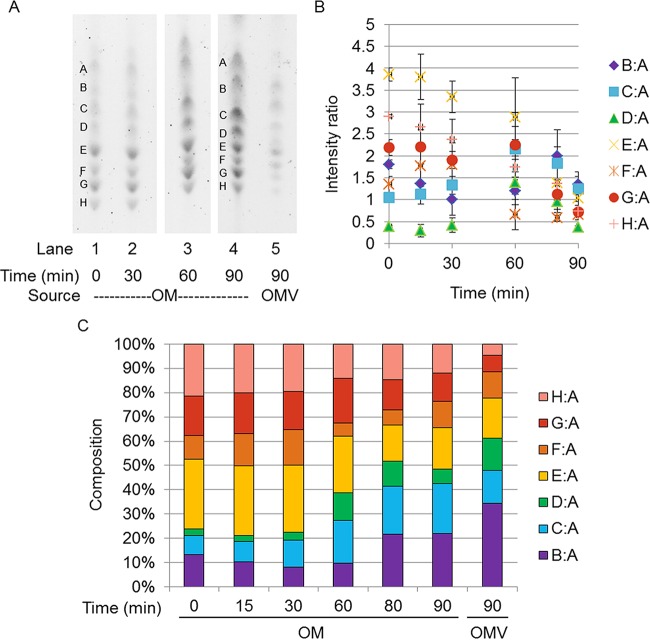
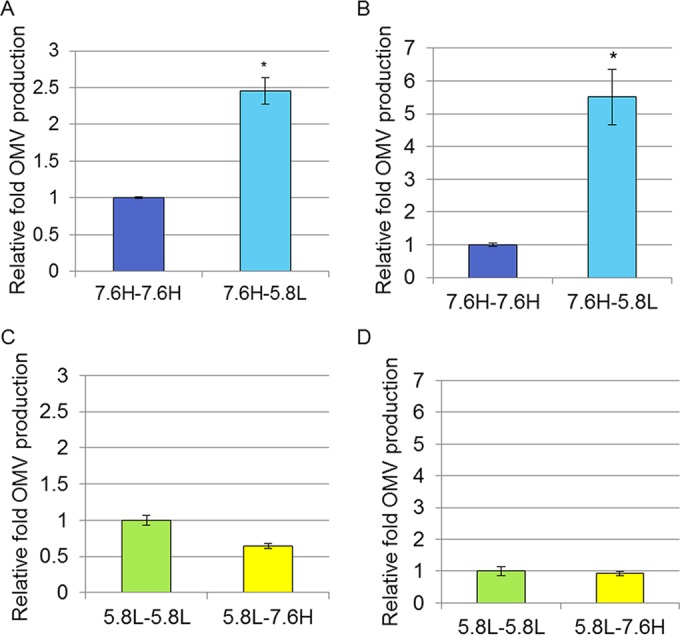
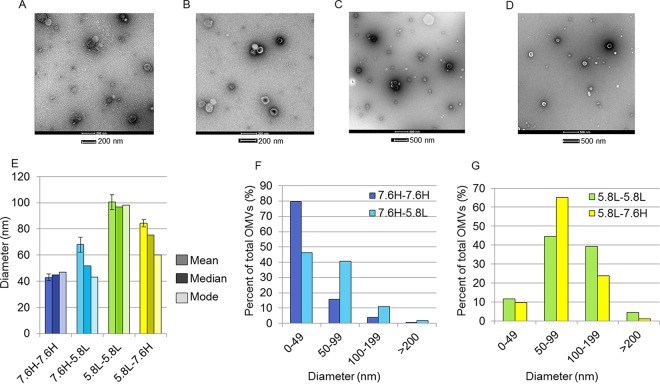
The ability of Gram-negative bacteria to carefully modulate outer membrane (OM) composition is essential to their survival. However, the asymmetric and heterogeneous structure of the Gram-negative OM poses unique challenges to the cell's successful adaption to rapid environmental transitions. Although mechanisms to recycle and degrade OM phospholipid material exist, there is no known mechanism by which to remove unfavorable lipopolysaccharide (LPS) glycoforms, except slow dilution through cell growth. As all Gram-negative bacteria constitutively shed OM vesicles (OMVs), we propose that cells may utilize OMV formation as a way to selectively remove environmentally disadvantageous LPS species. We examined the native kinetics of OM composition during physiologically relevant environmental changes in Salmonella enterica, a well-characterized model system for activation of PhoP/Q and PmrA/B two-component systems (TCSs). In response to acidic pH, toxic metals, antimicrobial peptides, and lack of divalent cations, these TCSs modify the LPS lipid A and core, lengthen the O antigen, and upregulate specific OM proteins. An environmental change to PhoP/Q- and PmrA/B-activating conditions simultaneously induced the addition of modified species of LPS to the OM, downregulation of previously dominant species of LPS, greater OMV production, and increased OMV diameter. Comparison of the relative abundance of lipid A species present in the OM and the newly budded OMVs following two sets of rapid environmental shifts revealed the retention of lipid A species with modified phosphate moieties in the OM concomitant with the selective loss of palmitoylated species via vesiculation following exposure to moderately acidic environmental conditions.
All Gram-negative bacteria alter the structural composition of LPS present in their OM in response to various environmental stimuli. We developed a system to track the native dynamics of lipid A change in Salmonella enterica serovar Typhimurium following an environmental shift to PhoP/Q- and PmrA/B-inducing conditions. We show that growth conditions influence OMV production, size, and lipid A content. We further demonstrate that the lipid A content of OMVs does not fit a stochastic model of content selection, revealing the significant retention of lipid A species containing covalent modifications that mask their 1- and 4'-phosphate moieties under host-like conditions. Furthermore, palmitoylation of the lipid A to form hepta-acylated species substantially increases the likelihood of its incorporation into OMVs. These results highlight a role for the OMV response in OM remodeling and maintenance processes in Gram-negative bacteria.
革兰氏阴性菌精确调节外膜(OM)组成的能力对其生存至关重要。然而,革兰氏阴性菌外膜的不对称和异质结构给细胞成功适应快速的环境转变带来了独特挑战。尽管存在回收和降解外膜磷脂物质的机制,但除了通过细胞生长缓慢稀释外,尚无已知机制可去除不利的脂多糖(LPS)糖型。由于所有革兰氏阴性菌都会持续释放外膜囊泡(OMV),我们提出细胞可能利用外膜囊泡的形成作为一种选择性去除对环境不利的LPS种类的方式。我们研究了肠炎沙门氏菌在生理相关环境变化期间外膜组成的天然动力学,肠炎沙门氏菌是用于激活PhoP/Q和PmrA/B双组分系统(TCS)的一个特征明确的模型系统。响应酸性pH、有毒金属、抗菌肽和二价阳离子缺乏,这些双组分系统会修饰LPS脂质A和核心,延长O抗原,并上调特定的外膜蛋白。向激活PhoP/Q和PmrA/B的条件转变的环境变化同时诱导了修饰的LPS种类添加到外膜,下调了先前占主导地位的LPS种类,增加了外膜囊泡的产生,并增大了外膜囊泡的直径。在两组快速环境转变后,比较外膜和新出芽的外膜囊泡中存在的脂质A种类的相对丰度,发现在暴露于中度酸性环境条件后,外膜中保留了具有修饰磷酸基团的脂质A种类,同时通过囊泡化选择性丢失了棕榈酰化种类。
所有革兰氏阴性菌都会响应各种环境刺激改变其外膜中存在的LPS的结构组成。我们开发了一个系统来追踪肠炎沙门氏菌血清型鼠伤寒沙门氏菌在环境转变为诱导PhoP/Q和PmrA/B的条件后脂质A变化的天然动态。我们表明生长条件会影响外膜囊泡的产生、大小和脂质A含量。我们进一步证明外膜囊泡的脂质A含量不符合内容选择的随机模型,揭示了在类似宿主的条件下,含有掩盖其1-和4'-磷酸基团的共价修饰的脂质A种类的显著保留。此外,脂质A的棕榈酰化形成七酰化种类大大增加了其掺入外膜囊泡的可能性。这些结果突出了外膜囊泡反应在革兰氏阴性菌外膜重塑和维持过程中的作用。