Frolli Alessandro, Bosco Antonia, Di Carmine Francesca, Cavallaro Antonella, Lombardi Agnese, Sergi Luana, Corrivetti Giulio, Ricci Maria Carla
Disability Research Centre, University of International Studies in Rome-Via Cristoforo Colombo, 00147 Rome, Italy.
FINDS-Italian Foundation for Neuroscience and Neurodevelopmental Disorders, 81040 Caserta, Italy.
Pediatr Rep. 2021 May 2;13(2):216-226. doi: 10.3390/pediatric13020030.
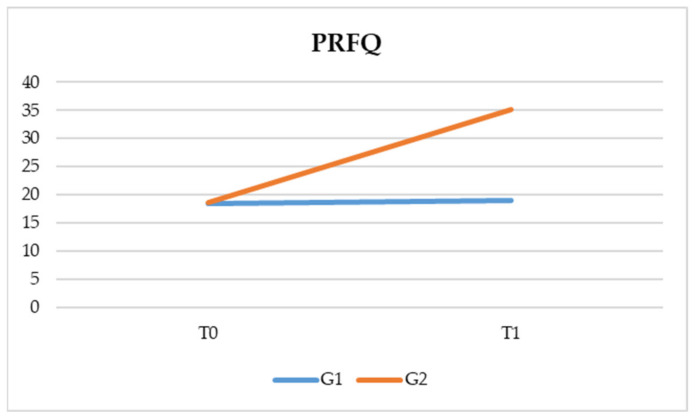
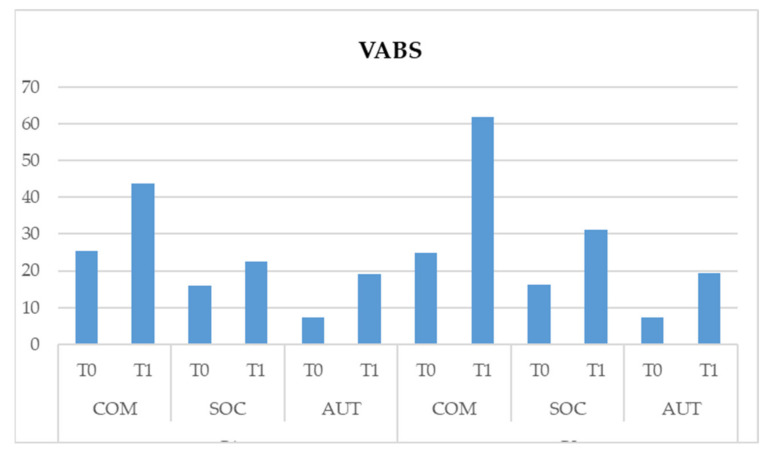
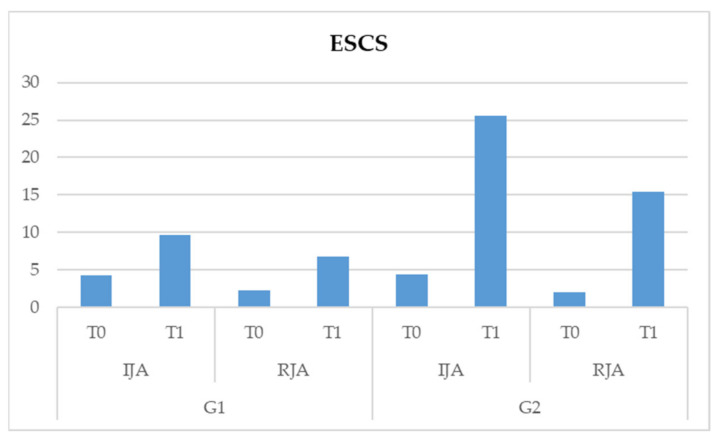
With the introduction of the Diagnostic and Statistical Manual of Mental Disorders-5th ed. (DSM-5) autism spectrum disorders (ASD) fall into the category of neurodevelopmental disorders. ASD is characterized by the inhibitory mechanisms responsible for social adaptation and emotional expression being underdeveloped, causing a child's recognition and understanding of emotions to be impaired. Our study hypothesizes that early intervention using behavioral interventions such as Applied Behavior Analysis (ABA) and reflexive functions (RF) training on parents can improve the development of joint attention (JA), a cognitive precursor to the theory of mind (ToM) and mentalization processes. We considered a sample of 84 children aged between 20 and 30 months who had received a diagnosis of risk of autism spectrum disorder (level 1). The sample was divided into two groups of 42 subjects, in the first group we carried out a weekly behavioral parent training (PT) based only on ABA principles, while in the second group we carried out a weekly PT aimed at improving reflective functions and parental awareness according to a model inspired by the model based on emotional mirroring and mentalization of Fonagy. Our study shows that parents who are able to make sense of both their own mental state and that of their child can serve as a protective factor for the child's development even in atypical developmental situations such as in ASD.
随着《精神疾病诊断与统计手册》第5版(DSM - 5)的推出,自闭症谱系障碍(ASD)被归入神经发育障碍类别。ASD的特征是负责社会适应和情感表达的抑制机制发育不全,导致儿童对情感的识别和理解受损。我们的研究假设,使用诸如应用行为分析(ABA)等行为干预措施以及对父母进行反射功能(RF)训练的早期干预,可以改善共同注意(JA)的发展,共同注意是心理理论(ToM)和心理化过程的认知先兆。我们选取了84名年龄在20至30个月之间、被诊断为有自闭症谱系障碍风险(1级)的儿童作为样本。样本被分为两组,每组42名受试者,第一组仅基于ABA原则进行每周一次的行为家长培训(PT),而第二组则根据受Fonagy基于情感镜像和心理化模型启发的模式,进行旨在改善反射功能和家长意识的每周一次的PT。我们的研究表明,即使在诸如ASD这种非典型发育情况下,能够理解自己和孩子心理状态的父母也可以成为孩子发展的保护因素。