Amestoy Hegoi, Diego Paul, Meaurio Emilio, Muñoz Jone, Sarasua Jose-Ramon
Department of Mining-Metallurgy Engineering and Materials Science, POLYMAT, Faculty of Engineering in Bilbao, University of the Basque Country (UPV/EHU), Plaza Torres Quevedo 1, 48013 Bilbao, Spain.
Materials (Basel). 2021 May 2;14(9):2368. doi: 10.3390/ma14092368.
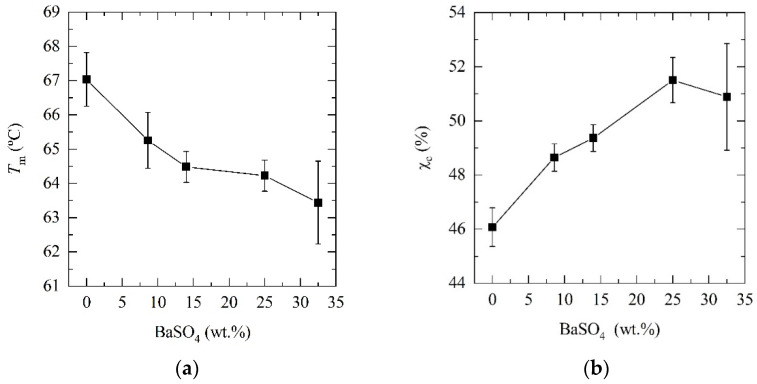
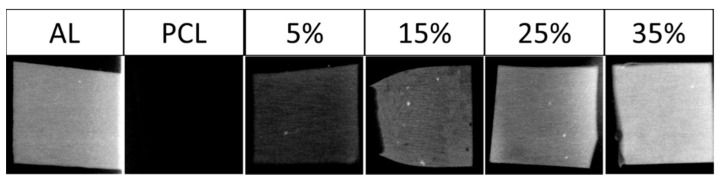
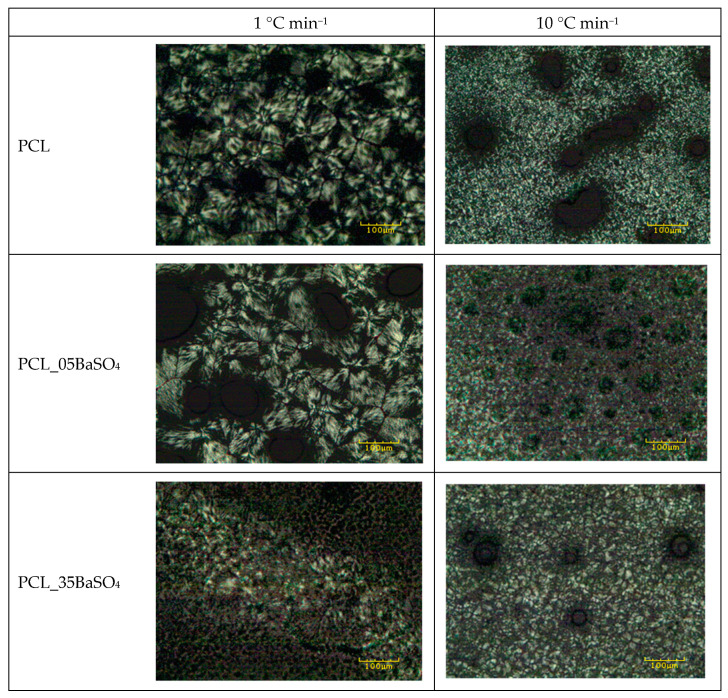
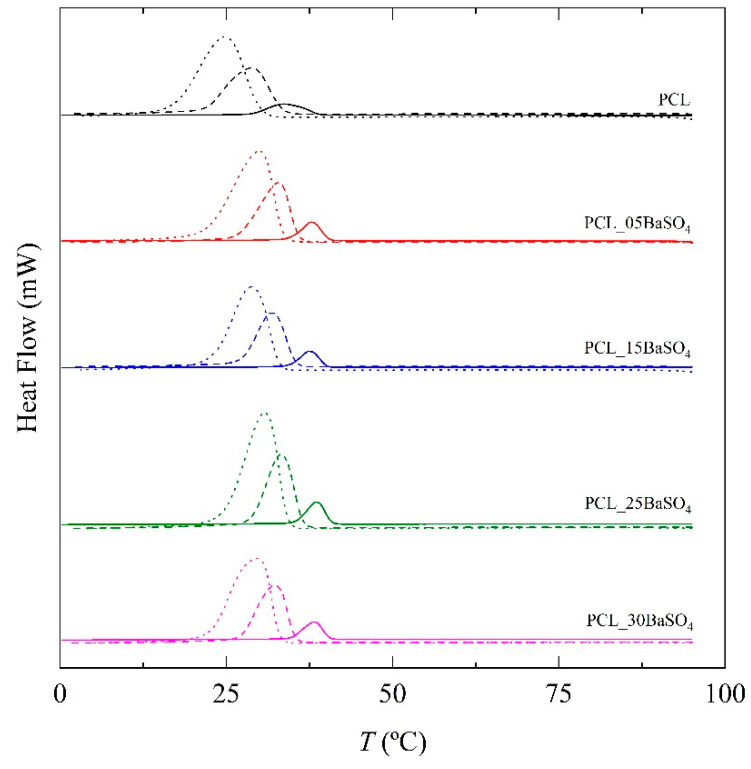
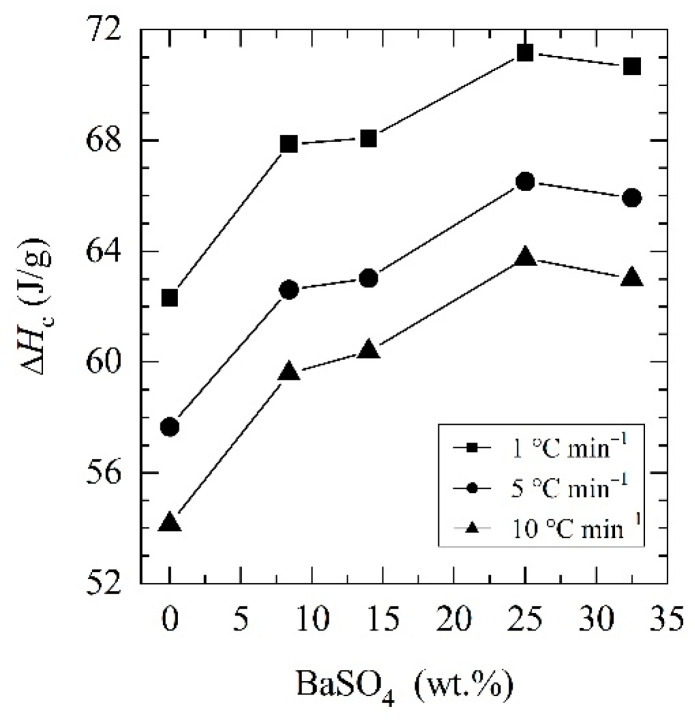
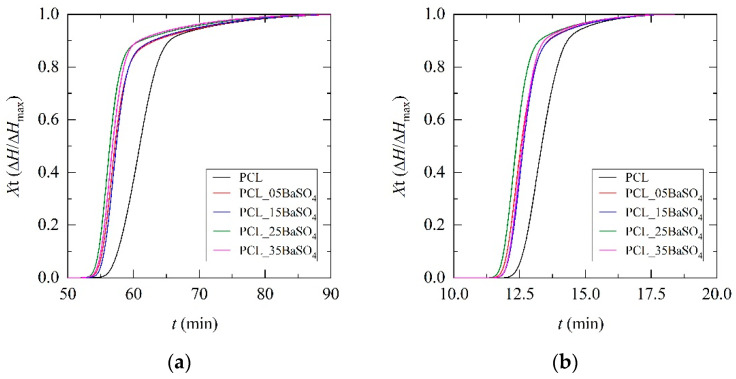
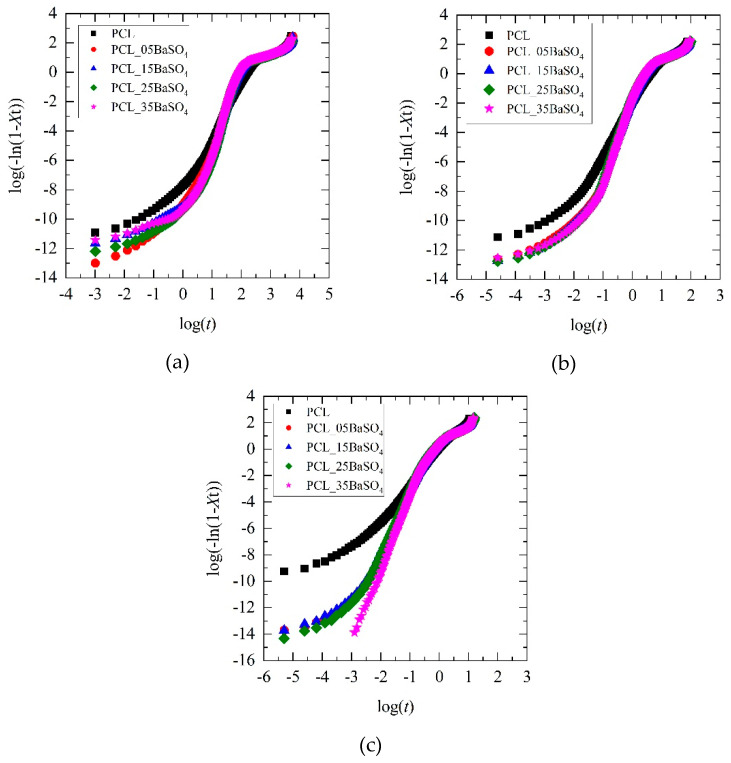
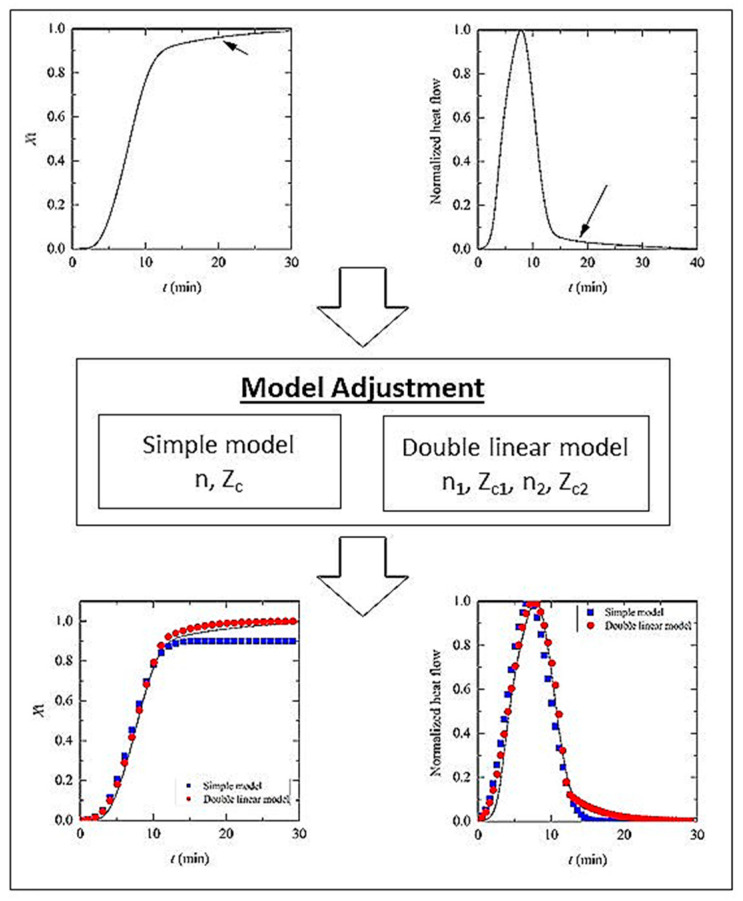
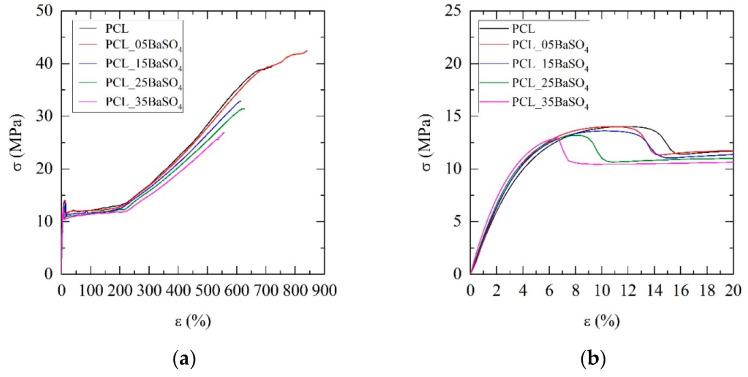
Poly(ε-caprolactone) (PCL) was mixed with submicron particles of barium sulfate to obtain biodegradable radiopaque composites. X-ray images comparing with aluminum samples show that 15 wt.% barium sulfate (BaSO) is sufficient to present radiopacity. Thermal studies by differential scanning calorimetry (DSC) show a statistically significant increase in PCL degree of crystallinity from 46% to 52% for 25 wt.% BaSO. Non-isothermal crystallization tests were performed at different cooling rates to evaluate crystallization kinetics. The nucleation effect of BaSO was found to change the morphology and quantity of the primary crystals of PCL, which was also corroborated by the use of a polarized light optical microscope (PLOM). These results fit well with Avrami-Ozawa-Jeziorny model and show a secondary crystallization that contributes to an increase in crystal fraction with internal structure reorganization. The addition of barium sulfate particles in composite formulations with PCL improves stiffness but not strength for all compositions due to possible cavitation effects induced by debonding of reinforcement interphase.
将聚(ε-己内酯)(PCL)与硫酸钡亚微米颗粒混合,以获得可生物降解的不透射线复合材料。与铝样品对比的X射线图像表明,15 wt.%的硫酸钡(BaSO)足以呈现不透射线性能。通过差示扫描量热法(DSC)进行的热学研究表明,对于25 wt.%的BaSO,PCL的结晶度从46%提高到52%,具有统计学上的显著增加。在不同冷却速率下进行非等温结晶试验,以评估结晶动力学。发现BaSO的成核作用改变了PCL初级晶体的形态和数量,这也通过偏光光学显微镜(PLOM)得到了证实。这些结果与Avrami-Ozawa-Jeziorny模型吻合良好,并显示出二次结晶,其通过内部结构重组导致晶体分数增加。在与PCL的复合配方中添加硫酸钡颗粒,由于增强相间脱粘可能引起的空化效应,所有组合物的刚度提高,但强度未提高。