Liu Shuming, Liu Hongmei, Chen Rui, Ma Yong, Yang Bo, Chen Zhiyong, Liang Yunshan, Fang Jun, Xiao Yunhua
College of Bioscience and Biotechnology, College of Resource and Environment, Hunan Agricultural University, Changsha 410128, China.
Hunan Engineering Laboratory for Pollution Control and Waste Utilization in Swine Production, Changsha 410128, China.
Plants (Basel). 2021 May 2;10(5):912. doi: 10.3390/plants10050912.
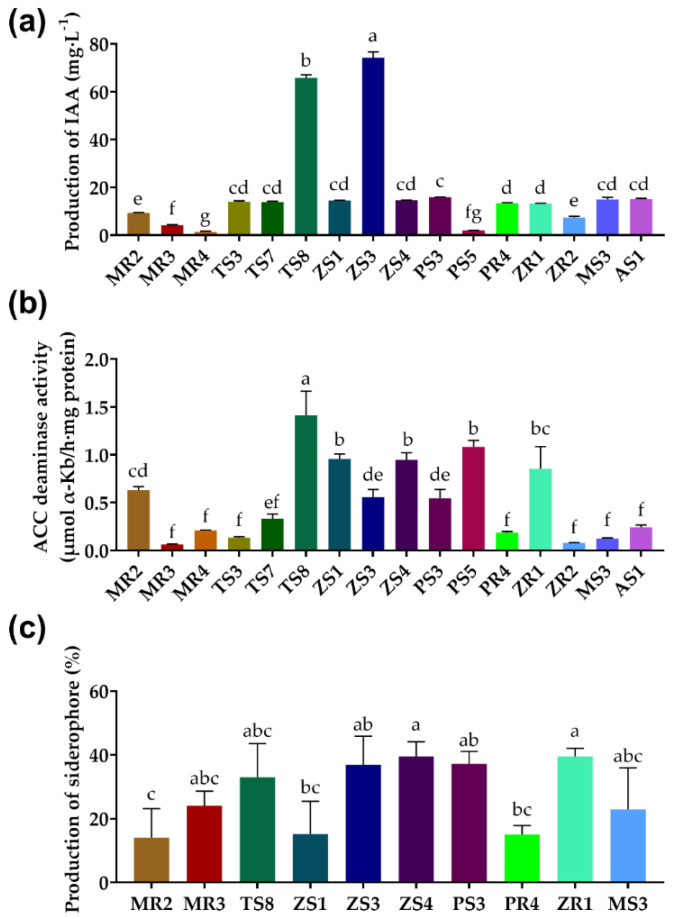
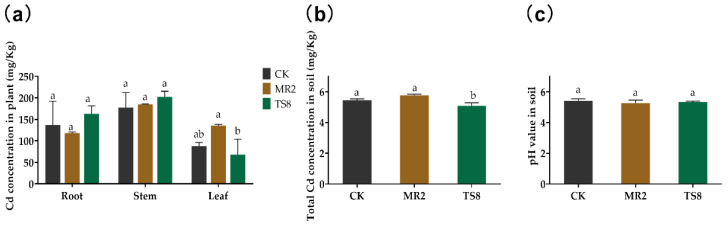
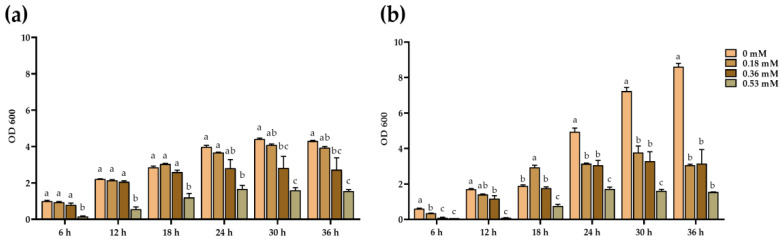
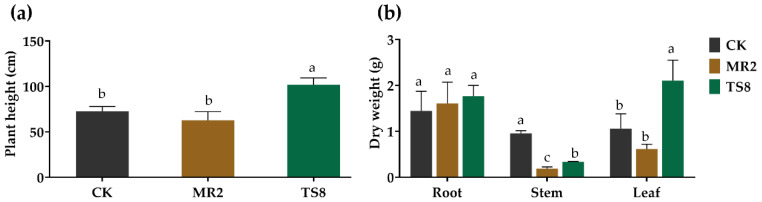
spp. are energy plants and excellent candidates for phytoremediation approaches of metal(loid)s-contaminated soils, especially when combined with plant growth-promoting bacteria. Forty-one bacterial strains were isolated from the rhizosphere soils and roots tissue of five dominant plants ( Levl., Vaniot Houtt, L., Tenore, and Lab.) colonizing a cadmium (Cd)-contaminated mining area (Huayuan, Hunan, China). We subsequently tested their plant growth-promoting (PGP) traits (e.g., production of indole-3-acetic acid, siderophore, and 1-aminocyclopropane-1-carboxylate deaminase) and Cd tolerance. Among bacteria, two strains, TS8 and MR2, presented higher Cd tolerance and showed the best results regarding in vitro growth-promoting traits. In the subsequent pot experiments using soil spiked with 10 mg Cd·kg, we investigated the effects of TS8 and MR2 strains on soil Cd phytoremediation when combined with (Lab.). After sixty days of planting (Lab.), we found that TS8 increased plant height by 39.9%, dry weight of leaves by 99.1%, and the total Cd in the rhizosphere soil was reduced by 49.2%. Although MR2 had no significant effects on the efficiency of phytoremediation, it significantly enhanced the Cd translocation from the root to the aboveground tissues (translocation factor > 1). The combination of TS8 and (Lab.) may be an effective method to remediate Cd-contaminated soils, while the inoculation of MR2 may be used to enhance the phytoextraction potential of .
某些物种是能源植物,是用于修复金属(类金属)污染土壤的植物修复方法的理想选择,特别是与促进植物生长的细菌结合使用时。从五个优势植物(龙葵、商陆、牛膝、酸模和李氏禾)的根际土壤和根组织中分离出41株细菌菌株,这些植物生长在镉(Cd)污染的矿区(中国湖南花垣)。随后,我们测试了它们促进植物生长(PGP)的特性(例如吲哚-3-乙酸、铁载体和1-氨基环丙烷-1-羧酸脱氨酶的产生)以及对镉的耐受性。在这些细菌中,TS8和MR2两株菌株表现出较高的镉耐受性,并且在体外促进生长特性方面显示出最佳结果。在随后使用添加了10 mg Cd·kg的土壤进行的盆栽实验中,我们研究了TS8和MR2菌株与李氏禾结合时对土壤镉植物修复的影响。种植李氏禾60天后,我们发现TS8使株高增加了39.9%,叶片干重增加了99.1%,根际土壤中的总镉含量降低了49.2%。虽然MR2对植物修复效率没有显著影响,但它显著提高了镉从根部向地上组织的转运(转运系数>1)。TS8和李氏禾的组合可能是修复镉污染土壤的有效方法,而接种MR2可用于提高李氏禾的植物提取潜力。