Nair Anroop B, Shah Jigar, Jacob Shery, Al-Dhubiab Bandar E, Patel Vimal, Sreeharsha Nagaraja, Shinu Pottathil
Department of Pharmaceutical Sciences, College of Clinical Pharmacy, King Faisal University, Al-Ahsa 31982, Saudi Arabia.
Department of Pharmaceutics, Institute of Pharmacy, Nirma University, Ahmedabad 382481, India.
Pharmaceutics. 2021 May 15;13(5):728. doi: 10.3390/pharmaceutics13050728.
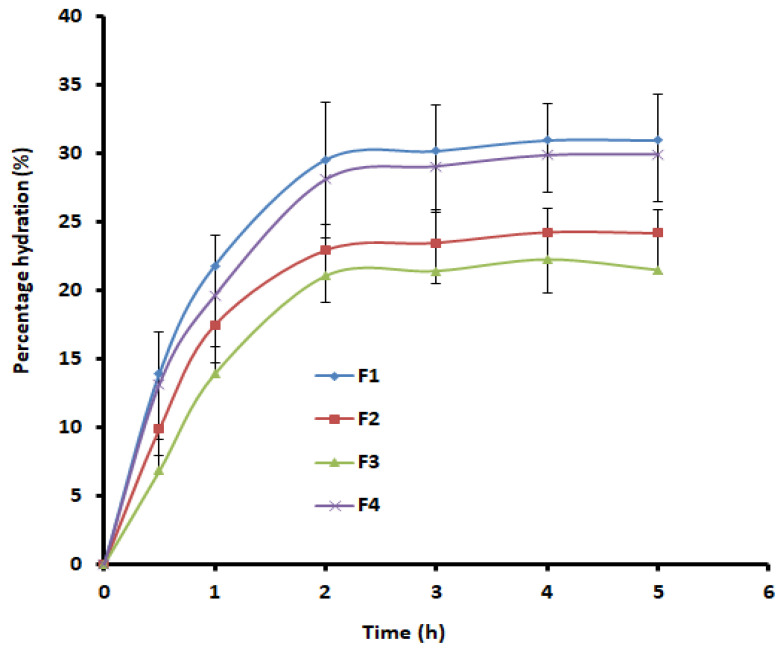
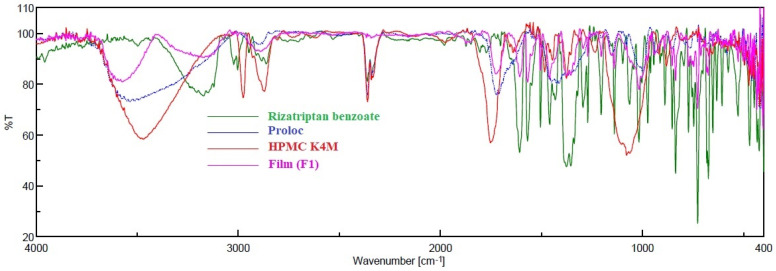
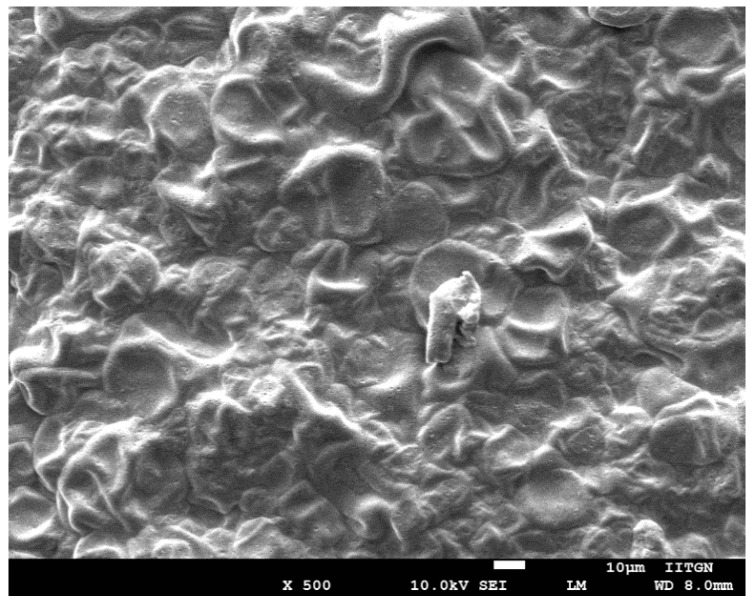
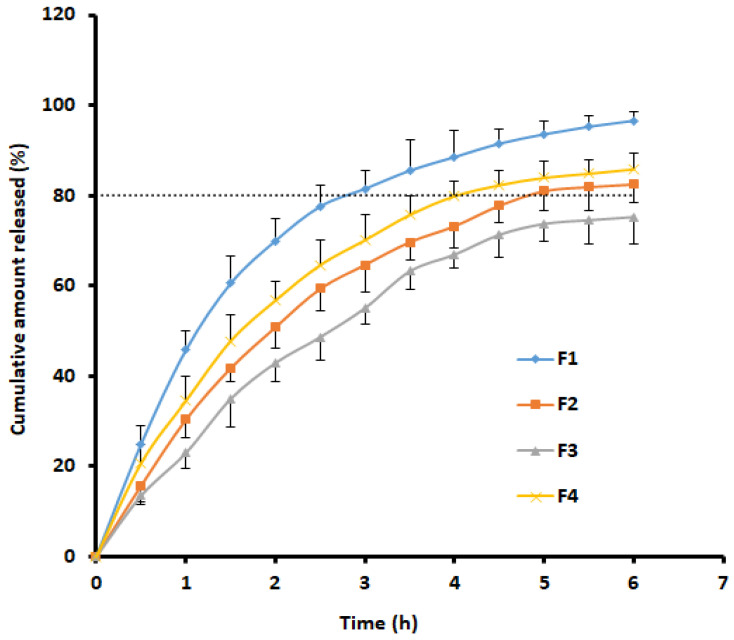
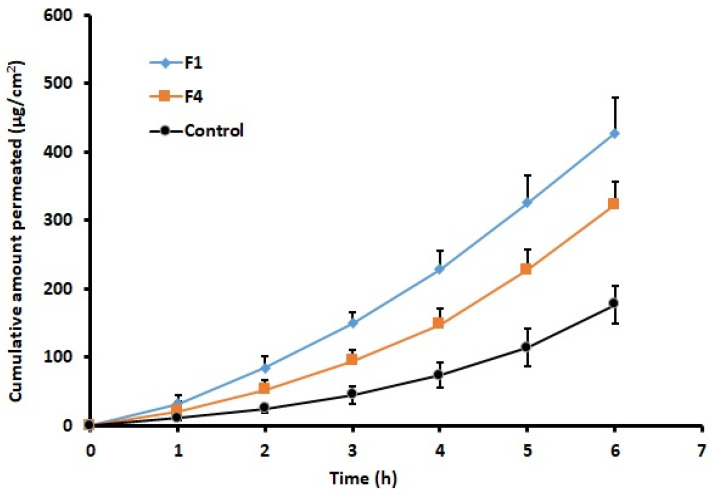
The reduced therapeutic efficacy of rizatriptan in migraine treatment is primarily due to low oral bioavailability and extensive first pass metabolism. The purpose of this investigation was to optimize the thin mucoadhesive buccal film of rizatriptan and assess the practicability of its development as a potential substitute for conventional migraine treatment. Buccal films (FR1-FR10) were fabricated by a conventional solvent casting method utilizing a combination of polymers (Proloc, hydroxypropyl methylcellulose and Eudragit RS 100). Drug-loaded buccal films (F1-F4) were examined for mechanical, mucoadhesive, swelling and release characteristics. In vivo pharmacokinetics parameters of selected buccal film (F1) in rabbits were compared to oral administration. Films F1-F4 displayed optimal physicomechanical properties including mucoadhesive strength, which can prolong the buccal residence time. A biphasic, complete and higher drug release was seen in films F1 and F4, which followed Weibull model kinetics. The optimized film, F1, exhibited significantly higher ( < 0.005) rizatriptan buccal flux (71.94 ± 8.26 µg/cm/h) with a short lag time. Film features suggested the drug particles were in an amorphous form, compatible with the polymers used and had an appropriate surface morphology suitable for buccal application. Pharmacokinetic data indicated a significantly higher rizatriptan plasma level ( < 0.005) and C ( < 0.0001) upon buccal film application as compared to oral solution. The observed AUC (994.86 ± 95.79 ng.h/mL) in buccal treatment was two-fold higher ( < 0.0001) than the control, and the relative bioavailability judged was 245%. This investigation demonstrates the prospective of buccal films as a viable and alternative approach for effective rizatriptan delivery.
利扎曲普坦在偏头痛治疗中疗效降低主要归因于口服生物利用度低和广泛的首过代谢。本研究的目的是优化利扎曲普坦的薄型黏膜黏附颊膜,并评估其作为传统偏头痛治疗潜在替代物开发的可行性。颊膜(FR1-FR10)采用常规溶剂浇铸法制备,使用了聚合物组合(普罗洛克、羟丙基甲基纤维素和Eudragit RS 100)。对载药颊膜(F1-F4)进行了机械、黏膜黏附、溶胀和释放特性研究。将所选颊膜(F1)在兔体内的药代动力学参数与口服给药进行了比较。F1-F4膜表现出最佳的物理机械性能,包括黏膜黏附强度,可延长颊部停留时间。F1和F4膜呈现出双相、完全且更高的药物释放,符合威布尔模型动力学。优化后的F1膜显示利扎曲普坦颊部通量显著更高(<0.005)(71.94±8.26μg/cm/h),滞后时间短。膜的特性表明药物颗粒呈无定形形式,与所用聚合物相容,且具有适合颊部应用的适当表面形态。药代动力学数据表明,与口服溶液相比,颊膜给药后利扎曲普坦的血浆水平显著更高(<0.005),曲线下面积(<0.0001)也显著更高。颊部治疗中观察到的曲线下面积(994.86±95.79 ng.h/mL)比对照组高出两倍(<0.0001),判断的相对生物利用度为245%。本研究证明了颊膜作为有效递送利扎曲普坦的可行替代方法的前景。