Petretta Mauro, Gambardella Alessandro, Boi Marco, Berni Matteo, Cavallo Carola, Marchiori Gregorio, Maltarello Maria Cristina, Bellucci Devis, Fini Milena, Baldini Nicola, Grigolo Brunella, Cannillo Valeria
IRCCS-Istituto Ortopedico Rizzoli, Laboratory RAMSES, Via di Barbiano 1/10, 40136 Bologna, Italy.
RegenHU LTD, Z.I. Du Vivier 22, CH-1690 Villaz-St-Pierre, Switzerland.
Biology (Basel). 2021 May 4;10(5):398. doi: 10.3390/biology10050398.
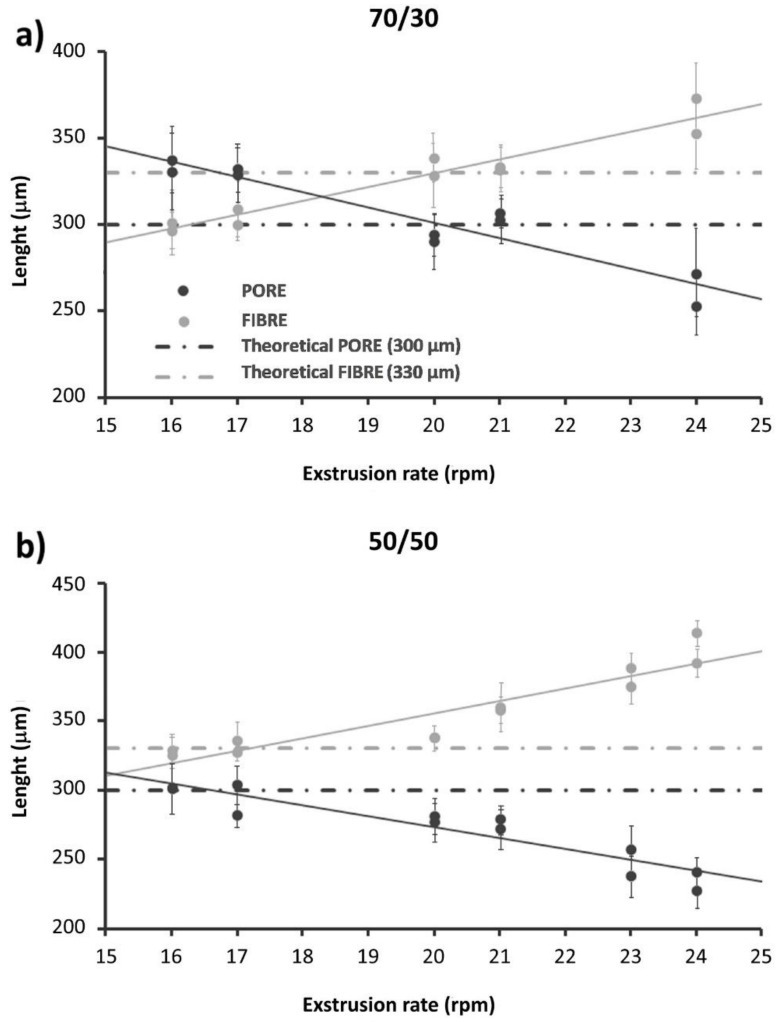
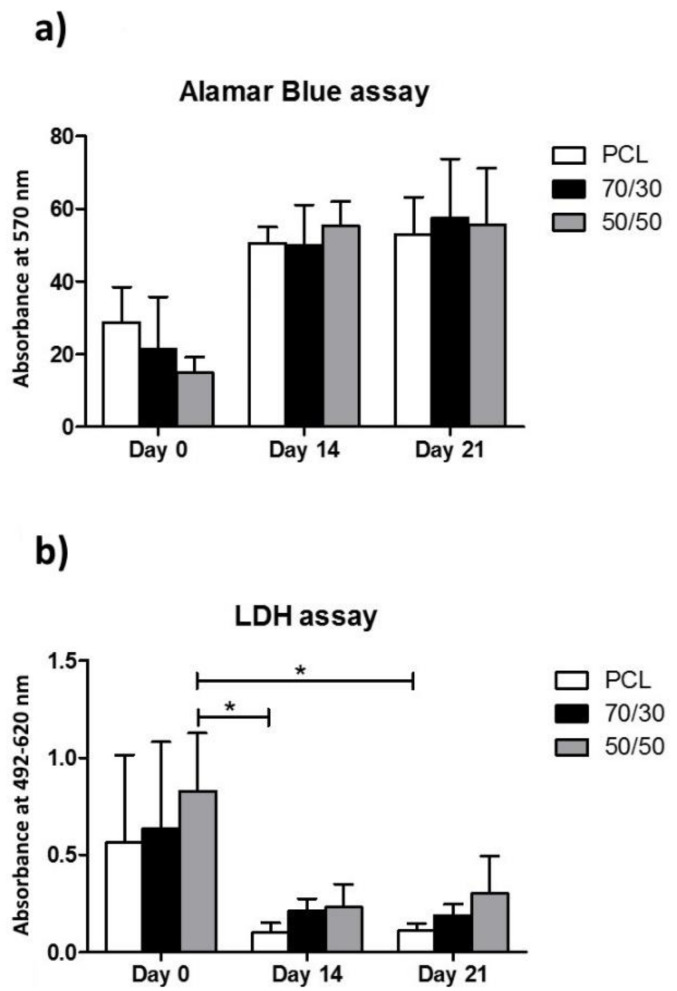
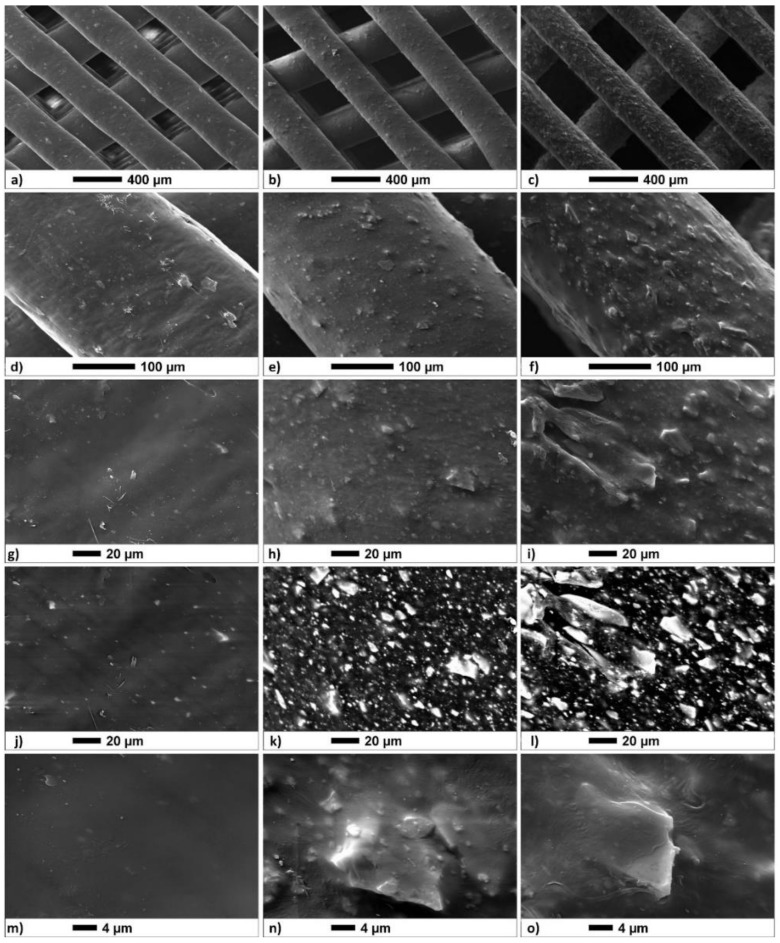
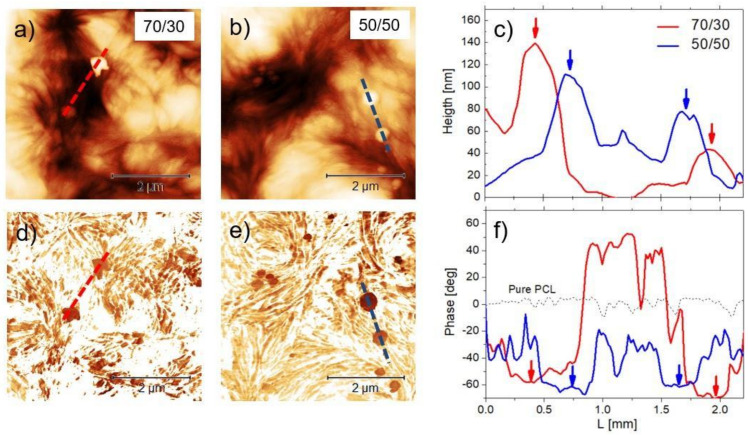
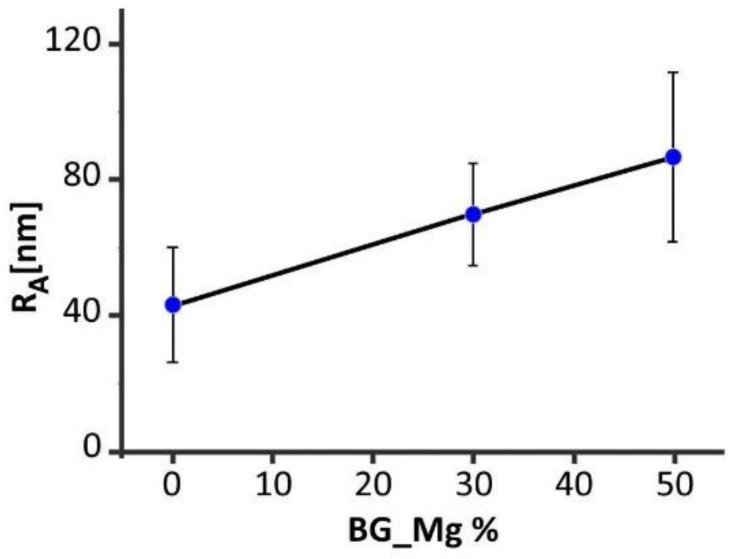
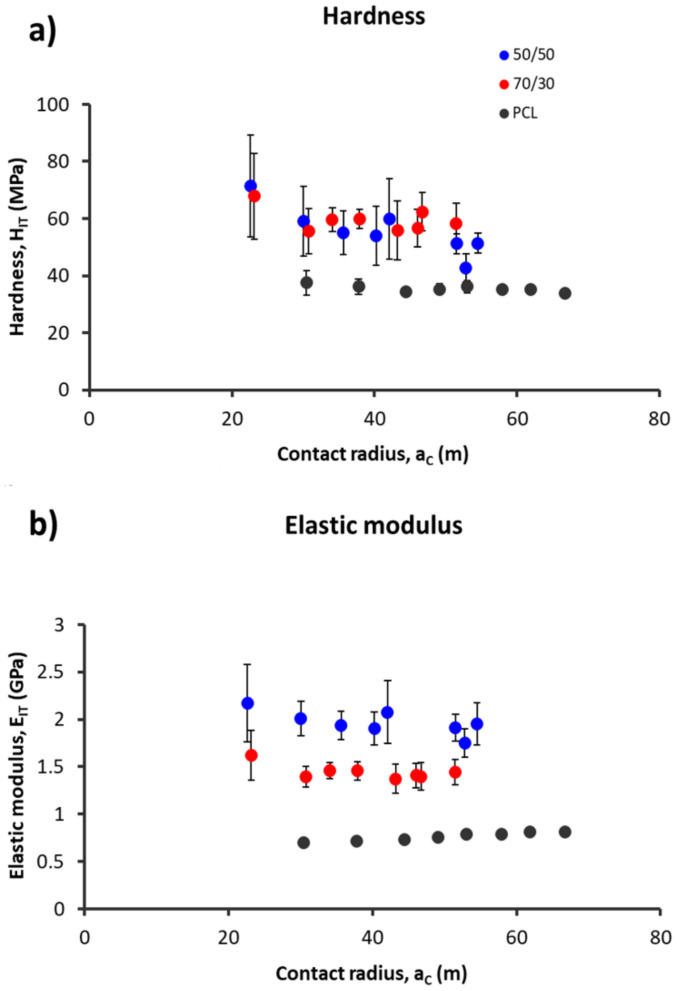
Polycaprolactone (PCL) is widely used in additive manufacturing for the construction of scaffolds for tissue engineering because of its good bioresorbability, biocompatibility, and processability. Nevertheless, its use is limited by its inadequate mechanical support, slow degradation rate and the lack of bioactivity and ability to induce cell adhesion and, thus, bone tissue regeneration. In this study, we fabricated 3D PCL scaffolds reinforced with a novel Mg-doped bioactive glass (Mg-BG) characterized by good mechanical properties and biological reactivity. An optimization of the printing parameters and scaffold fabrication was performed; furthermore, an extensive microtopography characterization by scanning electron microscopy and atomic force microscopy was carried out. Nano-indentation tests accounted for the mechanical properties of the scaffolds, whereas SBF tests and cytotoxicity tests using human bone-marrow-derived mesenchymal stem cells (BM-MSCs) were performed to evaluate the bioactivity and in vitro viability. Our results showed that a 50/50 wt% of the polymer-to-glass ratio provides scaffolds with a dense and homogeneous distribution of Mg-BG particles at the surface and roughness twice that of pure PCL scaffolds. Compared to pure PCL (hardness H = 35 ± 2 MPa and Young's elastic modulus E = 0.80 ± 0.05 GPa), the 50/50 wt% formulation showed H = 52 ± 11 MPa and E = 2.0 ± 0.2 GPa, hence, it was close to those of trabecular bone. The high level of biocompatibility, bioactivity, and cell adhesion encourages the use of the composite PCL/Mg-BG scaffolds in promoting cell viability and supporting mechanical loading in the host trabecular bone.
聚己内酯(PCL)因其良好的生物可吸收性、生物相容性和可加工性,在增材制造中被广泛用于构建组织工程支架。然而,其应用受到机械支撑不足、降解速率缓慢以及缺乏生物活性和诱导细胞黏附能力的限制,因此无法促进骨组织再生。在本研究中,我们制备了一种新型镁掺杂生物活性玻璃(Mg-BG)增强的3D PCL支架,该支架具有良好的机械性能和生物反应性。我们对打印参数和支架制造进行了优化;此外,还通过扫描电子显微镜和原子力显微镜进行了广泛的微观形貌表征。纳米压痕测试分析了支架的机械性能,而使用人骨髓间充质干细胞(BM-MSCs)进行的模拟体液(SBF)测试和细胞毒性测试则用于评估生物活性和体外生存能力。我们的结果表明,聚合物与玻璃的重量比为50/50时,支架表面的Mg-BG颗粒分布致密且均匀,粗糙度是纯PCL支架的两倍。与纯PCL(硬度H = 35±2 MPa,杨氏弹性模量E = 0.80±0.05 GPa)相比,50/50重量比的配方显示H = 52±11 MPa,E = 2.0±0.2 GPa,因此接近松质骨的性能。高度的生物相容性、生物活性和细胞黏附性促使复合PCL/Mg-BG支架在促进细胞生存能力和支持宿主松质骨机械负荷方面的应用。