Saillard Margaux, Cenerenti Mara, Romero Pedro, Jandus Camilla
Department of Oncology, University of Lausanne, 1006 Epalinges, Switzerland.
Department of Pathology and Immunology, Faculty of Medicine, University of Geneva, 1211 Geneva, Switzerland.
Vaccines (Basel). 2021 May 4;9(5):454. doi: 10.3390/vaccines9050454.
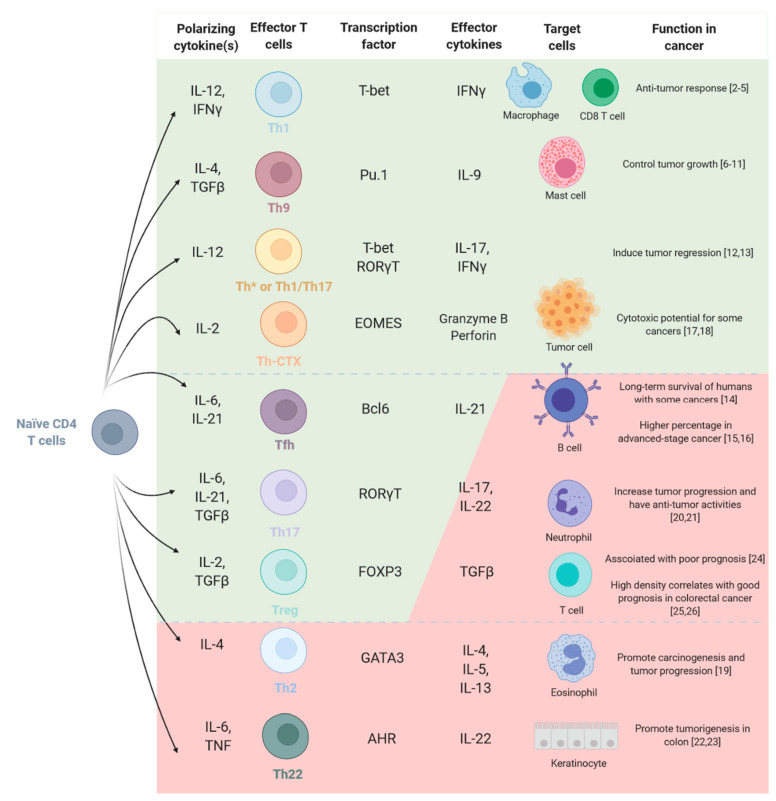
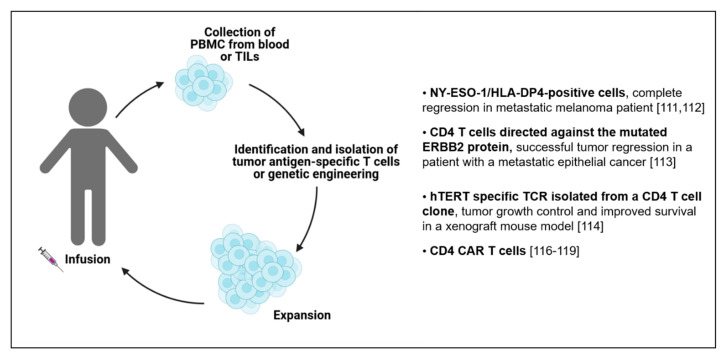
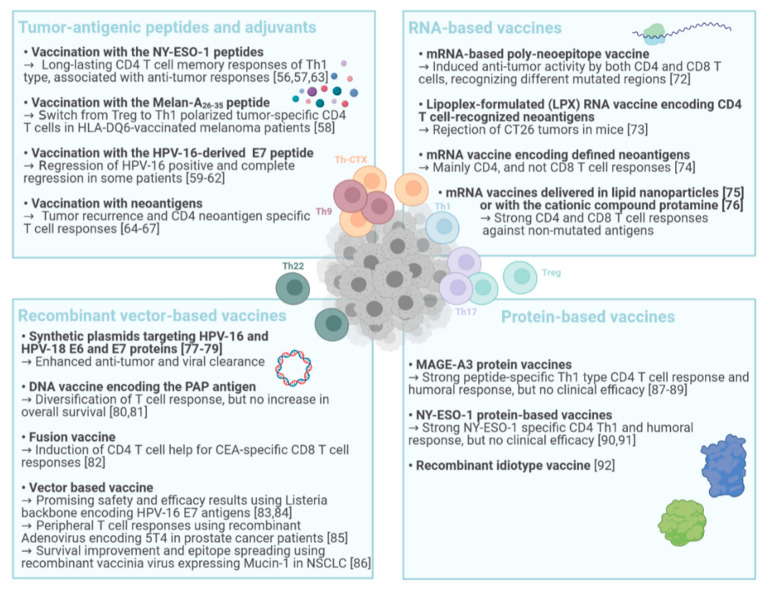
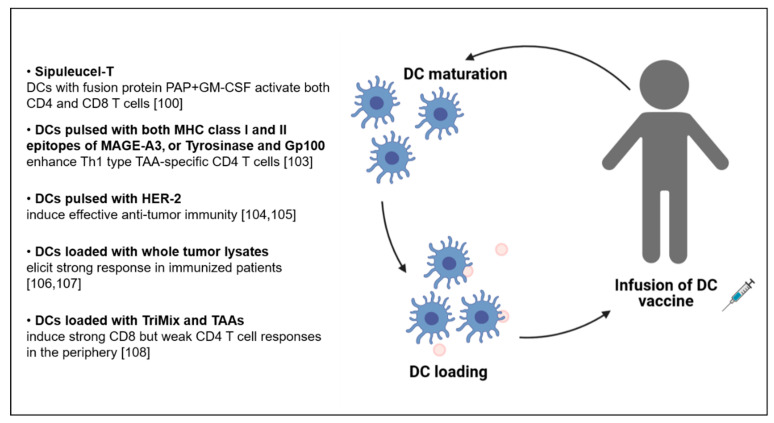
Immunotherapy has become a standard treatment in many cancers and it is based on three main therapeutic axes: immune checkpoint blockade (ICB), vaccination and adoptive cell transfer (ACT). If originally these therapies mainly focused on exploiting CD8 T cells given their role in the direct elimination of tumor cells, increasing evidence highlights the crucial role CD4 T cells play in the antitumor immune response. Indeed, these cells can profoundly modulate the tumor microenvironment (TME) by secreting different types of cytokine or by directly eliminating cancer cells. In this review, we describe how different CD4 T cell subsets can contribute to tumor immune responses during immunotherapy and the novel high-throughput immune monitoring tools that are expected to facilitate the study of CD4 T cells, at antigen-specific and single cell level, thus accelerating bench-to-bed translational research in cancer.
免疫疗法已成为许多癌症的标准治疗方法,它基于三个主要治疗轴:免疫检查点阻断(ICB)、疫苗接种和过继性细胞转移(ACT)。如果说最初这些疗法主要侧重于利用CD8 T细胞,因为它们在直接消除肿瘤细胞中发挥作用,那么越来越多的证据凸显了CD4 T细胞在抗肿瘤免疫反应中所起的关键作用。事实上,这些细胞可以通过分泌不同类型的细胞因子或直接消除癌细胞来深刻调节肿瘤微环境(TME)。在这篇综述中,我们描述了不同的CD4 T细胞亚群如何在免疫治疗期间促进肿瘤免疫反应,以及有望在抗原特异性和单细胞水平上促进CD4 T细胞研究的新型高通量免疫监测工具,从而加速癌症领域从 bench 到 bedside 的转化研究。