Hils Christian, Manners Ian, Schöbel Judith, Schmalz Holger
Macromolecular Chemistry II, University of Bayreuth, Universitätsstraße 30, 95440 Bayreuth, Germany.
Department of Chemistry, University of Victoria, 3800 Finnerty Road, Victoria, BC V8P 5C2, Canada.
Polymers (Basel). 2021 May 4;13(9):1481. doi: 10.3390/polym13091481.
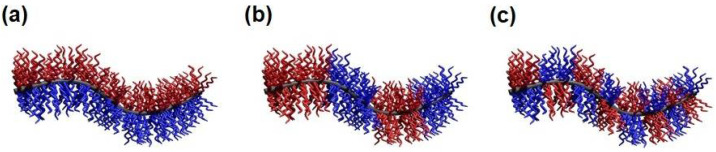
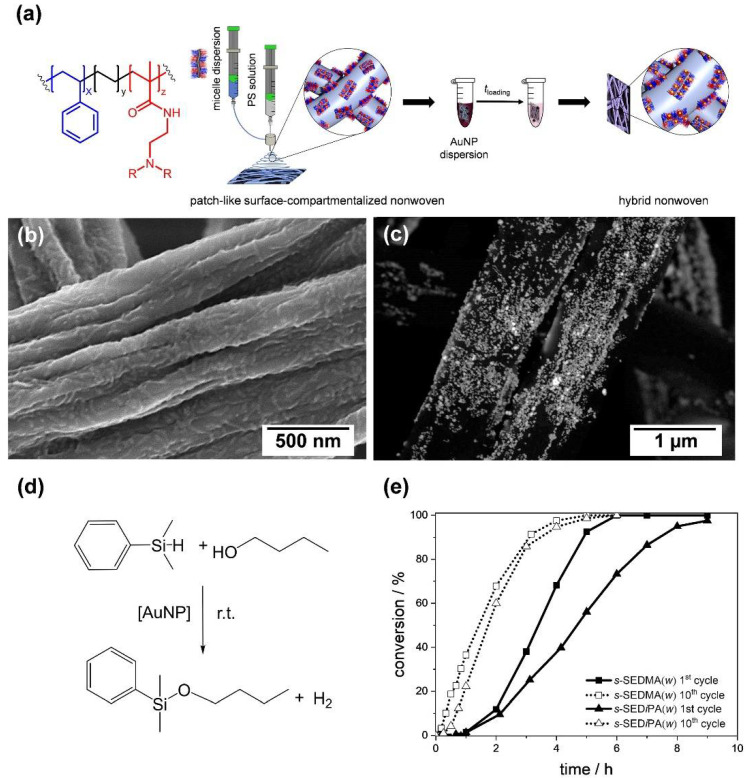
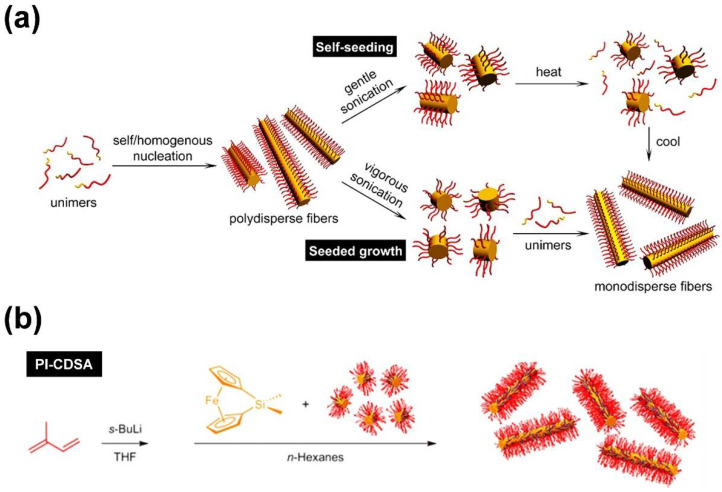
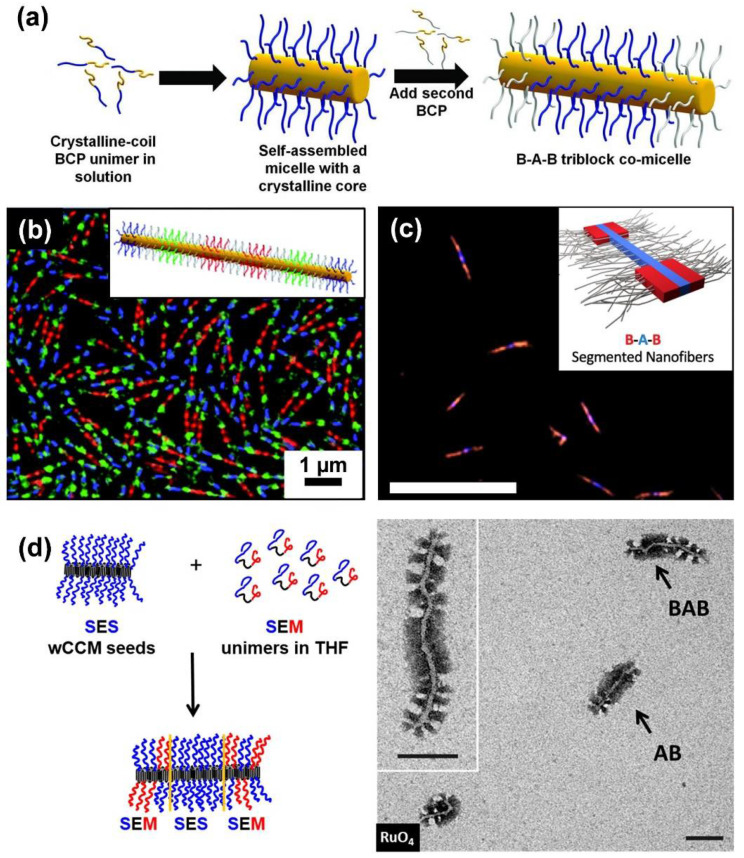
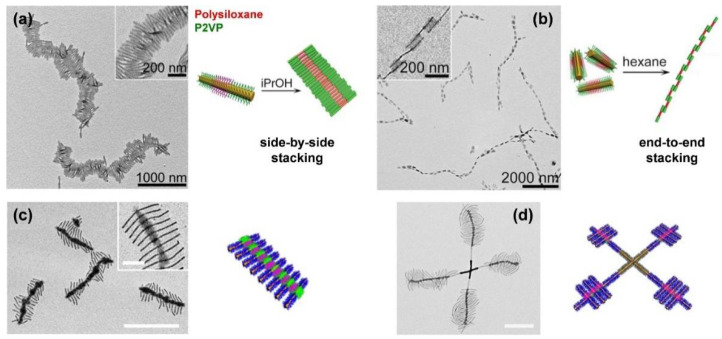
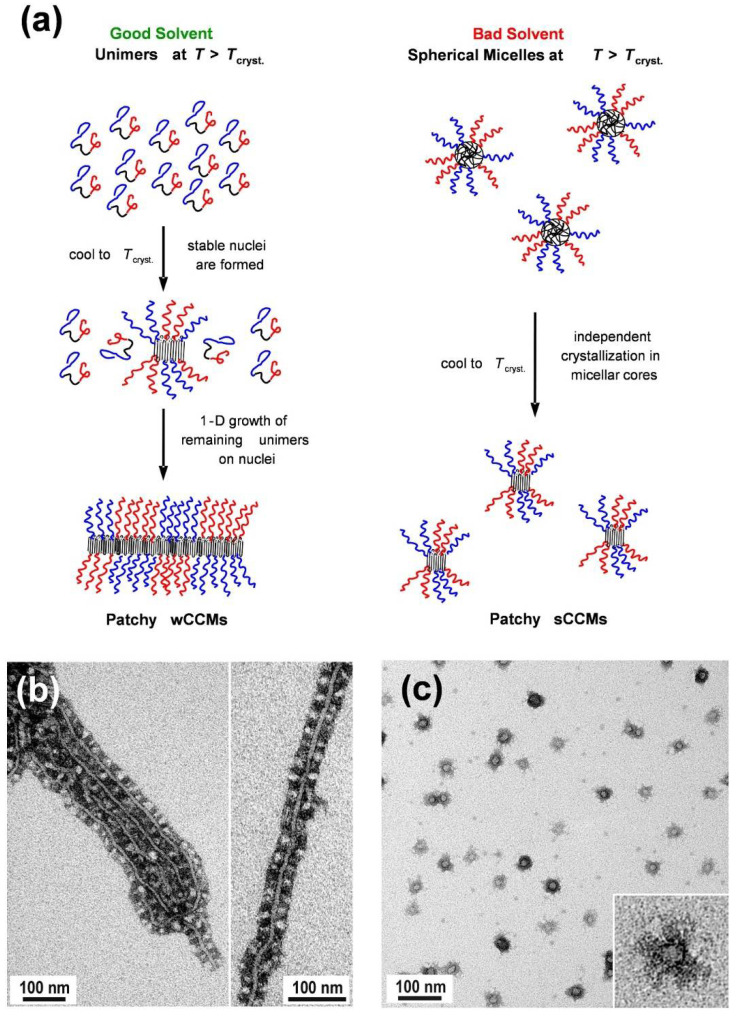
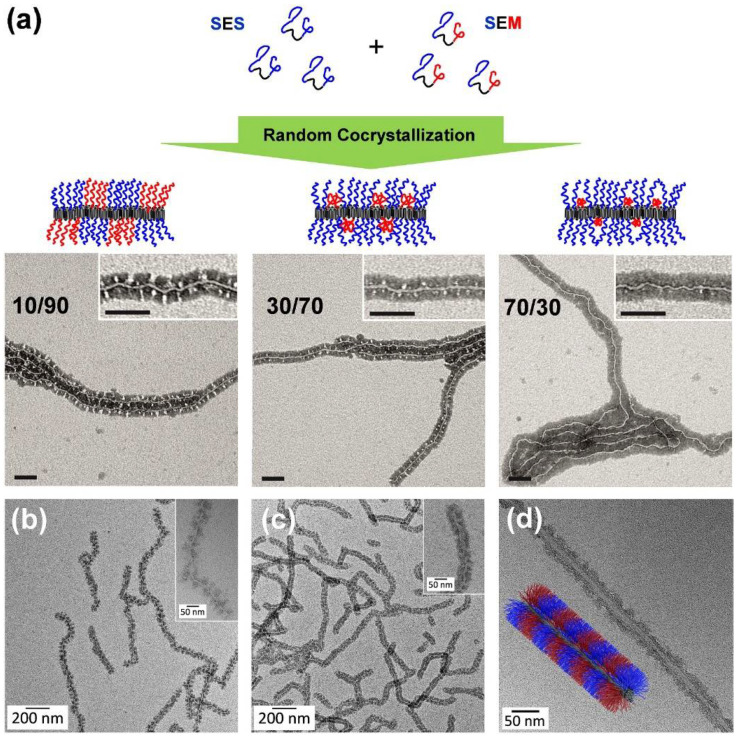
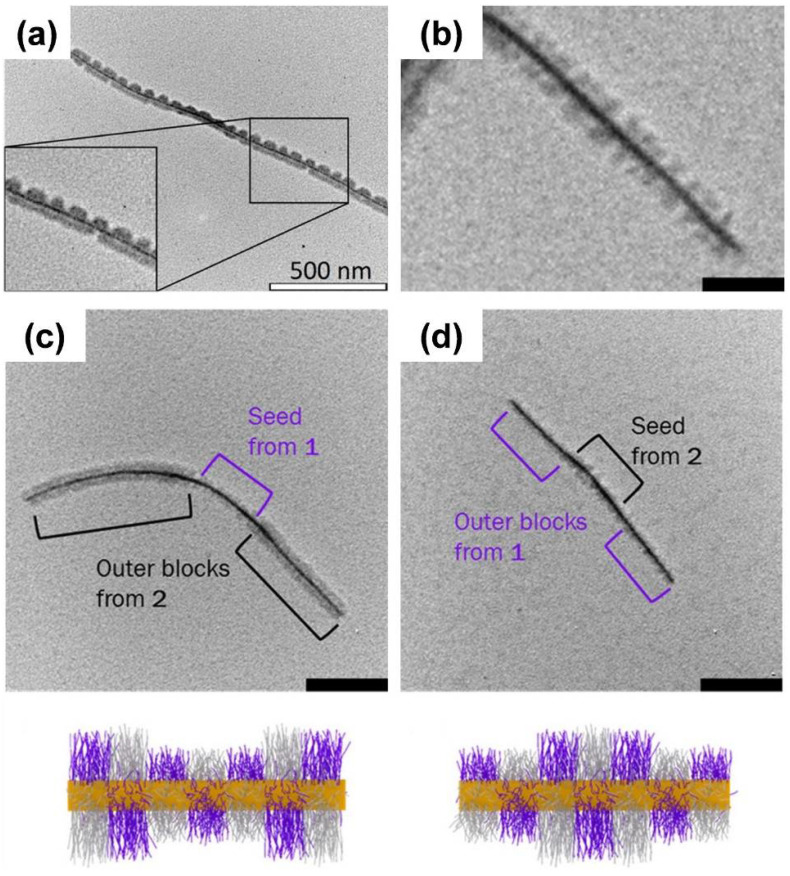
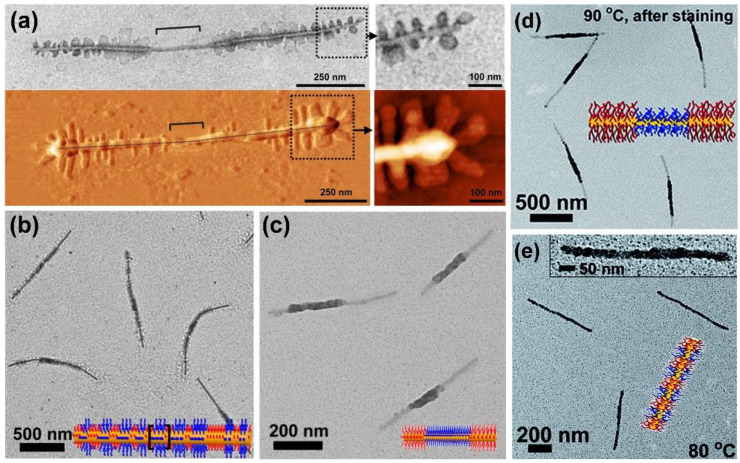
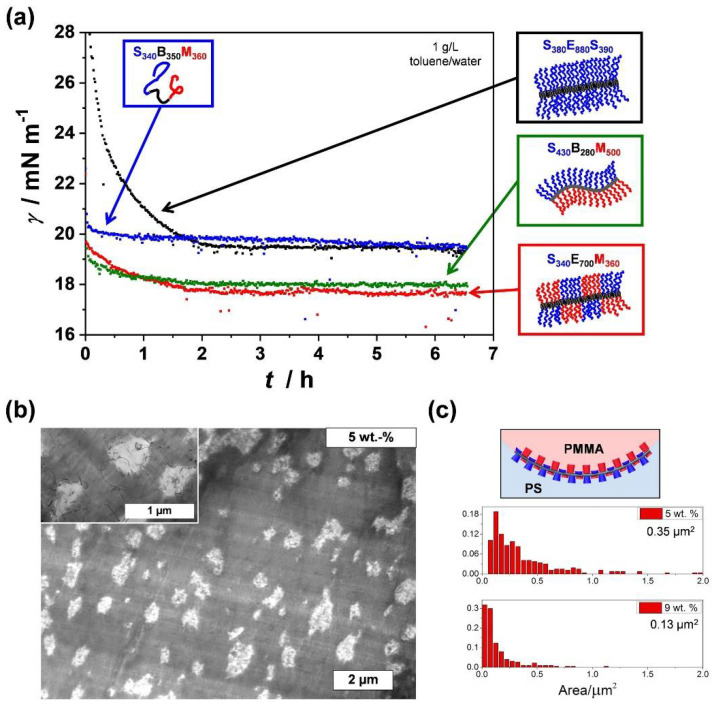
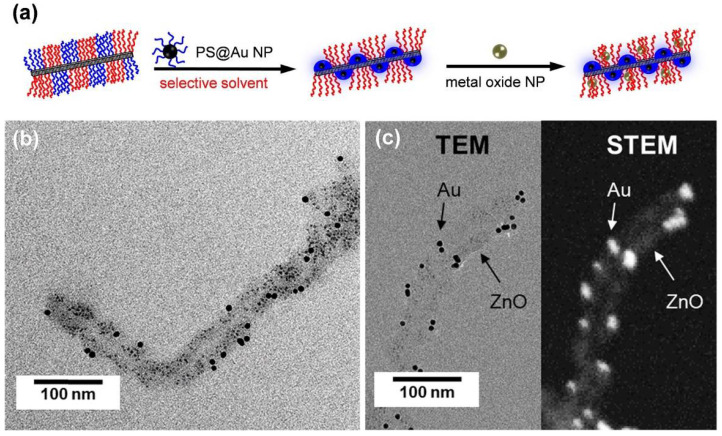
Crystallization-driven self-assembly (CDSA) of block copolymers bearing one crystallizable block has emerged to be a powerful and highly relevant method for the production of one- and two-dimensional micellar assemblies with controlled length, shape, and corona chemistries. This gives access to a multitude of potential applications, from hierarchical self-assembly to complex superstructures, catalysis, sensing, nanomedicine, nanoelectronics, and surface functionalization. Related to these applications, patchy crystalline-core micelles, with their unique, nanometer-sized, alternating corona segmentation, are highly interesting, as this feature provides striking advantages concerning interfacial activity, functionalization, and confinement effects. Hence, this review aims to provide an overview of the current state of the art with respect to self-assembly concepts, properties, and applications of patchy micelles with crystalline cores formed by CDSA. We have also included a more general discussion on the CDSA process and highlight block-type co-micelles as a special type of patchy micelle, due to similarities of the corona structure if the size of the blocks is well below 100 nm.
带有一个可结晶嵌段的嵌段共聚物的结晶驱动自组装(CDSA)已成为一种强大且高度相关的方法,用于制备具有可控长度、形状和冠层化学性质的一维和二维胶束聚集体。这使得从分级自组装到复杂超结构、催化、传感、纳米医学、纳米电子学和表面功能化等众多潜在应用成为可能。与这些应用相关的是,具有独特的纳米级交替冠层分段的斑状晶核胶束非常有趣,因为这一特性在界面活性、功能化和限制效应方面具有显著优势。因此,本综述旨在概述通过CDSA形成的具有晶核的斑状胶束的自组装概念、性质和应用的当前技术水平。我们还对CDSA过程进行了更一般性的讨论,并强调了嵌段型共胶束是斑状胶束的一种特殊类型,这是由于如果嵌段尺寸远低于100 nm,其冠层结构具有相似性。