Hils Christian, Dulle Martin, Sitaru Gabriel, Gekle Stephan, Schöbel Judith, Frank Andreas, Drechsler Markus, Greiner Andreas, Schmalz Holger
Macromolecular Chemistry II, University of Bayreuth Universitätsstraße 30 95440 Bayreuth Germany
JCNS-1/ICS-1, Forschungszentrum Jülich GmbH Wilhelm-Johnen-Straße 52428 Jülich Germany.
Nanoscale Adv. 2019 Nov 26;2(1):438-452. doi: 10.1039/c9na00607a. eCollection 2020 Jan 22.
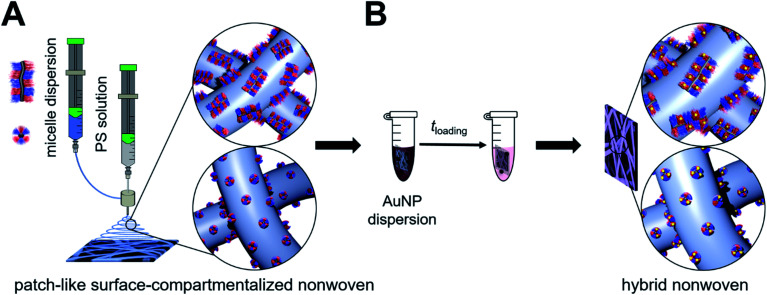
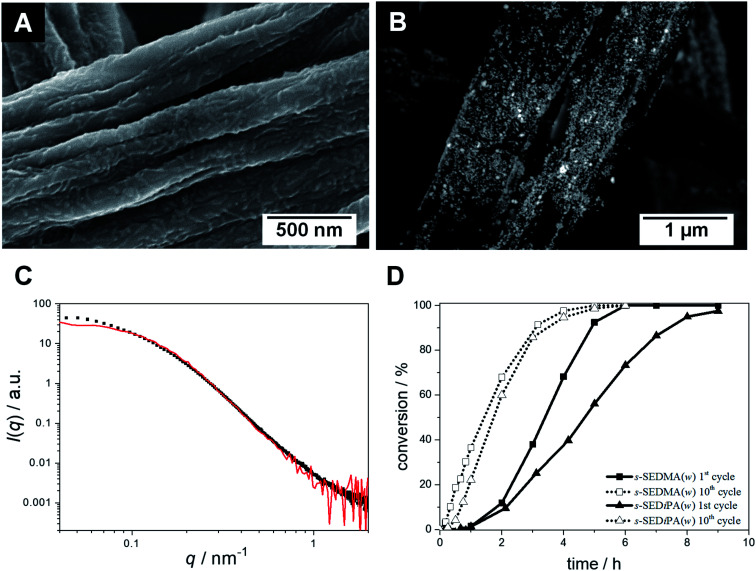
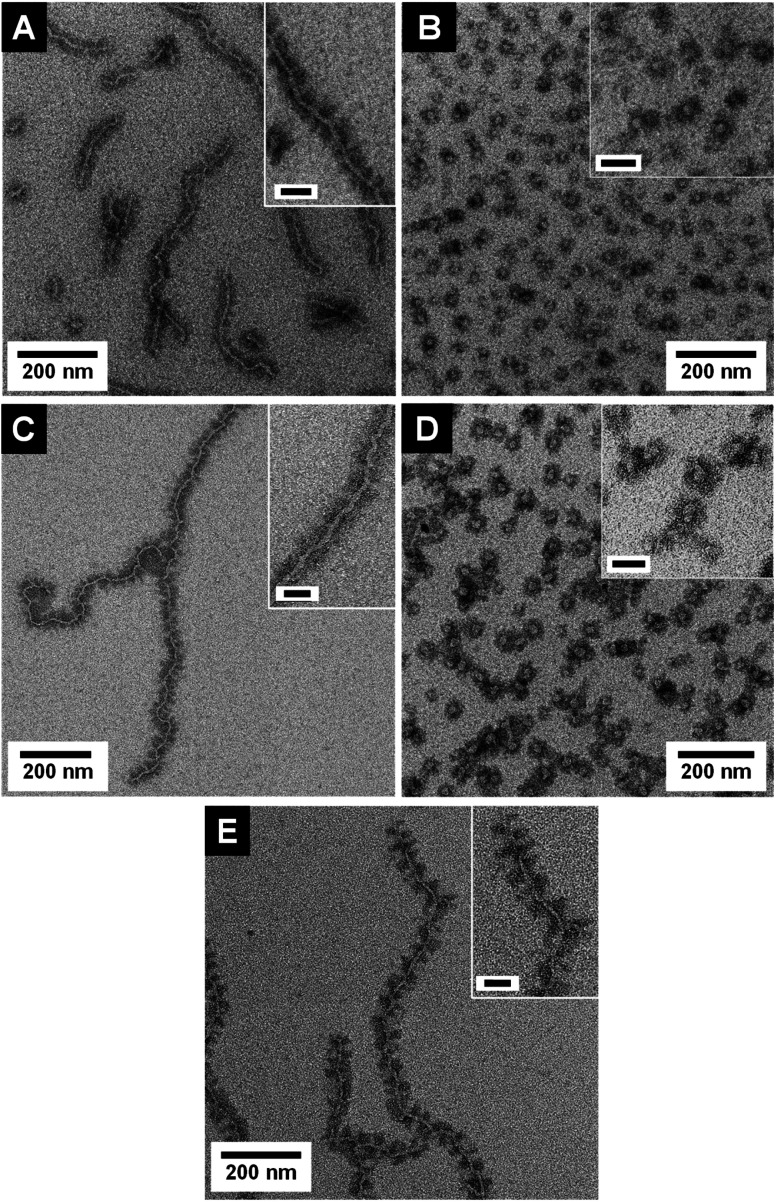
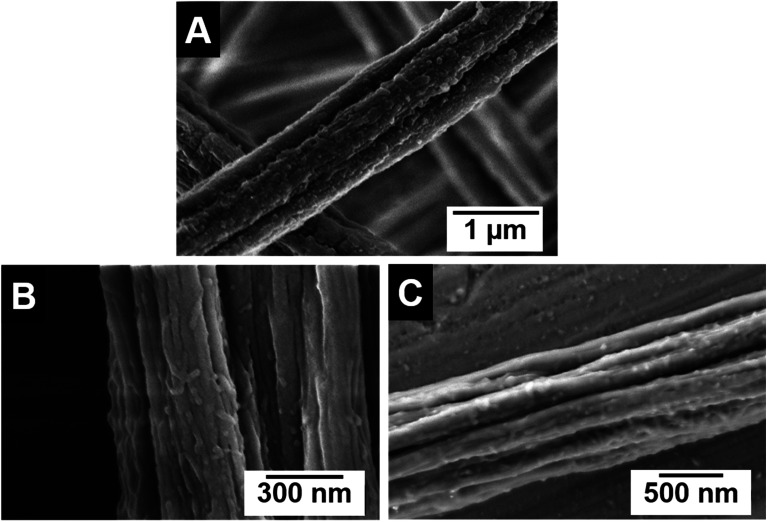
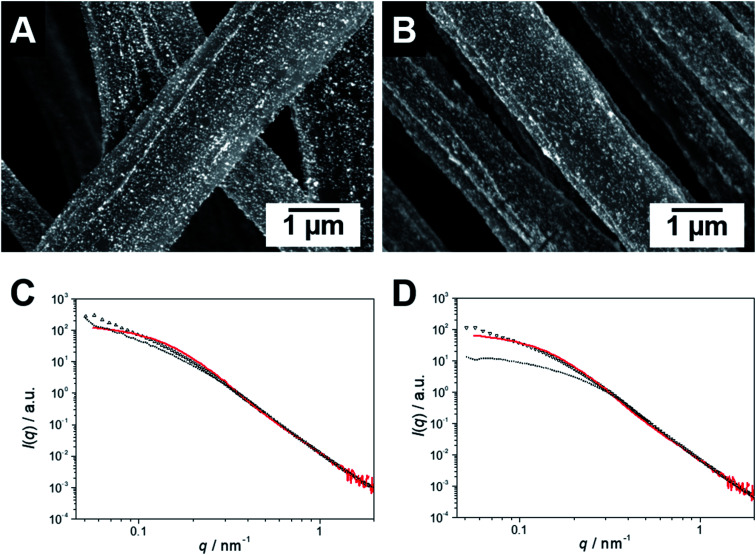
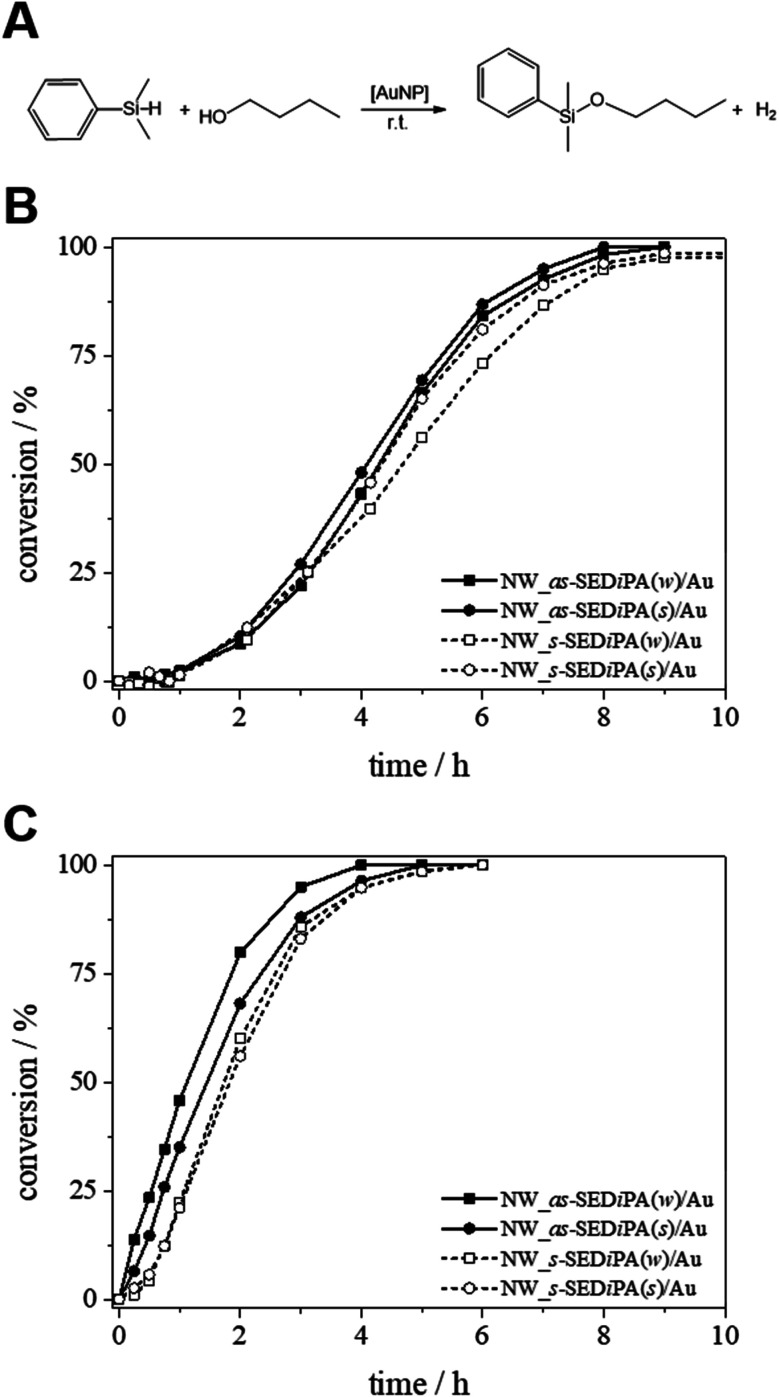
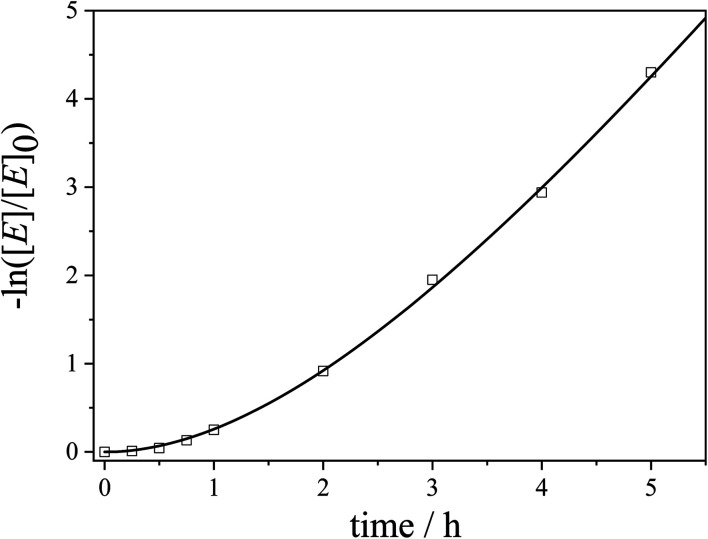
In this work, we provide a detailed study on the influence of patch size and chemistry on the catalytic activity of patchy hybrid nonwovens in the gold nanoparticle (Au NP) catalysed alcoholysis of dimethylphenylsilane in -butanol. The nonwovens were produced by coaxial electrospinning, employing a polystyrene solution as the core and a dispersion of spherical or worm-like patchy micelles with functional, amino group-bearing patches (dimethyl and diisopropyl amino groups as anchor groups for Au NP) as the shell. Subsequent loading by dipping into a dispersion of preformed Au NPs yields the patchy hybrid nonwovens. In terms of NP stabilization, , preventing agglomeration, worm-like micelles with poly(,-dimethylaminoethyl methacrylamide) (PDMA) patches are most efficient. Kinetic studies employing an extended 1 order kinetics model, which includes the observed induction periods, revealed a strong dependence on the accessibility of the Au NPs' surface to the reactants. The accessibility is controlled by the swellability of the functional patches in -butanol, which depends on both patch chemistry and size. As a result, significantly longer induction ( ) and reaction ( ) times were observed for the 1 catalysis cycles in comparison to the 10 cycles and nonwovens with more polar PDMA patches show a significantly lower in the 1 catalysis cycle. Thus, the unique patchy surface structure allows tailoring the properties of this ""-like catalyst system in terms of NP stabilization and catalytic performance, which resulted in a significant reduction of to about 4 h for an optimized system.
在本工作中,我们详细研究了补丁尺寸和化学性质对片状杂化非织造布催化活性的影响,该非织造布用于金纳米颗粒(Au NP)催化的二甲基苯基硅烷在正丁醇中的醇解反应。非织造布通过同轴静电纺丝制备,以聚苯乙烯溶液为芯,以带有功能性氨基补丁(二甲基和二异丙基氨基作为Au NP的锚定基团)的球形或蠕虫状片状胶束分散体为壳。随后通过浸入预制Au NPs的分散体中进行负载,得到片状杂化非织造布。在NP稳定方面,具有聚(甲基丙烯酸-2,2-二甲基氨基乙酯)(PDMA)补丁的蠕虫状胶束在防止团聚方面最有效。采用扩展的一级动力学模型(包括观察到的诱导期)进行的动力学研究表明,催化活性强烈依赖于Au NPs表面对反应物的可及性。可及性由功能性补丁在正丁醇中的溶胀性控制,而溶胀性取决于补丁的化学性质和尺寸。结果,与10个循环相比,在1个催化循环中观察到明显更长的诱导()和反应()时间,并且具有更多极性PDMA补丁的非织造布在1个催化循环中显示出明显更低的。因此,独特的片状表面结构使得可以在NP稳定和催化性能方面定制这种“”-类催化剂体系的性质,对于优化的体系,这导致显著降低至约4小时。