Oh Han-Jin, Park Yei-Ju, Cho Jae Hyoung, Song Min-Ho, Gu Bon-Hee, Yun Won, Lee Ji-Hwan, An Ji-Seon, Kim Yong-Ju, Lee Jun-Soeng, Kim Sheena, Kim Hyeri, Kim Eun Sol, Lee Byoung-Kon, Kim Byeong-Woo, Kim Hyeun Bum, Cho Jin-Ho, Kim Myung-Hoo
Department of Animal Sciences, Chungbuk National University, Cheongju 286-44, Korea.
Department of Animal Sciences, Pusan National University, Miryang 50463, Korea.
Animals (Basel). 2021 May 11;11(5):1356. doi: 10.3390/ani11051356.
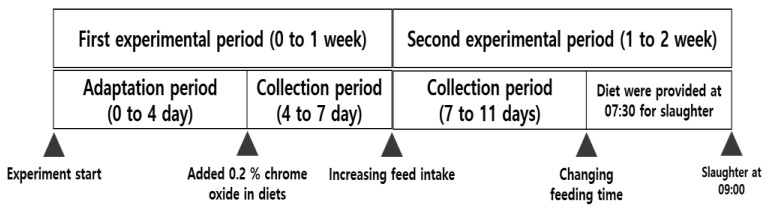
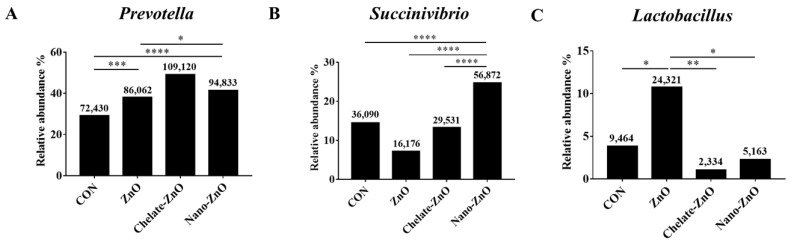
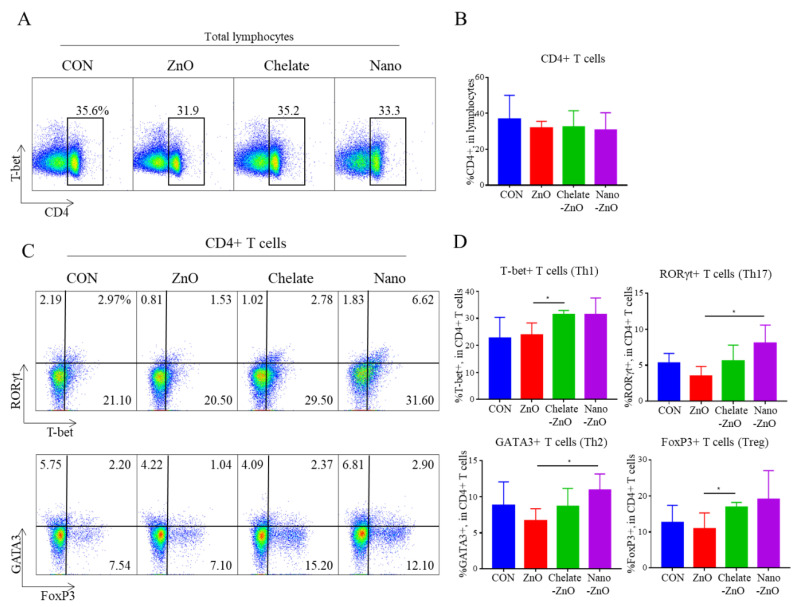
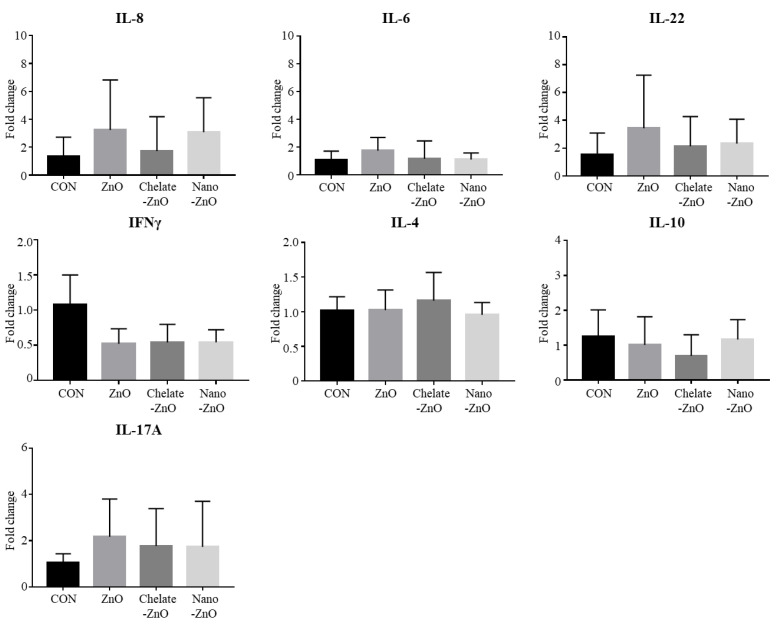
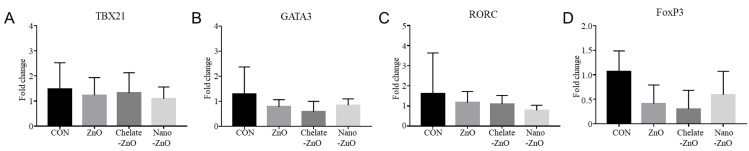
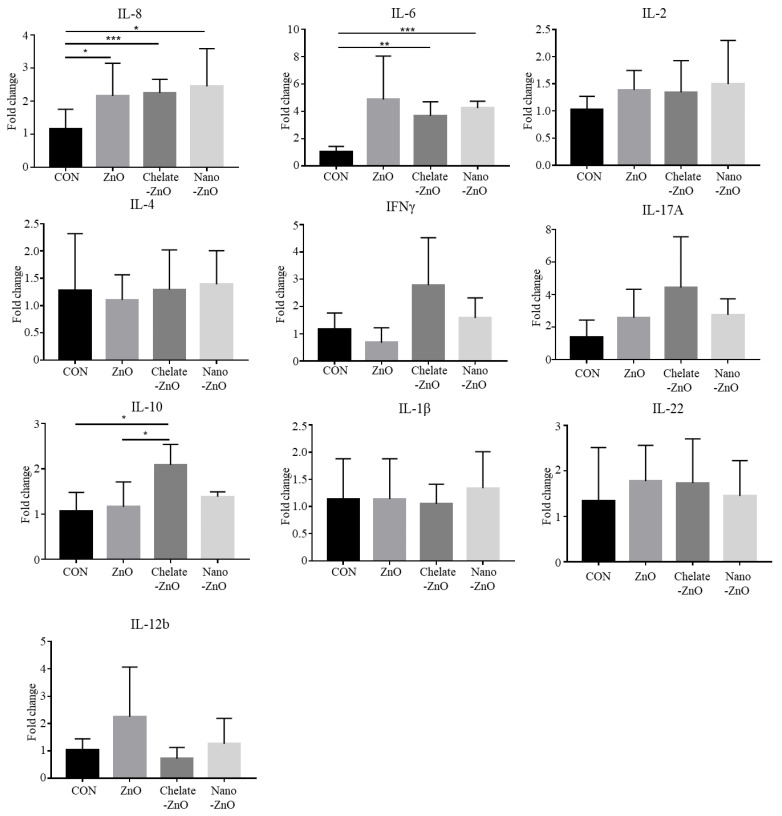
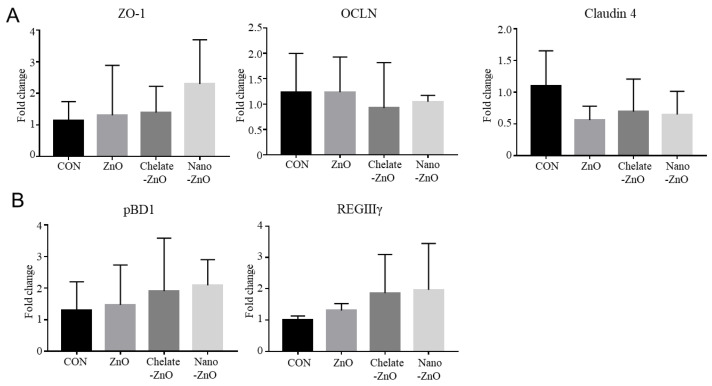
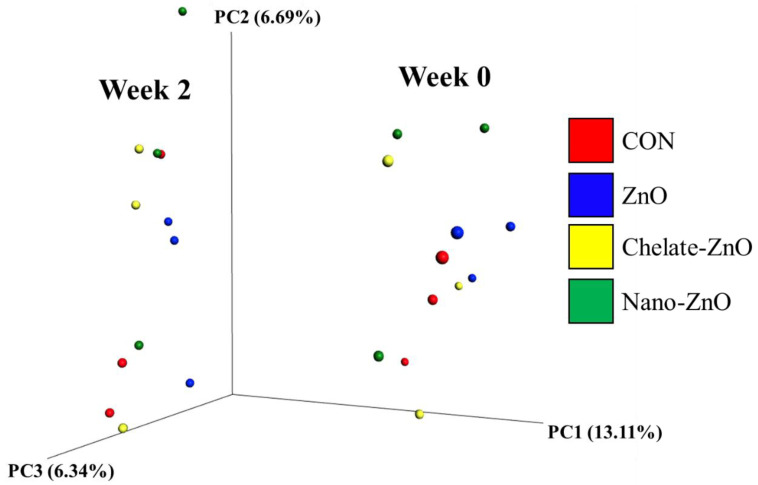
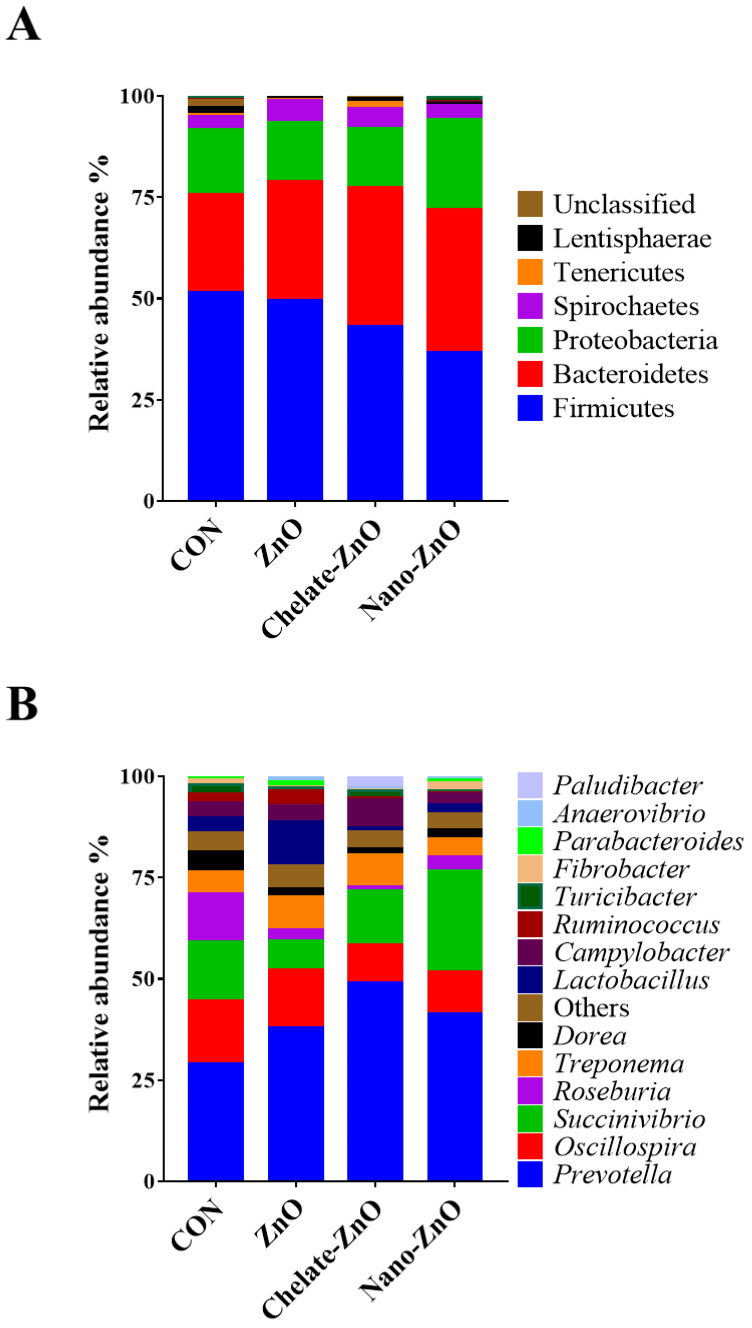
Twenty weaned piglets with initial body weight of 6.83 ± 0.33 kg (21 day of age, LYD) were randomly assigned to four treatments for a two-week feeding trial to determine the effects of different dietary zinc on nutrient digestibility, intestinal health, and microbiome of weaned piglets. The dietary treatments included a negative control (CON), standard ZnO (ZnO, 2500 ppm), zinc chelate with glycine (Chelate-ZnO, 200 ppm), and nanoparticle-sized ZnO (Nano-ZnO, 200 ppm). At 0 to 1 week, the diarrhea score was decreased in the CON group compared with the ZnO, Chelate-ZnO, and Nano-ZnO group. In overall period, the ZnO and Nano-ZnO groups exhibited improved diarrhea scores compared to the CON group. The apparent total tract digestibility of dry matter and gross energy was the lowest in the CON group after one week. Compared to the ZnO group, the chelate-ZnO group exhibited higher proportion of T-bet+ and FoxP3+ T cells and the nano-ZnO group had higher numbers of RORgt+ and GATA3+ T cells in the mesenteric lymph nodes. ZnO group increased IL-6 and IL-8 levels in the colon tissues and these positive effects were observed in both chelate ZnO and nano-ZnO groups with lower level. The 16S rRNA gene analysis showed that the relative abundance of was higher in the ZnO-treated groups than in the CON group and that of was the highest in the nano-ZnO group. The relative abundance of increased in the ZnO group. In conclusion, low nano-ZnO levels have similar effects on nutrient digestibility, fecal microflora, and intestinal immune profiles in weaning pigs; thus, nano-ZnO could be used as a ZnO alternative for promoting ZnO utilization and intestinal immunity.
20头初始体重为6.83±0.33千克(21日龄,LYD)的断奶仔猪被随机分为四组,进行为期两周的饲养试验,以确定不同日粮锌对断奶仔猪营养物质消化率、肠道健康和微生物群的影响。日粮处理包括阴性对照(CON)、标准氧化锌(ZnO,2500 ppm)、甘氨酸锌螯合物(Chelate-ZnO,200 ppm)和纳米氧化锌(Nano-ZnO,200 ppm)。在0至1周时,CON组的腹泻评分低于ZnO组、Chelate-ZnO组和Nano-ZnO组。在整个试验期内,ZnO组和Nano-ZnO组的腹泻评分相比CON组有所改善。一周后,CON组的干物质和总能表观全肠道消化率最低。与ZnO组相比,Chelate-ZnO组在肠系膜淋巴结中T-bet+和FoxP3+ T细胞的比例更高,Nano-ZnO组RORgt+和GATA3+ T细胞的数量更多。ZnO组结肠组织中IL-6和IL-8水平升高,Chelate ZnO组和Nano-ZnO组也有较低水平的这些积极影响。16S rRNA基因分析表明,ZnO处理组中 的相对丰度高于CON组,Nano-ZnO组中 的相对丰度最高。ZnO组中 的相对丰度增加。总之,低水平纳米氧化锌对断奶仔猪的营养物质消化率、粪便微生物群和肠道免疫谱有类似影响;因此,纳米氧化锌可作为氧化锌的替代品,以提高氧化锌的利用率和肠道免疫力。