Wang Chao, Zhang Ligen, Su Weipeng, Ying Zhixiong, He Jintian, Zhang Lili, Zhong Xiang, Wang Tian
College of Animal Science and Technology, Nanjing Agricultural University, Nanjing, People's Republic of China.
PLoS One. 2017 Jul 13;12(7):e0181136. doi: 10.1371/journal.pone.0181136. eCollection 2017.
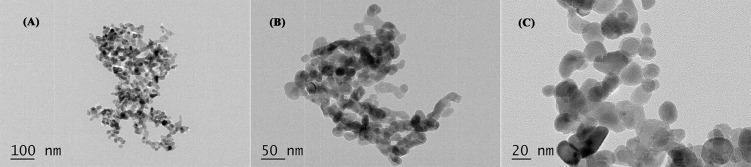
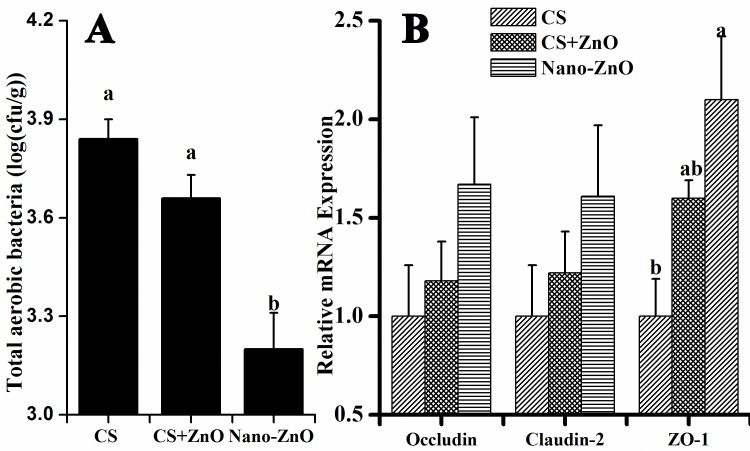
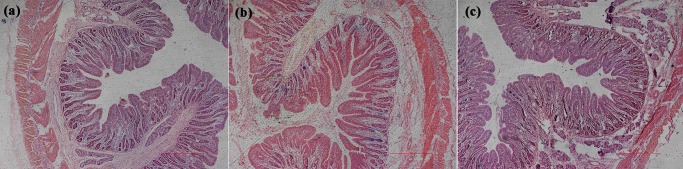
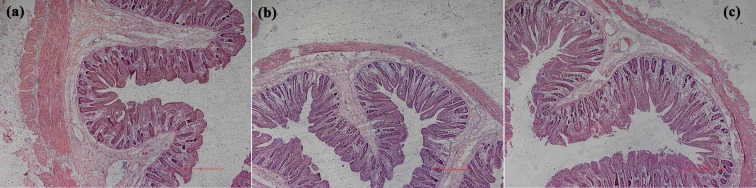
The objective of this study was to evaluate effects of zinc oxide nanoparticles (nano-ZnOs) as a substitute for colistin sulfate (CS) and/or zinc oxide (ZnO) on growth performance, serum enzymes, zinc deposition, intestinal morphology and epithelial barrier in weaned piglets. A total of 216 crossbred Duroc×(Landrace×Yorkshire) piglets weaned at 23 days were randomly assigned into 3 groups, which were fed with basal diets supplemented with 20 mg/kg CS (CS group), 20mg/kg CS+3000 mg/kg ZnO (CS+ZnO group), and 1200 mg/kg nano-ZnOs (nano-ZnO group) for 14 days. Results indicated that compared to CS group, supplementation of 1200 mg/kg nano-ZnOs (about 30 nm) significantly increased final body weight and average daily gain, and 3000 mg/kg ZnO plus colistin sulfate significantly increased average daily gain and decreased diarrhea rate in weaned piglets. There was no significant difference in growth performance and diarrhea rate between nano-ZnO and CS+ZnO groups. Supplementation of nano-ZnOs did not affect serum enzymes (glutamic oxalacetic transaminase, glutamic-pyruvic transaminase, and lactate dehydrogenase), but significantly increased plasma and tissue zinc concentrations (liver, tibia), improved intestinal morphology (increased duodenal and ileal villus length, crypt depth, and villus surface), enhanced mRNA expression of ZO-1 in ileal mucosa, and significantly decreased diamine oxidase activity in plasma, total aerobic bacterial population in MLN as compared to CS group. Effects of nano-ZnOs on serum enzymes, intestinal morphology, and mRNA expressions of tight junction were similar to those of high dietary ZnO plus colistin sulfate, while nano-ZnOs significantly reduced zinc concentrations of liver, tibia, and feces, and decreased total aerobic bacterial population in MLN as compared to CS+ZnO group. These results suggested that nano-ZnOs (1200 mg/kg) might be used as a substitute for colistin sulfate and high dietary ZnO in weaned piglets.
本研究的目的是评估纳米氧化锌(nano-ZnOs)替代硫酸黏菌素(CS)和/或氧化锌(ZnO)对断奶仔猪生长性能、血清酶、锌沉积、肠道形态和上皮屏障的影响。选取216头23日龄断奶的杜洛克×(长白×约克夏)杂交仔猪,随机分为3组,分别饲喂添加20 mg/kg CS的基础日粮(CS组)、20 mg/kg CS + 3000 mg/kg ZnO的基础日粮(CS + ZnO组)和1200 mg/kg纳米氧化锌的基础日粮(纳米氧化锌组),为期14天。结果表明,与CS组相比,添加1200 mg/kg纳米氧化锌(约30 nm)显著提高了断奶仔猪的末重和平均日增重,3000 mg/kg ZnO加硫酸黏菌素显著提高了平均日增重并降低了腹泻率。纳米氧化锌组和CS + ZnO组在生长性能和腹泻率方面无显著差异。添加纳米氧化锌不影响血清酶(谷草转氨酶、谷丙转氨酶和乳酸脱氢酶),但显著提高了血浆和组织锌浓度(肝脏、胫骨),改善了肠道形态(增加十二指肠和回肠绒毛长度、隐窝深度和绒毛表面积),增强了回肠黏膜中ZO-1的mRNA表达,与CS组相比,显著降低了血浆中二胺氧化酶活性和肠系膜淋巴结中的需氧菌总数。纳米氧化锌对血清酶、肠道形态和紧密连接mRNA表达方面的影响与高剂量日粮ZnO加硫酸黏菌素相似,而与CS + ZnO组相比,纳米氧化锌显著降低了肝脏、胫骨和粪便中的锌浓度,并降低了肠系膜淋巴结中的需氧菌总数。这些结果表明,1200 mg/kg纳米氧化锌可替代断奶仔猪日粮中的硫酸黏菌素和高剂量日粮ZnO。