• 文献检索
  • 文档翻译
  • 深度研究
  • 学术资讯
  • Suppr Zotero 插件Zotero 插件
  • 邀请有礼
  • 套餐&价格
  • 历史记录
应用&插件
Suppr Zotero 插件Zotero 插件浏览器插件Mac 客户端Windows 客户端微信小程序
定价
高级版会员购买积分包购买API积分包
服务
文献检索文档翻译深度研究API 文档MCP 服务
关于我们
关于 Suppr公司介绍联系我们用户协议隐私条款
关注我们

Suppr 超能文献

核心技术专利:CN118964589B侵权必究
粤ICP备2023148730 号-1Suppr @ 2026

文献检索

告别复杂PubMed语法,用中文像聊天一样搜索,搜遍4000万医学文献。AI智能推荐,让科研检索更轻松。

立即免费搜索

文件翻译

保留排版,准确专业,支持PDF/Word/PPT等文件格式,支持 12+语言互译。

免费翻译文档

深度研究

AI帮你快速写综述,25分钟生成高质量综述,智能提取关键信息,辅助科研写作。

立即免费体验

蜂蜜作为植物花蜜、蜂蜜和蜜蜂中拮抗微生物相互作用产生的抗菌化合物的生态储存库。

Honey as an Ecological Reservoir of Antibacterial Compounds Produced by Antagonistic Microbial Interactions in Plant Nectars, Honey and Honey Bee.

作者信息

Brudzynski Katrina

机构信息

Department of Drug Discovery, Bee-Biomedicals Inc., St. Catharines, ON L2T 3T4, Canada.

Formerly Department of Biological Sciences, Brock University, St. Catharines, ON L2T 3T4, Canada.

出版信息

Antibiotics (Basel). 2021 May 9;10(5):551. doi: 10.3390/antibiotics10050551.

DOI:10.3390/antibiotics10050551
PMID:34065141
原文链接:https://pmc.ncbi.nlm.nih.gov/articles/PMC8151657/
Abstract

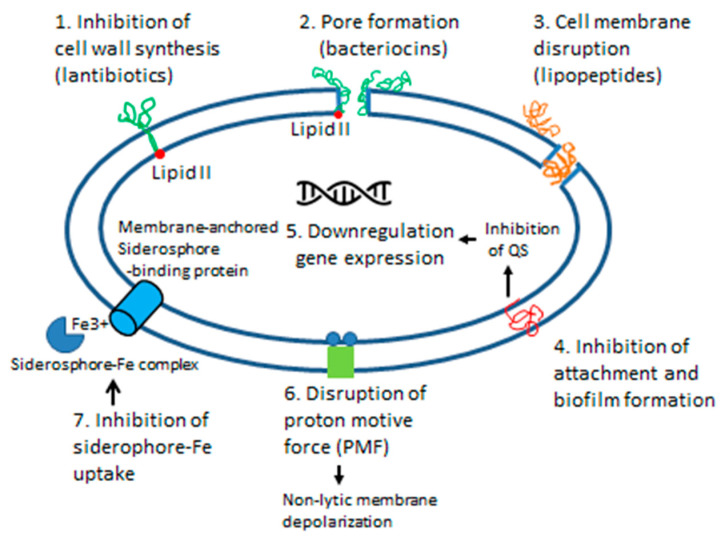
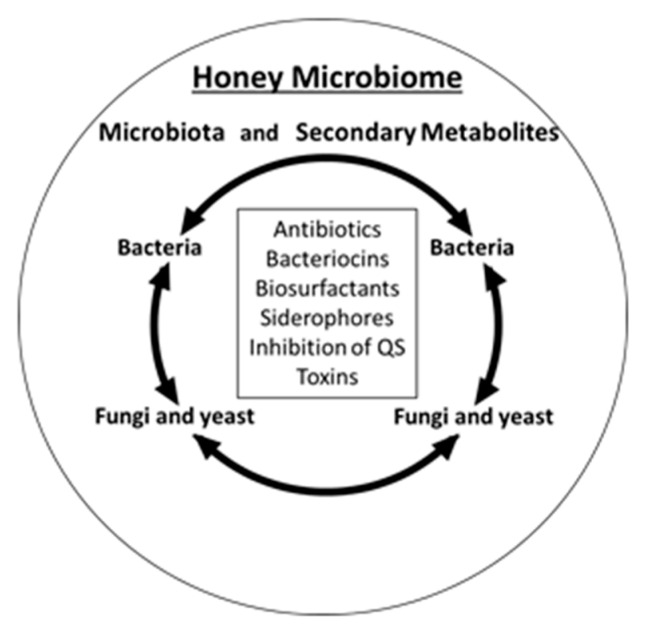
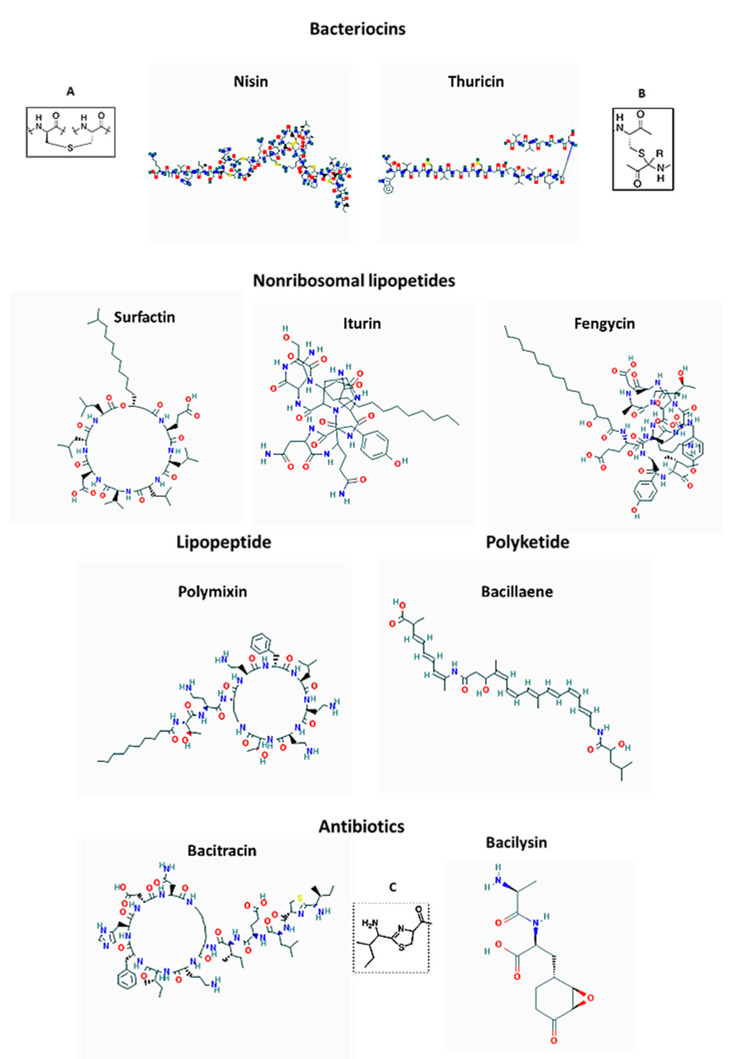
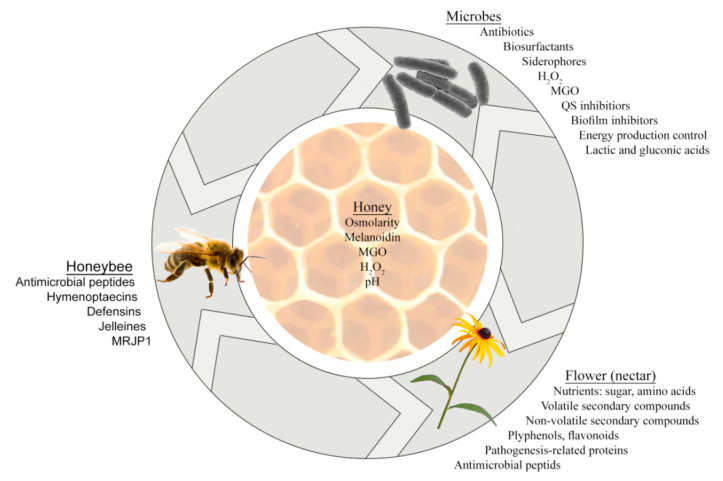
The fundamental feature of "active honeys" is the presence and concentration of antibacterial compounds. Currently identified compounds and factors have been described in several review papers without broader interpretation or links to the processes for their formation. In this review, we indicate that the dynamic, antagonistic/competitive microbe-microbe and microbe-host interactions are the main source of antibacterial compounds in honey. The microbial colonization of nectar, bees and honey is at the center of these interactions that in consequence produce a range of defence molecules in each of these niches. The products of the microbial interference and exploitive competitions include antimicrobial peptides, antibiotics, surfactants, inhibitors of biofilm formation and quorum sensing. Their accumulation in honey by horizontal transfer might explain honey broad-spectrum, pleiotropic, antibacterial activity. We conclude that honey is an ecological reservoir of antibacterial compounds produced by antagonistic microbial interactions in plant nectars, honey and honey bee. Thus, refocusing research on secondary metabolites resulting from these microbial interactions might lead to discovery of new antibacterial compounds in honey that are target-specific, i.e., acting on specific cellular components or inhibiting the essential cellular function.

摘要

“活性蜂蜜”的基本特征是抗菌化合物的存在及其浓度。目前已鉴定出的化合物和因素在几篇综述论文中已有描述,但缺乏更广泛的解释或与它们形成过程的联系。在本综述中,我们指出动态的、拮抗/竞争的微生物-微生物和微生物-宿主相互作用是蜂蜜中抗菌化合物的主要来源。花蜜、蜜蜂和蜂蜜中的微生物定殖处于这些相互作用的中心,这些相互作用进而在每个生态位中产生一系列防御分子。微生物干扰和剥削性竞争的产物包括抗菌肽、抗生素、表面活性剂、生物膜形成抑制剂和群体感应抑制剂。它们通过水平转移在蜂蜜中的积累可能解释了蜂蜜的广谱、多效性抗菌活性。我们得出结论,蜂蜜是植物花蜜、蜂蜜和蜜蜂中由拮抗微生物相互作用产生的抗菌化合物的生态储存库。因此,将研究重点重新聚焦于这些微生物相互作用产生的次生代谢产物,可能会导致在蜂蜜中发现新的具有靶点特异性的抗菌化合物,即作用于特定细胞成分或抑制基本细胞功能。
https://cdn.ncbi.nlm.nih.gov/pmc/blobs/0c34/8151657/3e44369a5668/antibiotics-10-00551-g004.jpg
https://cdn.ncbi.nlm.nih.gov/pmc/blobs/0c34/8151657/68ea9e4137e9/antibiotics-10-00551-g001.jpg
https://cdn.ncbi.nlm.nih.gov/pmc/blobs/0c34/8151657/222ee8db383b/antibiotics-10-00551-g002.jpg
https://cdn.ncbi.nlm.nih.gov/pmc/blobs/0c34/8151657/d9859ff9c88b/antibiotics-10-00551-g003.jpg
https://cdn.ncbi.nlm.nih.gov/pmc/blobs/0c34/8151657/3e44369a5668/antibiotics-10-00551-g004.jpg
https://cdn.ncbi.nlm.nih.gov/pmc/blobs/0c34/8151657/68ea9e4137e9/antibiotics-10-00551-g001.jpg
https://cdn.ncbi.nlm.nih.gov/pmc/blobs/0c34/8151657/222ee8db383b/antibiotics-10-00551-g002.jpg
https://cdn.ncbi.nlm.nih.gov/pmc/blobs/0c34/8151657/d9859ff9c88b/antibiotics-10-00551-g003.jpg
https://cdn.ncbi.nlm.nih.gov/pmc/blobs/0c34/8151657/3e44369a5668/antibiotics-10-00551-g004.jpg

相似文献

1
Honey as an Ecological Reservoir of Antibacterial Compounds Produced by Antagonistic Microbial Interactions in Plant Nectars, Honey and Honey Bee.蜂蜜作为植物花蜜、蜂蜜和蜜蜂中拮抗微生物相互作用产生的抗菌化合物的生态储存库。
Antibiotics (Basel). 2021 May 9;10(5):551. doi: 10.3390/antibiotics10050551.
2
Anti-bacterial, anti-biofilm and anti-quorum sensing activities of honey: A review.蜂蜜的抗菌、抗生物膜和抗群体感应活性:综述。
J Ethnopharmacol. 2023 Dec 5;317:116830. doi: 10.1016/j.jep.2023.116830. Epub 2023 Jul 1.
3
The Antibacterial Potential of Honeydew Honey Produced by Stingless Bee () against Antibiotic Resistant Bacteria.无刺蜂所产甘露蜜对耐抗生素细菌的抗菌潜力
Antibiotics (Basel). 2020 Dec 5;9(12):871. doi: 10.3390/antibiotics9120871.
4
Structural diversity and functional variability of gut microbial communities associated with honey bees.与蜜蜂相关的肠道微生物群落的结构多样性和功能变异性。
Microb Pathog. 2020 Jan;138:103793. doi: 10.1016/j.micpath.2019.103793. Epub 2019 Oct 15.
5
Physical characteristics and antimicrobial properties of Apis mellifera, Frieseomelitta nigra and Melipona favosa bee honeys from apiaries in Trinidad and Tobago.特立尼达和多巴哥养蜂场的蜜蜂蜂蜜的物理特性和抗菌性能,包括 Apis mellifera、Frieseomelitta nigra 和 Melipona favosa。
BMC Complement Med Ther. 2020 Mar 17;20(1):85. doi: 10.1186/s12906-020-2829-5.
6
Antibacterial compounds of Canadian honeys target bacterial cell wall inducing phenotype changes, growth inhibition and cell lysis that resemble action of β-lactam antibiotics.加拿大蜂蜜中的抗菌化合物靶向细菌细胞壁,诱导表型变化、生长抑制和细胞裂解,类似于β-内酰胺类抗生素的作用。
PLoS One. 2014 Sep 5;9(9):e106967. doi: 10.1371/journal.pone.0106967. eCollection 2014.
7
Effects of the Carbohydrate Sources Nectar, Sucrose and Invert Sugar on Antibacterial Activity of Honey and Bee-Processed Syrups.碳水化合物来源花蜜、蔗糖和转化糖对蜂蜜及蜜蜂加工糖浆抗菌活性的影响
Antibiotics (Basel). 2021 Aug 15;10(8):985. doi: 10.3390/antibiotics10080985.
8
Antibacterial potential of Swiss honeys and characterisation of their bee-derived bioactive compounds.瑞士蜂蜜的抗菌潜力及其蜜蜂源生物活性化合物的特性。
J Sci Food Agric. 2020 Jan 15;100(1):335-342. doi: 10.1002/jsfa.10043. Epub 2019 Nov 4.
9
Antibacterial components of honey.蜂蜜的抗菌成分。
IUBMB Life. 2012 Jan;64(1):48-55. doi: 10.1002/iub.578. Epub 2011 Nov 17.
10
Antibacterial and Biofilm Degradation Effects of Hungarian Honeys Linked With Botanical Origin, Antioxidant Capacity and Mineral Content.匈牙利蜂蜜的抗菌和生物膜降解作用与植物来源、抗氧化能力及矿物质含量的关系
Front Nutr. 2022 Jul 13;9:953470. doi: 10.3389/fnut.2022.953470. eCollection 2022.

引用本文的文献

1
Antimicrobial-Resistant Environmental Bacteria Isolated Using a Network of Honey Bee Colonies ( L. 1758).利用蜂群网络分离出的耐抗菌环境细菌(L. 1758)。
Transbound Emerg Dis. 2023 Nov 27;2023:5540574. doi: 10.1155/2023/5540574. eCollection 2023.
2
Selected honey as a multifaceted antimicrobial agent: review of compounds, mechanisms, and research challenges.选定蜂蜜作为一种多方面的抗菌剂:化合物、作用机制及研究挑战综述
Future Microbiol. 2025 May-Jun;20(7-9):589-610. doi: 10.1080/17460913.2025.2498233. Epub 2025 Apr 28.
3
Characterization of Honey Microbiome Using MALDI-TOF Mass Spectrometry and Physicochemical Study.

本文引用的文献

1
Colloidal structure of honey and its influence on antibacterial activity.蜂蜜的胶体结构及其对抗菌活性的影响。
Compr Rev Food Sci Food Saf. 2021 Mar;20(2):2063-2080. doi: 10.1111/1541-4337.12720. Epub 2021 Feb 10.
2
Bacteriocins and their Food Applications.细菌素及其在食品中的应用。
Compr Rev Food Sci Food Saf. 2003 Jul;2(3):82-100. doi: 10.1111/j.1541-4337.2003.tb00016.x.
3
The Use of Probiotics to Fight Biofilms in Medical Devices: A Systematic Review and Meta-Analysis.益生菌用于对抗医疗器械中的生物膜:一项系统评价与荟萃分析
使用基质辅助激光解吸电离飞行时间质谱法对蜂蜜微生物组进行表征及理化研究。
Molecules. 2025 Mar 12;30(6):1266. doi: 10.3390/molecules30061266.
4
Physicochemical parameters, microbiological quality, and antibacterial activity of honey from the Bucovina region of Romania.罗马尼亚布科维纳地区蜂蜜的物理化学参数、微生物质量及抗菌活性
Sci Rep. 2025 Feb 5;15(1):4358. doi: 10.1038/s41598-025-88613-0.
5
Effectiveness of a Novel Liposomal Methylglyoxal-Tobramycin Formulation in Reducing Biofilm Formation and Bacterial Adhesion.一种新型脂质体甲基乙二醛-妥布霉素制剂在减少生物膜形成和细菌黏附中的有效性。
Antibiotics (Basel). 2024 Dec 24;14(1):3. doi: 10.3390/antibiotics14010003.
6
Bee products: An overview of sources, biological activities and advanced approaches used in apitherapy application.蜂产品:蜂疗应用中的来源、生物活性及先进方法概述。
Biotechnol Rep (Amst). 2024 Oct 18;44:e00862. doi: 10.1016/j.btre.2024.e00862. eCollection 2024 Dec.
7
Antimicrobial Activity of Honey and Propolis from Alba County, Romania.罗马尼亚阿尔巴县蜂蜜和蜂胶的抗菌活性。
Antibiotics (Basel). 2024 Oct 10;13(10):952. doi: 10.3390/antibiotics13100952.
8
Honey microbiota, methods for determining the microbiological composition and the antimicrobial effect of honey - A review.蜂蜜微生物群、测定蜂蜜微生物组成及抗菌效果的方法——综述
Food Chem X. 2024 Jun 4;23:101524. doi: 10.1016/j.fochx.2024.101524. eCollection 2024 Oct 30.
9
Manuka honey as a non-antibiotic alternative against spp. and their small colony variant (SCVs) phenotypes.麦卢卡蜂蜜作为一种针对[具体菌种]及其小菌落变异体(SCVs)表型的非抗生素替代品。 (注:原文中“ spp.”表述不完整,可能是指代某些特定菌种,但这里按原样翻译后仍缺具体信息)
Front Cell Infect Microbiol. 2024 May 28;14:1380289. doi: 10.3389/fcimb.2024.1380289. eCollection 2024.
10
Effects of Artificial Sugar Supplementation on the Composition and Nutritional Potency of Honey from .人工添加糖对[来源]蜂蜜成分和营养效能的影响
Insects. 2024 May 10;15(5):344. doi: 10.3390/insects15050344.
Microorganisms. 2020 Dec 23;9(1):27. doi: 10.3390/microorganisms9010027.
4
Lactic Acid Bacteria as Antifungal and Anti-Mycotoxigenic Agents: A Comprehensive Review.乳酸菌作为抗真菌和抗产毒真菌剂:综述
Compr Rev Food Sci Food Saf. 2019 Sep;18(5):1403-1436. doi: 10.1111/1541-4337.12481. Epub 2019 Aug 13.
5
Honey: Another Alternative in the Fight against Antibiotic-Resistant Bacteria?蜂蜜:对抗抗生素耐药细菌的另一种选择?
Antibiotics (Basel). 2020 Nov 4;9(11):774. doi: 10.3390/antibiotics9110774.
6
Kunkecin A, a New Nisin Variant Bacteriocin Produced by the Fructophilic Lactic Acid Bacterium, FF30-6 Isolated From Honey Bees.昆克菌素A,一种由从蜜蜂中分离出的嗜果糖乳酸菌FF30-6产生的新型乳酸链球菌素变体细菌素。
Front Microbiol. 2020 Sep 16;11:571903. doi: 10.3389/fmicb.2020.571903. eCollection 2020.
7
The Discovery of New Antilisterial Proteins From Kp10 via Genome Mining and Mass Spectrometry.通过基因组挖掘和质谱法从Kp10中发现新型抗李斯特菌蛋白
Front Microbiol. 2020 Jul 2;11:960. doi: 10.3389/fmicb.2020.00960. eCollection 2020.
8
A current perspective on hydrogen peroxide production in honey. A review.关于蜂蜜中过氧化氢产生的最新观点。综述。
Food Chem. 2020 Dec 1;332:127229. doi: 10.1016/j.foodchem.2020.127229. Epub 2020 Jun 5.
9
Diversity of xerotolerant and xerophilic fungi in honey.蜂蜜中耐旱和嗜干真菌的多样性。
IMA Fungus. 2019 Nov 27;10:20. doi: 10.1186/s43008-019-0021-7. eCollection 2019.
10
Microbiome definition re-visited: old concepts and new challenges.微生物组定义再探讨:旧概念和新挑战。
Microbiome. 2020 Jun 30;8(1):103. doi: 10.1186/s40168-020-00875-0.