Nassar Eyyad, Hassan Nourhan, El-Ghonaimy Eslam A, Hassan Hebatallah, Abdullah Mahmoud Salah, Rottke Theresa V, Kiesel Ludwig, Greve Burkhard, Ibrahim Sherif Abdelaziz, Götte Martin
Department of Gynecology and Obstetrics, Münster University Hospital, Albert-Schweitzer-Campus 1, D11, 48149 Münster, Germany.
Biotechnology/Biomolecular Chemistry Program, Faculty of Science, Cairo University, 12613 Giza, Egypt.
Cancers (Basel). 2021 May 12;13(10):2318. doi: 10.3390/cancers13102318.
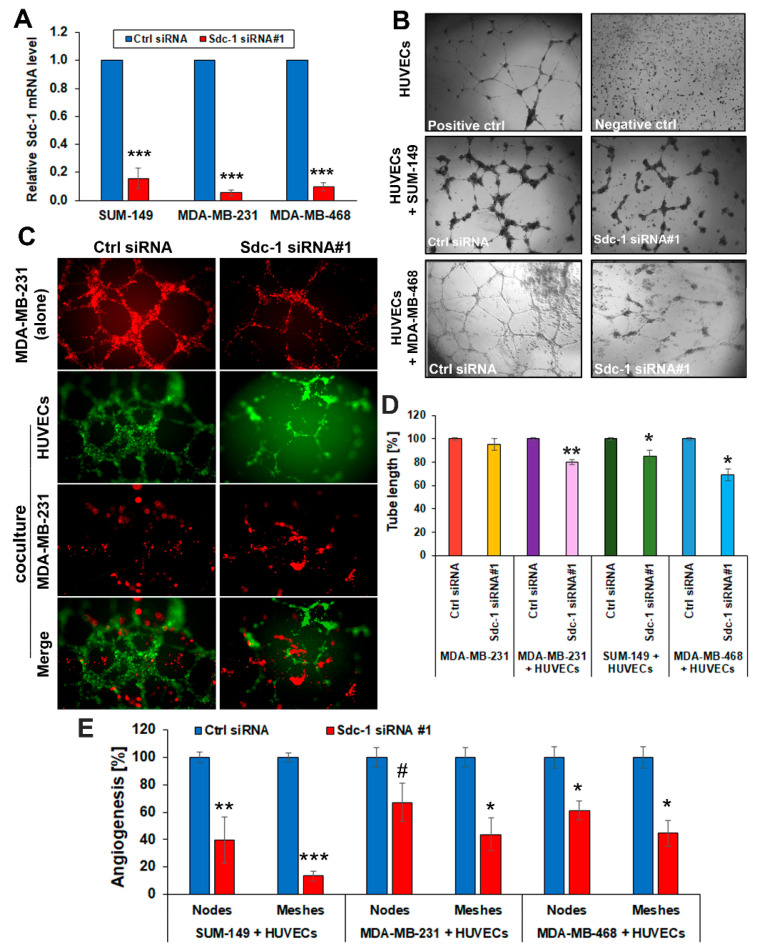
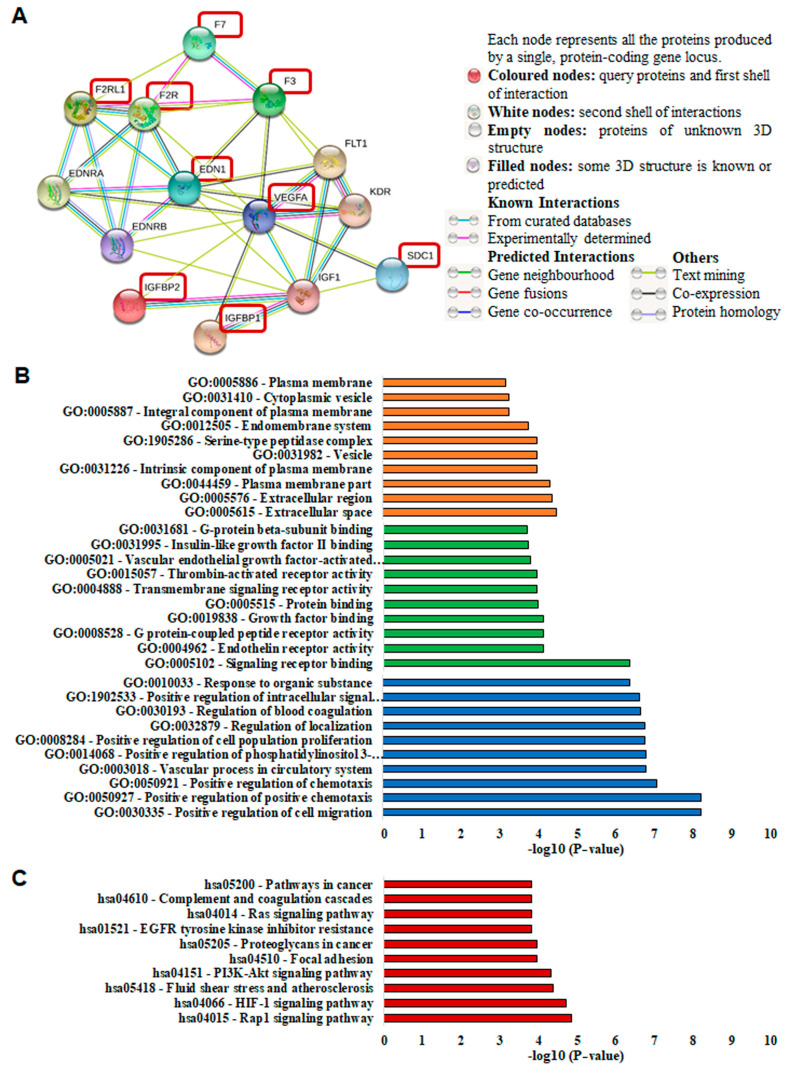
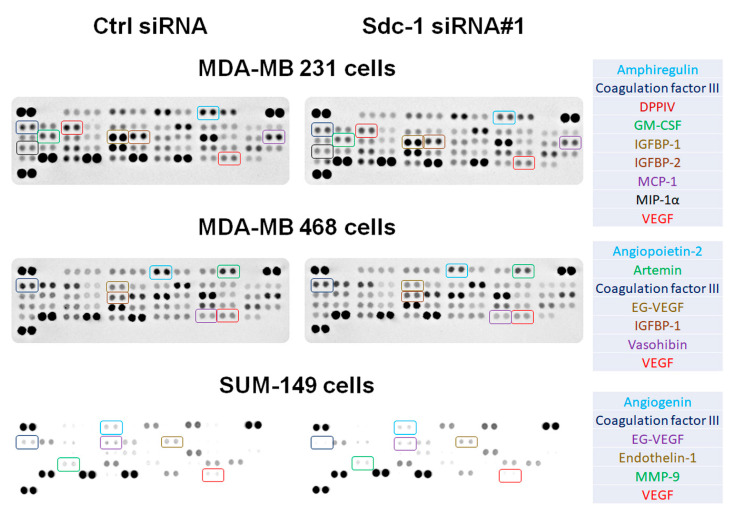
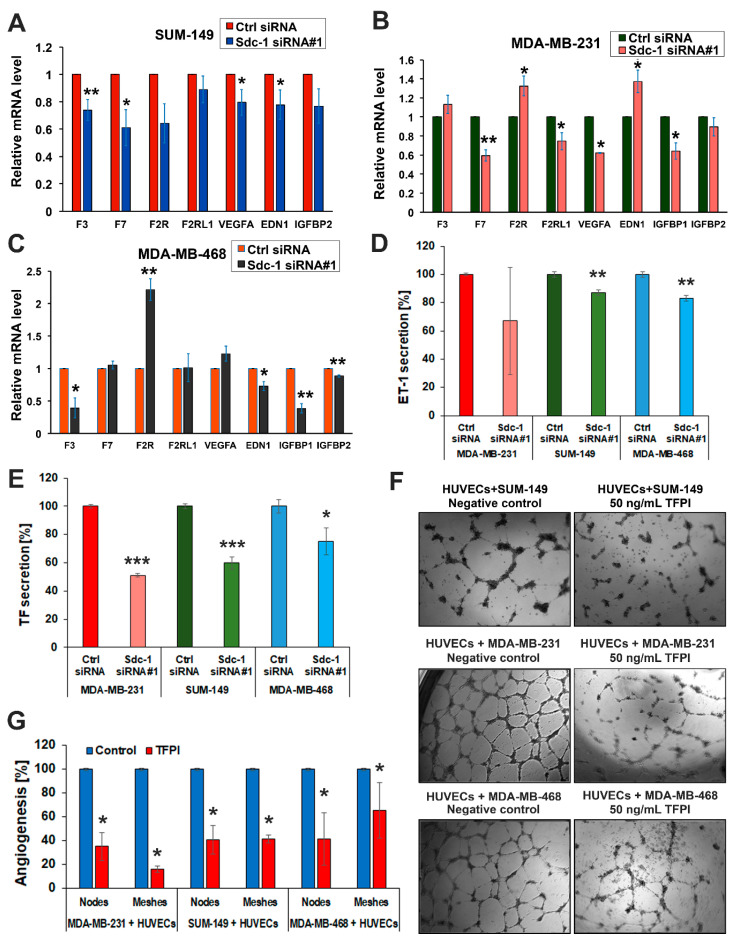
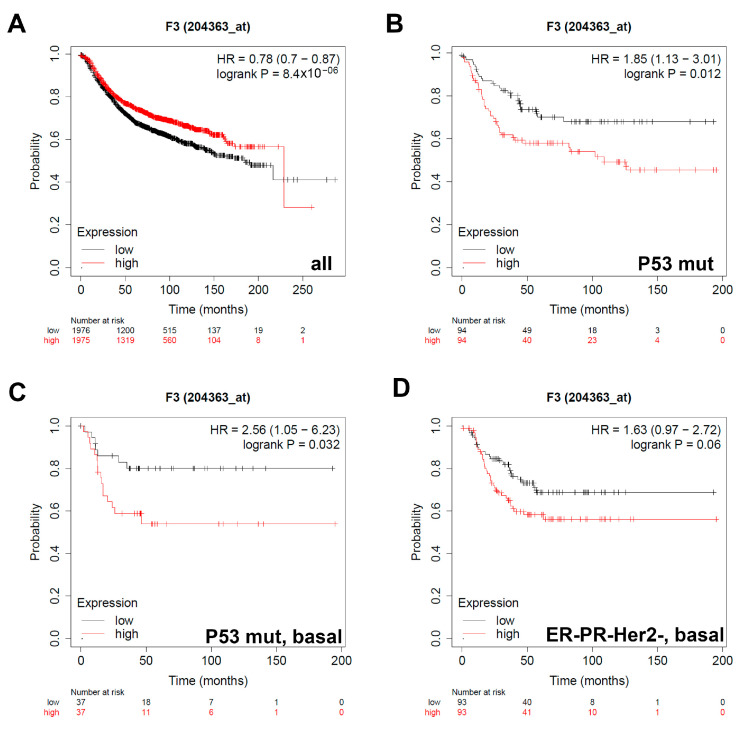
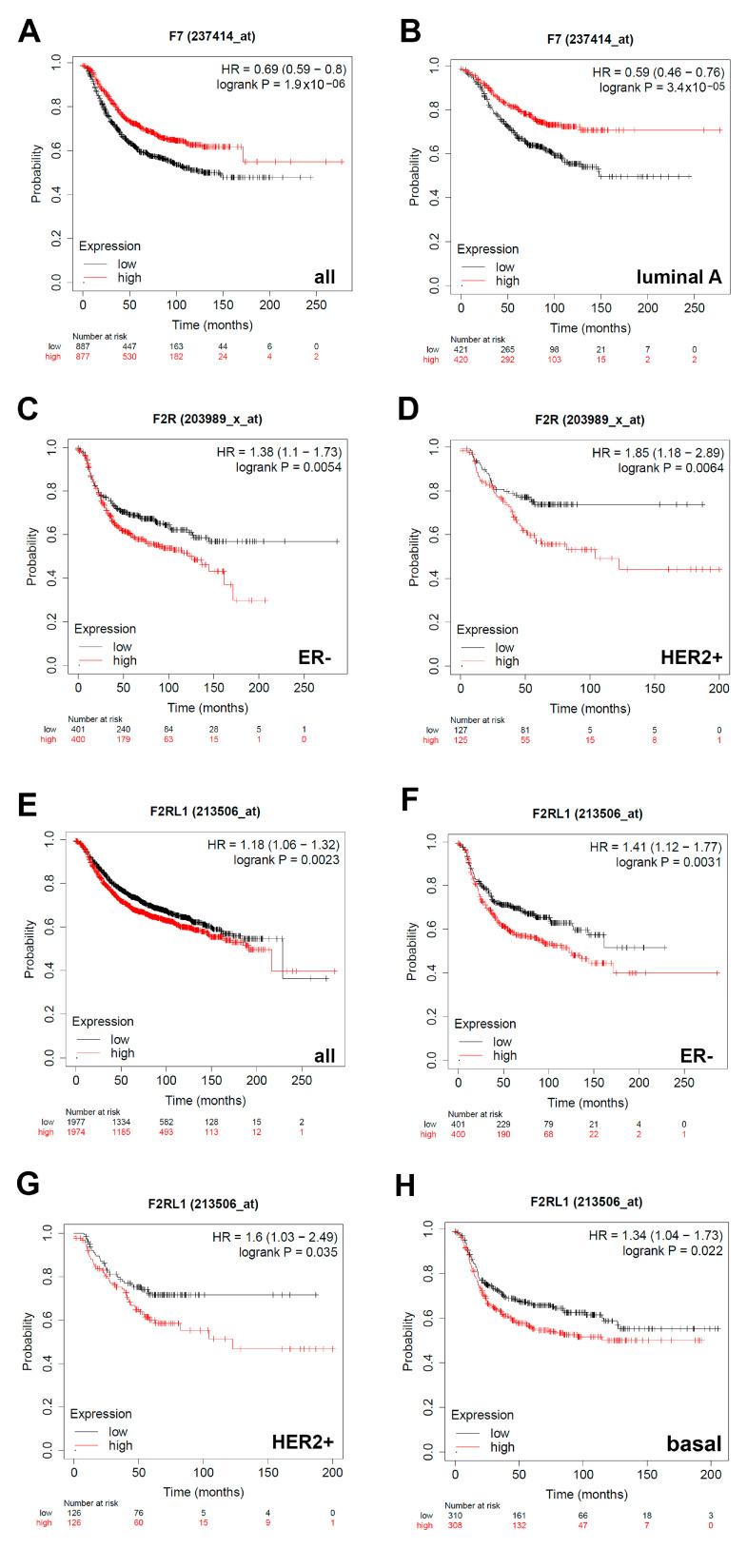
Triple-negative breast cancer (TNBC) is characterized by increased angiogenesis, metastasis, and poor survival. Dysregulation of the cell surface heparan sulfate proteoglycan and signaling co-receptor Syndecan-1 is linked to poor prognosis. To study its role in angiogenesis, we silenced Syndecan-1 in TNBC cell lines using a 3D human umbilical vein endothelial cell (HUVEC) co-culture system. Syndecan-1 siRNA depletion in SUM-149, MDA-MB-468, and MDA-MB-231 cells decreased HUVEC tubule network formation. Angiogenesis array revealed reduced VEGF-A and tissue factor (TF) in the Syndecan-1-silenced secretome. qPCR independently confirmed altered expression of , , , , , , , and in SUM-149, MDA-MB-231, and MDA-MB-468 cells. ELISA revealed reduced secreted endothelin-1 (SUM-149, MDA-MB-468) and TF (all cell lines) upon Syndecan-1 depletion, while TF pathway inhibitor treatment impaired angiogenesis. Survival analysis of 3951 patients demonstrated that high expression of and are associated with better relapse-free survival, whereas poor survival was observed in TNBC and p53 mutant basal breast cancer () and in ER-negative and HER2-positive breast cancer (). STRING protein network analysis revealed associations of Syndecan-1 with VEGF-A and IGFBP1, further associated with the TF and ET-1 pathways. Our study suggests that TNBC Syndecan-1 regulates angiogenesis via the TF and additional angiogenic pathways and marks its constituents as novel prognostic markers and therapeutic targets.
三阴性乳腺癌(TNBC)的特征是血管生成增加、转移以及生存率低。细胞表面硫酸乙酰肝素蛋白聚糖和信号共受体Syndecan-1的失调与预后不良有关。为了研究其在血管生成中的作用,我们使用三维人脐静脉内皮细胞(HUVEC)共培养系统在TNBC细胞系中沉默了Syndecan-1。在SUM-149、MDA-MB-468和MDA-MB-231细胞中敲低Syndecan-1 siRNA可减少HUVEC小管网络的形成。血管生成阵列显示,在Syndecan-1沉默的分泌蛋白组中,VEGF-A和组织因子(TF)减少。qPCR独立证实了SUM-149、MDA-MB-231和MDA-MB-468细胞中 、 、 、 、 、 、 和 的表达改变。ELISA显示,敲低Syndecan-1后,分泌的内皮素-1(SUM-149、MDA-MB-468)和TF(所有细胞系)减少,而TF途径抑制剂处理会损害血管生成。对3951例患者的生存分析表明, 和 的高表达与更好的无复发生存率相关,而在TNBC和p53突变的基底样乳腺癌( )以及雌激素受体阴性和人表皮生长因子受体2阳性乳腺癌( )中观察到生存率较低。STRING蛋白质网络分析揭示了Syndecan-1与VEGF-A和IGFBP1的关联,它们进一步与TF和ET-1途径相关。我们的研究表明,TNBC Syndecan-1通过TF和其他血管生成途径调节血管生成,并将其成分标记为新的预后标志物和治疗靶点。