Lee Song Hee, Lee Minwoo, Ko Dong Gyun, Choi Bo Young, Suh Sang Won
Department of Physiology, College of Medicine, Hallym University, Chuncheon 24252, Korea.
Department of Neurology, Hallym Neurological Institute, Hallym University Sacred Heart Hospital, Anyang 14068, Korea.
Antioxidants (Basel). 2021 May 7;10(5):739. doi: 10.3390/antiox10050739.
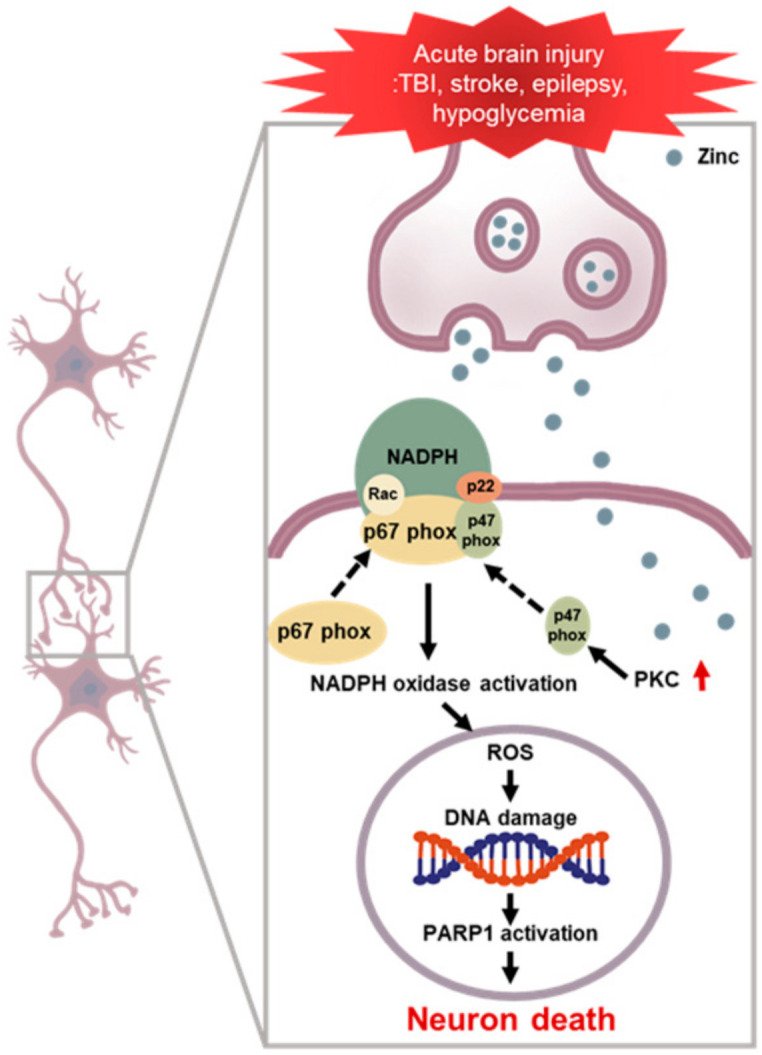
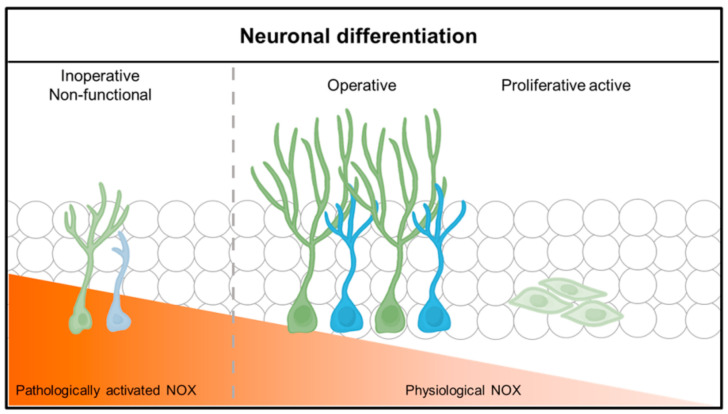
Oxidative stress is a well-known common pathological process involved in mediating acute neurological injuries, such as stroke, traumatic brain injury, epilepsy, and hypoglycemia-related neuronal injury. However, effective therapeutic measures aimed at scavenging free reactive oxygen species have shown little success in clinical trials. Recent studies have revealed that NADPH oxidase, a membrane-bound enzyme complex that catalyzes the production of a superoxide free radical, is one of the major sources of cellular reactive oxygen species in acute neurological disorders. Furthermore, several studies, including our previous ones, have shown that the inhibition of NADPH oxidase can reduce subsequent neuronal injury in neurological disease. Moreover, maintaining appropriate levels of NADPH oxidase has also been shown to be associated with proper neurogenesis after neuronal injury. This review aims to present a comprehensive overview of the role of NADPH oxidase in neuronal death and neurogenesis in multiple acute neurological disorders and to explore potential pharmacological strategies targeting the NADPH-related oxidative stress pathways.
氧化应激是一种众所周知的常见病理过程,参与介导急性神经损伤,如中风、创伤性脑损伤、癫痫和低血糖相关的神经元损伤。然而,旨在清除活性氧自由基的有效治疗措施在临床试验中收效甚微。最近的研究表明,NADPH氧化酶是一种膜结合酶复合物,可催化超氧自由基的产生,是急性神经疾病中细胞活性氧的主要来源之一。此外,包括我们之前的研究在内的多项研究表明,抑制NADPH氧化酶可减少神经疾病中随后的神经元损伤。此外,维持适当水平的NADPH氧化酶也与神经元损伤后的正常神经发生有关。本综述旨在全面概述NADPH氧化酶在多种急性神经疾病中的神经元死亡和神经发生中的作用,并探索针对NADPH相关氧化应激途径的潜在药理学策略。