Department of Mechanical and Electro-Mechanical Engineering, National Sun Yat-sen University, Kaohsiung 804, Taiwan.
Sensors (Basel). 2021 May 22;21(11):3608. doi: 10.3390/s21113608.
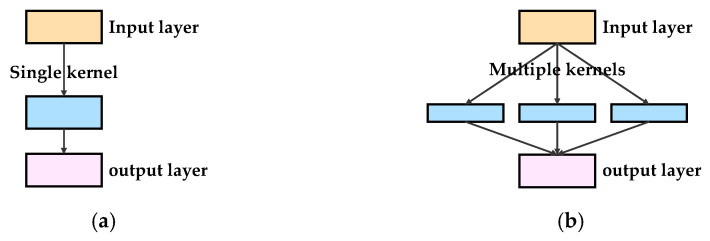
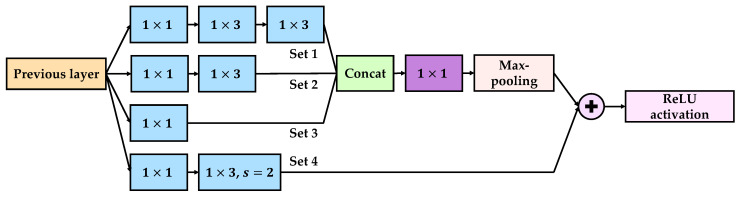
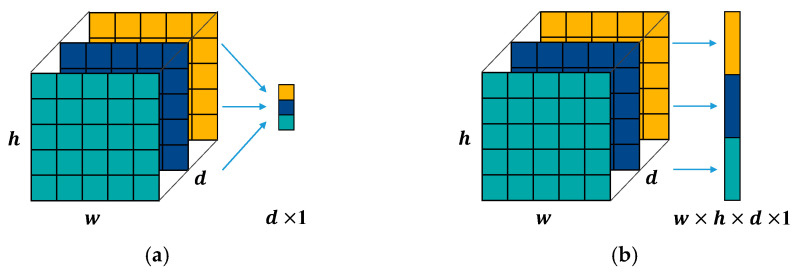
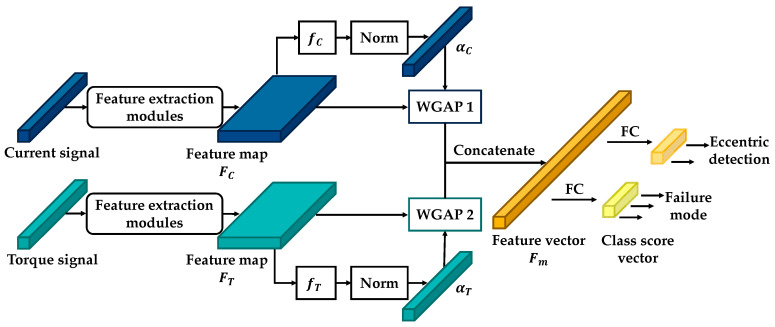
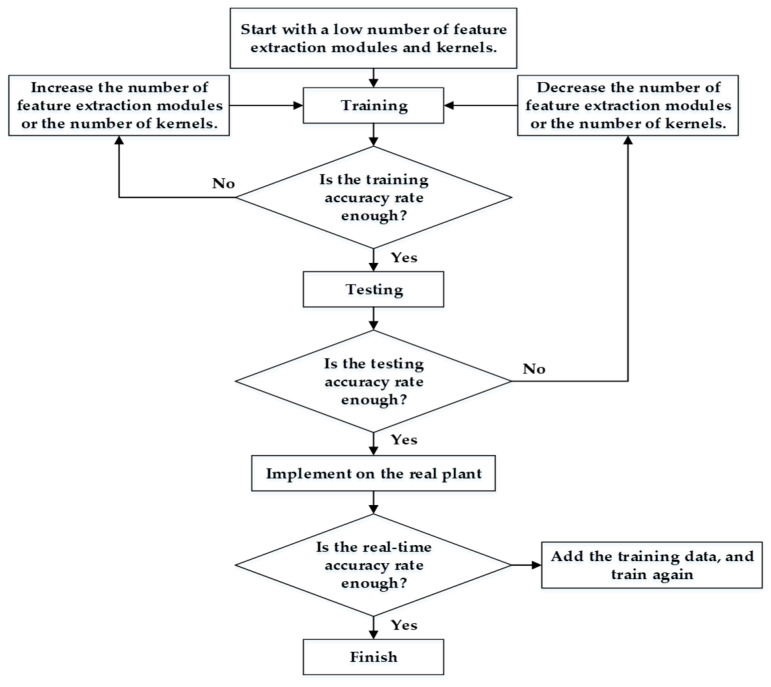
The early diagnosis of a motor is important. Many researchers have used deep learning to diagnose motor applications. This paper proposes a one-dimensional convolutional neural network for the diagnosis of permanent magnet synchronous motors. The one-dimensional convolutional neural network model is weakly supervised and consists of multiple convolutional feature-extraction modules. Through the analysis of the torque and current signals of the motors, the motors can be diagnosed under a wide range of speeds, variable loads, and eccentricity effects. The advantage of the proposed method is that the feature-extraction modules can extract multiscale features from complex conditions. The number of training parameters was reduced so as to solve the overfitting problem. Furthermore, the class feature map was proposed to automatically determine the frequency component that contributes to the classification using the weak learning method. The experimental results reveal that the proposed model can effectively diagnose three different motor states-healthy state, demagnetization fault state, and bearing fault state. In addition, the model can detect eccentric effects. By combining the current and torque features, the classification accuracy of the proposed model is up to 98.85%, which is higher than that of classical machine-learning methods such as the k-nearest neighbor and support vector machine.
电机的早期诊断很重要。许多研究人员已经使用深度学习来诊断电机应用。本文提出了一种用于永磁同步电机诊断的一维卷积神经网络。一维卷积神经网络模型是弱监督的,由多个卷积特征提取模块组成。通过分析电机的转矩和电流信号,可以在宽速度、变负载和偏心效应下对电机进行诊断。该方法的优点是特征提取模块可以从复杂条件中提取多尺度特征。减少了训练参数的数量,从而解决了过拟合问题。此外,还提出了类特征图,使用弱学习方法自动确定有助于分类的频率分量。实验结果表明,所提出的模型可以有效地诊断三种不同的电机状态——健康状态、退磁故障状态和轴承故障状态。此外,该模型还可以检测偏心效应。通过结合电流和转矩特征,所提出模型的分类准确率高达 98.85%,高于 k-近邻和支持向量机等经典机器学习方法。