Maliuk Andrei S, Prosvirin Alexander E, Ahmad Zahoor, Kim Cheol Hong, Kim Jong-Myon
Department of Electrical, Electronics, and Computer Engineering, University of Ulsan, Ulsan 44610, Korea.
School of Computer Science and Engineering, Soongsil University, Seoul 06978, Korea.
Sensors (Basel). 2021 Oct 1;21(19):6579. doi: 10.3390/s21196579.
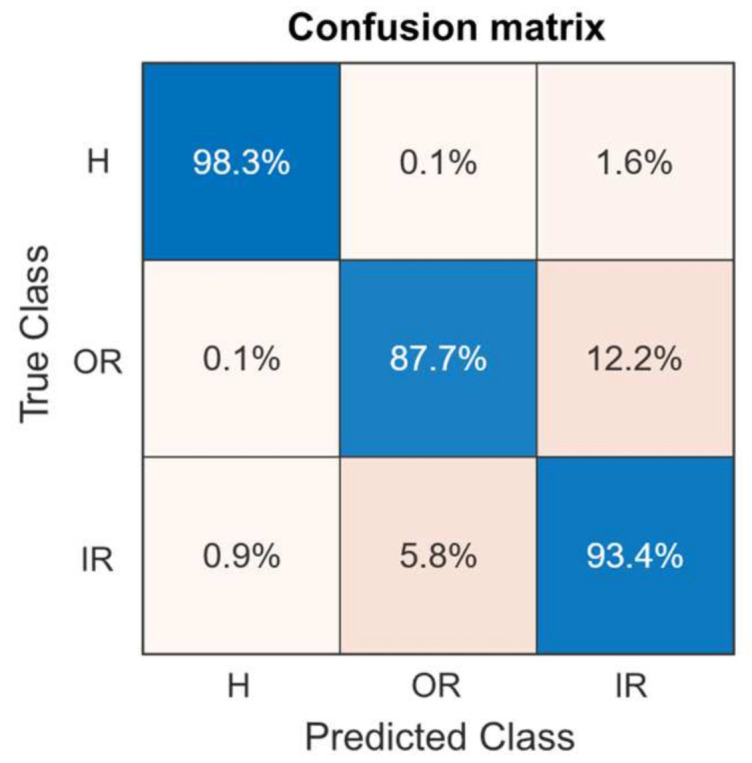
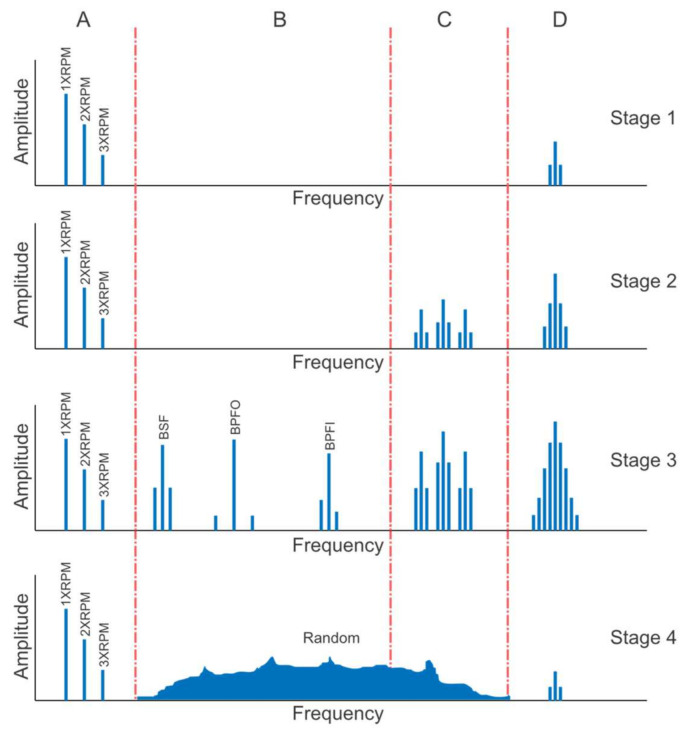
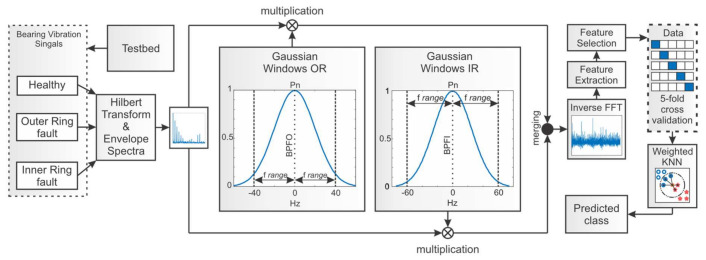
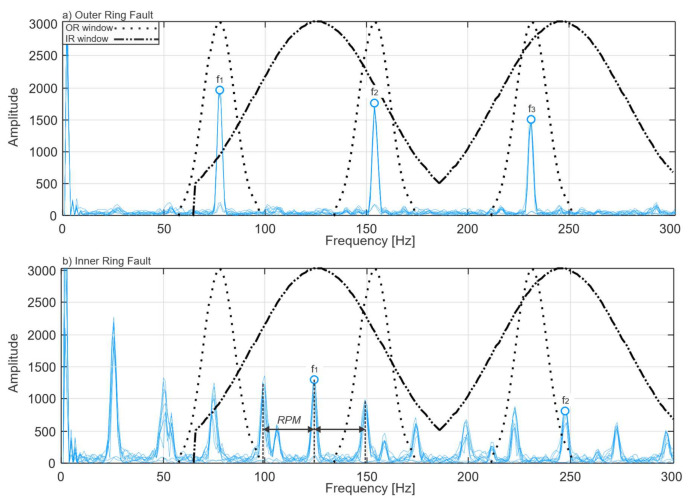
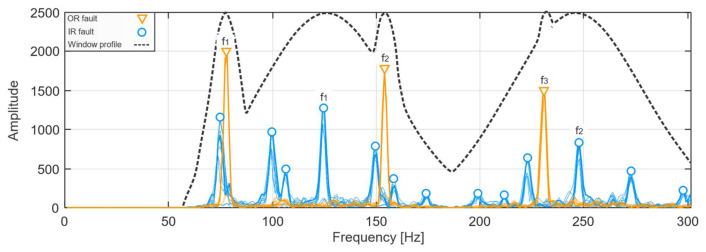
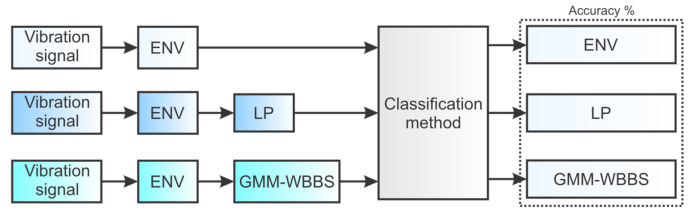
This paper proposes a Gaussian mixture model-based (GMM) bearing fault band selection (GMM-WBBS) method for signal processing. The proposed method benefits reliable feature extraction using fault frequency oriented Gaussian mixture model (GMM) window series. Selecting exclusively bearing fault frequency harmonics, it eliminates the interference of bearing normal vibrations in the lower frequencies, bearing natural frequencies, and the higher frequency contents that prove to be useful only for anomaly detection but do not provide any insight into the bearing fault location. The features are extracted from time- and frequency- domain signals that exclusively contain the bearing fault frequency harmonics. Classification is done using the Weighted KNN algorithm. The experiments performed with the data containing the vibrations recorded from artificially damaged bearings show the positive effect of utilizing the proposed GMM-WBBS signal processing to filter out the discriminative data of uncertain origin. All comparison methods retrofitted with the proposed method demonstrated classification performance improvements when provided with vibration data with suppressed bearing natural frequencies and higher frequency contents.
本文提出了一种基于高斯混合模型(GMM)的轴承故障频段选择(GMM-WBBS)方法用于信号处理。该方法利用面向故障频率的高斯混合模型(GMM)窗口序列,有助于可靠地提取特征。通过仅选择轴承故障频率谐波,它消除了较低频率下轴承正常振动、轴承固有频率以及那些仅对异常检测有用但对轴承故障位置无任何洞察作用的较高频率成分的干扰。这些特征从仅包含轴承故障频率谐波的时域和频域信号中提取。分类使用加权KNN算法进行。对包含从人工损坏轴承记录的振动数据进行的实验表明,利用所提出的GMM-WBBS信号处理来过滤出不确定来源的判别性数据具有积极效果。当为所有比较方法提供抑制了轴承固有频率和较高频率成分的振动数据时,采用所提出的方法进行改进后,它们的分类性能均有提高。