Magkouta Sophia Fotiou, Vaitsi Photene Christou, Pappas Apostolos Georgiou, Iliopoulou Marianthi, Kosti Chrysavgi Nikolaou, Psarra Katherina, Kalomenidis Ioannis Theodorou
Marianthi Simou Laboratory, 1st Department of Critical Care and Pulmonary Medicine, National and Kapodistrian University of Athens, School of Medicine, Evangelismos Hospital, 3 Ploutarchou st, 2nd Floor, 10675 Athens, Greece.
Department of Immunology-Histocompatibility, Evangelismos Hospital, 10675 Athens, Greece.
Cancers (Basel). 2021 May 22;13(11):2546. doi: 10.3390/cancers13112546.
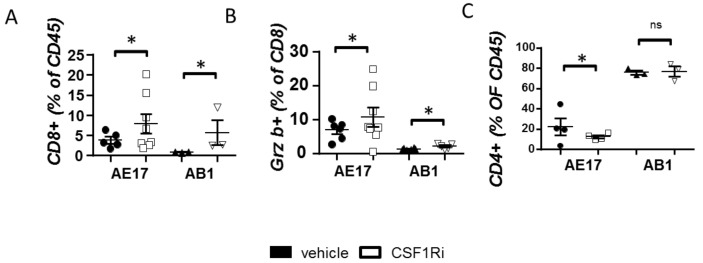
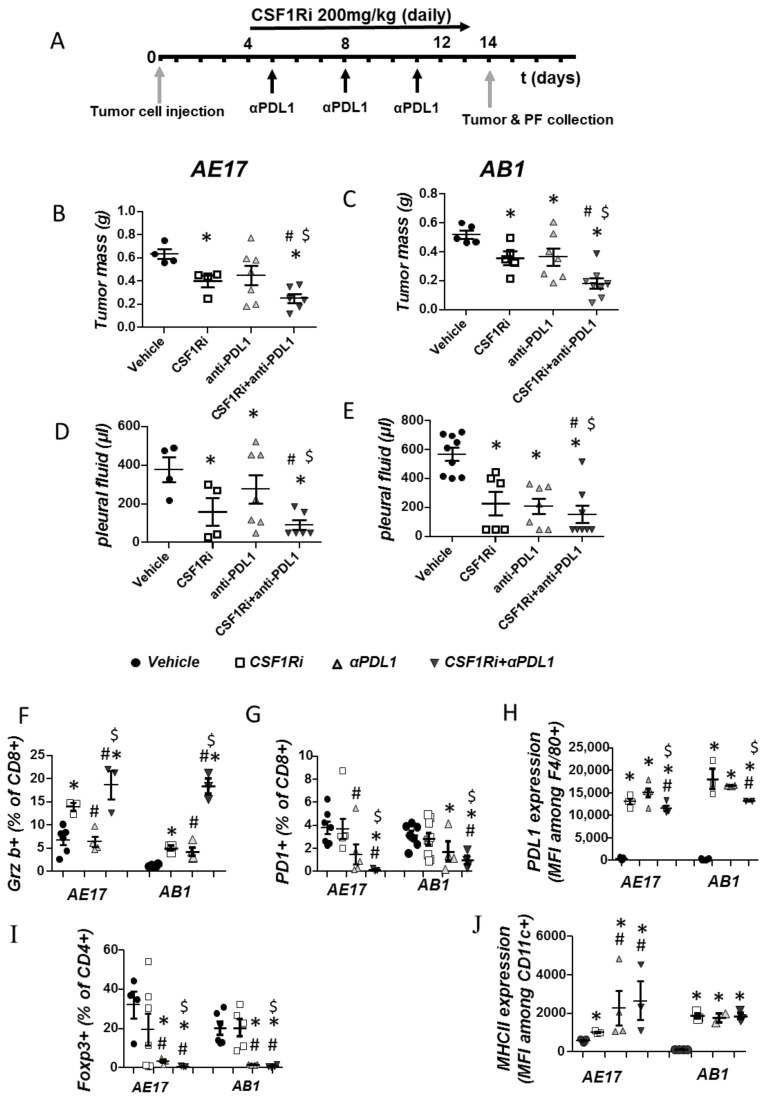
Colony-Stimulating Factor 1 (CSF1)/Colony-Stimulating Factor Receptor 1 (CSF1R) signaling orchestrates tumor-associated macrophage (TAM) recruitment and polarization towards a pro-tumor M2 phenotype, the dominant phenotype of TAMs infiltrating mesothelioma tumors. We hypothesized that CSF1/CSF1R inhibition would halt mesothelioma growth by targeting immunosuppressive M2 macrophages and unleashing efficient T cell responses. We also hypothesized that CSF1/CSF1R blockade would enhance the efficacy of a PDL1 inhibitor which directly activates CD8+ cells. We tested a clinically relevant CSF1R inhibitor (BLZ945) in mesothelioma treatment using syngeneic murine models. We evaluated the role of CSF1/CSF1R axis blockade in tumor-infiltrating immune subsets. We examined the effect of combined anti-CSF1R and anti-PDL1 treatment in mesothelioma progression. CSF1R inhibition impedes mesothelioma progression, abrogates infiltration of TAMs, facilitates an M1 anti-tumor phenotype and activates tumor dendritic and CD8+ T cells. CSF1R inhibition triggers a compensatory PD-1/PDL1 upregulation in tumor and immune cells. Combined CSF1R inhibitor with an anti-PDL1 agent was more effective in retarding mesothelioma growth compared to each monotherapy. In experimental mesotheliomas, CSF1R inhibition abrogates tumor progression by limiting suppressive myeloid populations and enhancing CD8+ cell activation and acts synergistically with anti-PDL1.
集落刺激因子1(CSF1)/集落刺激因子受体1(CSF1R)信号传导协调肿瘤相关巨噬细胞(TAM)向促肿瘤M2表型的募集和极化,M2表型是浸润间皮瘤肿瘤的TAM的主要表型。我们假设,抑制CSF1/CSF1R将通过靶向免疫抑制性M2巨噬细胞并释放有效的T细胞反应来阻止间皮瘤生长。我们还假设,阻断CSF1/CSF1R将增强直接激活CD8+细胞的PDL1抑制剂的疗效。我们使用同基因小鼠模型测试了一种临床相关的CSF1R抑制剂(BLZ945)在间皮瘤治疗中的作用。我们评估了CSF1/CSF1R轴阻断在肿瘤浸润免疫亚群中的作用。我们研究了联合抗CSF1R和抗PDL1治疗对间皮瘤进展的影响。抑制CSF1R可阻碍间皮瘤进展,消除TAM浸润,促进M1抗肿瘤表型,并激活肿瘤树突状细胞和CD8+T细胞。抑制CSF1R会引发肿瘤和免疫细胞中代偿性PD-1/PDL1上调。与每种单一疗法相比,联合CSF1R抑制剂和抗PDL1药物在延缓间皮瘤生长方面更有效。在实验性间皮瘤中,抑制CSF1R通过限制抑制性髓系细胞群和增强CD8+细胞激活来消除肿瘤进展,并与抗PDL1协同作用。