Ciardi Federico, Menon Vidya, Jensen Jamie L, Shariff Masood A, Pillai Anjana, Venugopal Usha, Kasubhai Moiz, Dimitrov Vihren, Kanna Balavenkatesh, Poole Brian D
Department of Medicine, NYC Health and Hospitals/Lincoln, The Bronx, NY 10451, USA.
Department of Biology, Brigham Young University, Provo, UT 84602, USA.
Vaccines (Basel). 2021 May 17;9(5):516. doi: 10.3390/vaccines9050516.
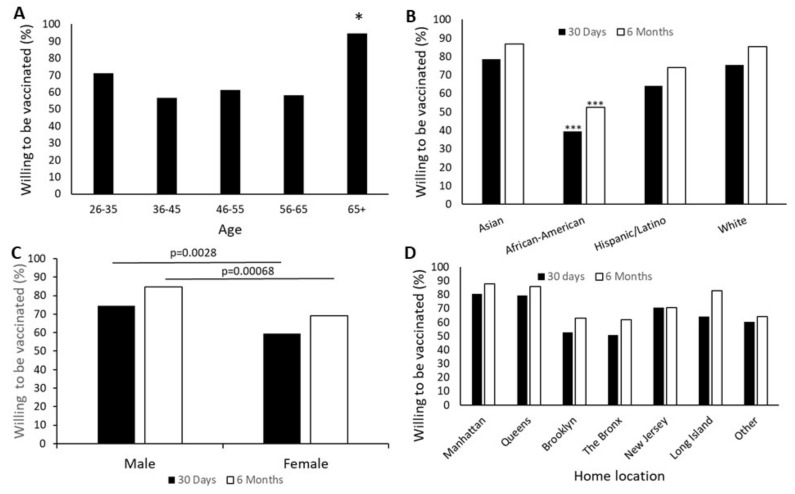
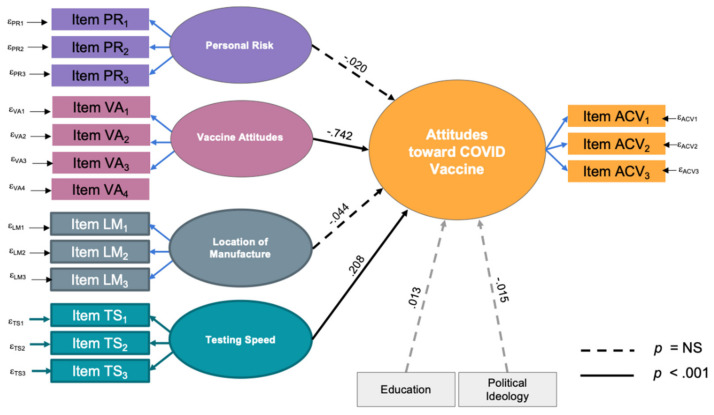
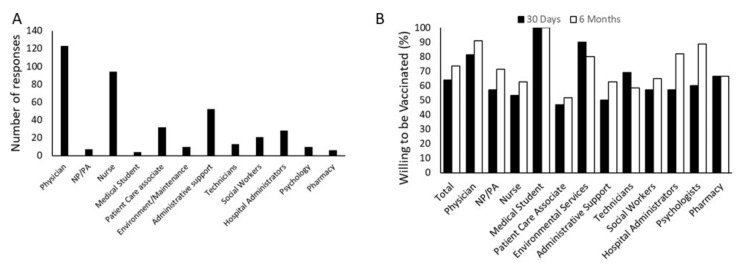
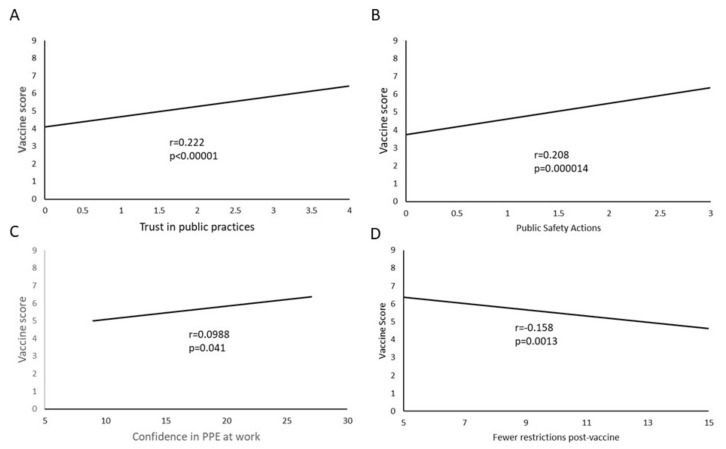
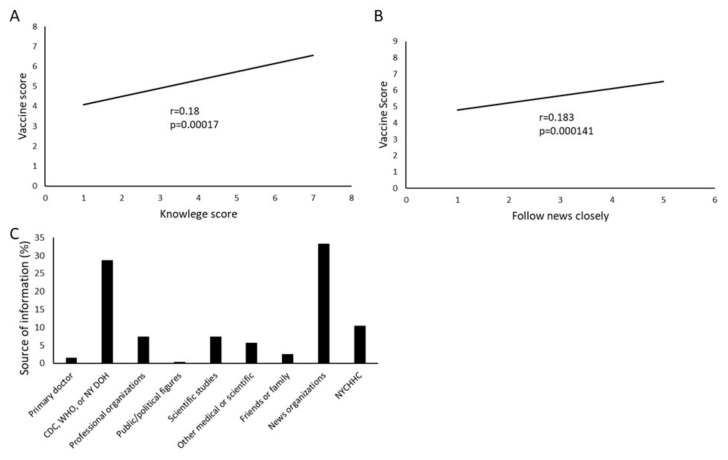
New York City is one of the areas most affected by the COVID-19 pandemic in the United States. Healthcare workers are among those at high risk of contracting the virus, and a vital source of information and trust in vaccines to the community. This study was conducted about attitudes towards COVID-19 vaccination among healthcare workers at a public hospital in New York City during the beginning of COVID-19 vaccination. 428 hospital employees responded. Several factors were significantly associated with vaccine attitudes, including demographics such as gender ( = 0.002), age ( = 0.005), race ( < 0.001) and home location ( < 0.001), role within the hospital ( < 0.001), knowledge about the virus ( < 0.001) and confidence in and expectations about personal protective equipment and behaviors ( < 0.001). Structural equation modeling revealed that the most predictive factors were prior vaccine attitudes and concern with the speed of testing and approval of the vaccines ( < 0.001). Multivariate analysis reinforced these, while also identifying perceived personal risk as significant ( = 0.033). Several modifiable factors that reflect confidence in science, scientific knowledge, personal risk perception, experience and medical authority are correlated with vaccine attitudes, indicating that a holistic educational approach to improve trust in science is likely to be effective in long-term reduction in vaccine hesitancy.
纽约市是美国受新冠疫情影响最严重的地区之一。医护人员是感染该病毒的高风险人群之一,也是社区获取疫苗信息和信任疫苗的重要来源。本研究针对新冠疫苗接种初期纽约市一家公立医院医护人员对新冠疫苗接种的态度展开。428名医院员工做出了回应。有几个因素与疫苗态度显著相关,包括人口统计学因素,如性别( = 0.002)、年龄( = 0.005)、种族( < 0.001)和家庭住址( < 0.001)、在医院内的角色( < 0.001)、对病毒的了解( < 0.001)以及对个人防护设备和行为的信心及期望( < 0.001)。结构方程模型显示,最具预测性的因素是先前的疫苗态度以及对疫苗测试和批准速度的担忧( < 0.001)。多变量分析强化了这些结果,同时还确定感知到的个人风险具有显著性( = 0.033)。一些反映对科学的信心、科学知识、个人风险认知、经验和医学权威的可改变因素与疫苗态度相关,这表明采用全面的教育方法来提高对科学的信任,可能对长期减少疫苗犹豫有效。