Institute of Molecular Pathobiochemistry, Experimental Gene Therapy and Clinical Chemistry (IFMPEGKC), RWTH University Hospital Aachen, D-52074 Aachen, Germany.
Int J Mol Sci. 2021 May 17;22(10):5284. doi: 10.3390/ijms22105284.
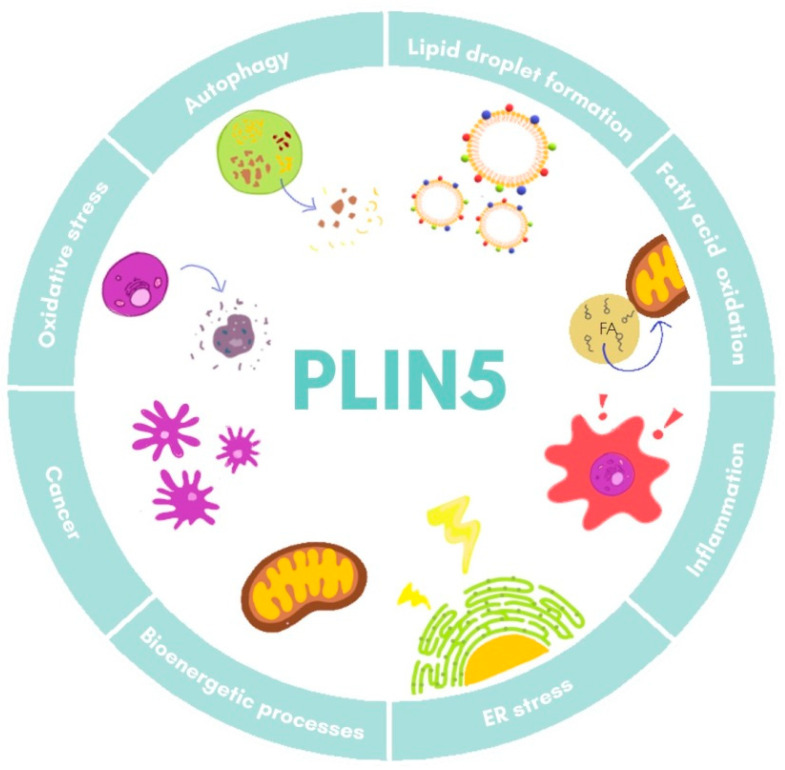
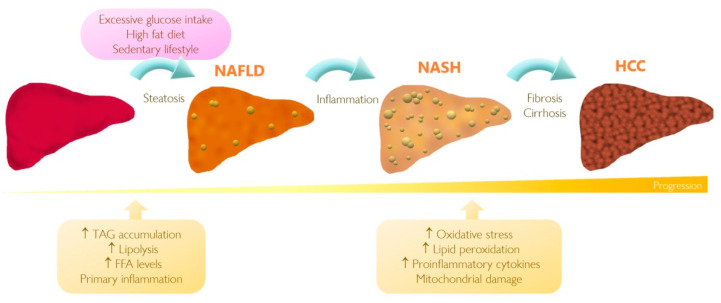
Consumption of high-calorie foods, such as diets rich in fats, is an important factor leading to the development of steatohepatitis. Several studies have suggested how lipid accumulation creates a lipotoxic microenvironment for cells, leading cells to deregulate their transcriptional and translational activity. This deregulation induces the development of liver diseases such as non-alcoholic fatty liver disease (NAFLD) and subsequently also the appearance of hepatocellular carcinoma (HCC) which is one of the deadliest types of cancers worldwide. Understanding its pathology and studying new biomarkers with better specificity in predicting disease prognosis can help in the personalized treatment of the disease. In this setting, understanding the link between NAFLD and HCC progression, the differentiation of each stage in between as well as the mechanisms underlying this process, are vital for development of new treatments and in exploring new therapeutic targets. Perilipins are a family of five closely related proteins expressed on the surface of lipid droplets (LD) in several tissues acting in several pathways involved in lipid metabolism. Recent studies have shown that depletion acts protectively in the pathogenesis of liver injury underpinning the importance of pathways associated with PLIN5. PLIN5 expression is involved in pro-inflammatory cytokine regulation and mitochondrial damage, as well as endoplasmic reticulum (ER) stress, making it critical target of the NAFLD-HCC studies. The aim of this review is to dissect the recent findings and functions of PLIN5 in lipid metabolism, metabolic disorders, and NAFLD as well as the progression of NAFLD to HCC.
高热量食物的摄入,如富含脂肪的饮食,是导致脂肪性肝炎发展的一个重要因素。有几项研究表明,脂质堆积如何为细胞创造一个脂毒性的微环境,导致细胞调节其转录和翻译活性。这种失调会导致非酒精性脂肪性肝病(NAFLD)等肝脏疾病的发展,随后也会出现肝细胞癌(HCC),这是全球最致命的癌症类型之一。了解其病理学,研究新的生物标志物,以更好地预测疾病预后的特异性,可以帮助对疾病进行个性化治疗。在这种情况下,了解 NAFLD 和 HCC 进展之间的联系,以及两者之间各个阶段的区别,以及这一过程背后的机制,对于开发新的治疗方法和探索新的治疗靶点至关重要。脂滴相关蛋白( perilipins )是一组在几种组织的脂滴(LD)表面表达的五个密切相关的蛋白,在涉及脂质代谢的几个途径中发挥作用。最近的研究表明,PLIN5 的耗竭在肝损伤的发病机制中起保护作用,这凸显了与 PLIN5 相关的途径的重要性。PLIN5 的表达参与了促炎细胞因子的调节和线粒体损伤,以及内质网(ER)应激,使其成为 NAFLD-HCC 研究的关键靶点。本综述的目的是剖析 PLIN5 在脂质代谢、代谢紊乱和 NAFLD 中的最新发现和功能,以及 NAFLD 向 HCC 的进展。