Division of Otolaryngology-Head & Neck Surgery, Dalhousie University, Halifax, NS B3H 2Y9, Canada.
Department of Surgery, Dalhousie University, Halifax, NS B3H 2Y9, Canada.
Curr Oncol. 2021 May 13;28(3):1867-1878. doi: 10.3390/curroncol28030173.
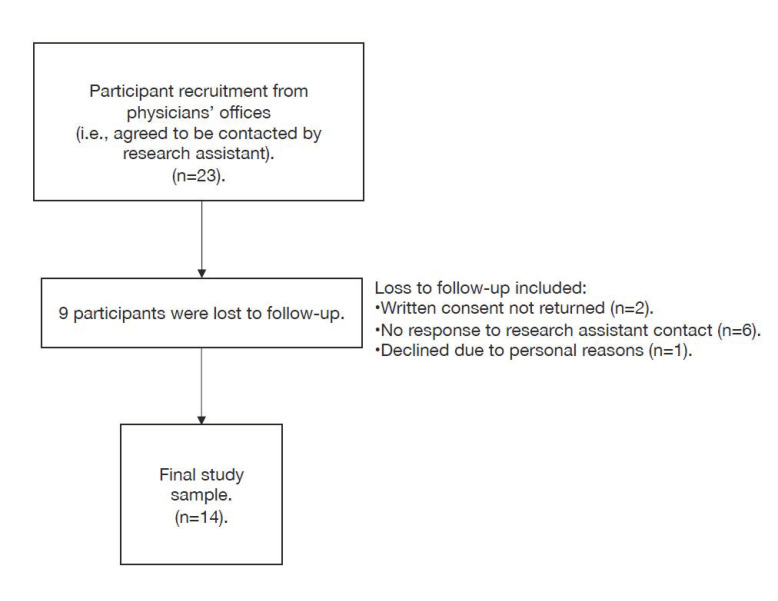
Cancer causes substantial emotional and psychosocial distress, which may be exacerbated by delays in treatment. The COVID-19 pandemic has resulted in increased wait times for many patients with cancer. In this study, the psychosocial distress associated with waiting for cancer surgery during the pandemic was investigated. This cross-sectional, convergent mixed-methods study included patients with lower priority disease during the first wave of COVID-19 at an academic, tertiary care hospital in eastern Canada. Participants underwent semi-structured interviews and completed two questionnaires: Hospital Anxiety and Depression Scale (HADS) and Perceived Stress Scale (PSS). Qualitative analysis was completed through a thematic analysis approach, with integration achieved through triangulation. Fourteen participants were recruited, with cancer sites including thyroid, kidney, breast, prostate, and a gynecological disorder. Increased anxiety symptoms were found in 36% of patients and depressive symptoms in 14%. Similarly, 64% of patients experienced moderate or high stress. Six key themes were identified, including uncertainty, life changes, coping strategies, communication, experience, and health services. Participants discussed substantial distress associated with lifestyle changes and uncertain treatment timelines. Participants identified quality communication with their healthcare team and individualized coping strategies as being partially protective against such symptoms. Delays in surgery for patients with cancer during the COVID-19 pandemic resulted in extensive psychosocial distress. Patients may be able to mitigate these symptoms partially through various coping mechanisms and improved communication with their healthcare teams.
癌症会导致严重的情绪和心理困扰,而治疗的延迟可能会使这种困扰加剧。COVID-19 大流行导致许多癌症患者的等待时间延长。在这项研究中,调查了在大流行期间等待癌症手术时的心理困扰。这是一项在加拿大东部一所学术性三级保健医院进行的、具有横向研究性质的、汇聚性混合方法研究,纳入了 COVID-19 第一波期间处于低优先级疾病的患者。参与者接受了半结构式访谈,并完成了两个问卷:医院焦虑和抑郁量表(HADS)和感知压力量表(PSS)。通过主题分析方法完成定性分析,并通过三角测量实现整合。共招募了 14 名参与者,癌症部位包括甲状腺、肾脏、乳房、前列腺和妇科疾病。研究发现,36%的患者出现焦虑症状,14%的患者出现抑郁症状。同样,64%的患者经历中度或高度压力。确定了六个关键主题,包括不确定性、生活变化、应对策略、沟通、体验和卫生服务。参与者讨论了与生活方式改变和不确定的治疗时间表相关的严重困扰。参与者确定与医疗团队进行高质量沟通和采用个体化应对策略可以部分缓解这些症状。COVID-19 大流行期间癌症患者的手术延迟导致了广泛的心理困扰。患者可能通过各种应对机制和改善与医疗团队的沟通,部分缓解这些症状。