Eberle Raphael J, Olivier Danilo S, Amaral Marcos S, Gering Ian, Willbold Dieter, Arni Raghuvir K, Coronado Monika A
Institute of Biological Information Processing (IBI-7: Structural Biochemistry), Forschungszentrum Jülich, 52428 Jülich, Germany.
Institut für Physikalische Biologie, Heinrich-Heine-Universität Düsseldorf, Universitätsstraße, 40225 Düsseldorf, Germany.
Viruses. 2021 May 10;13(5):873. doi: 10.3390/v13050873.
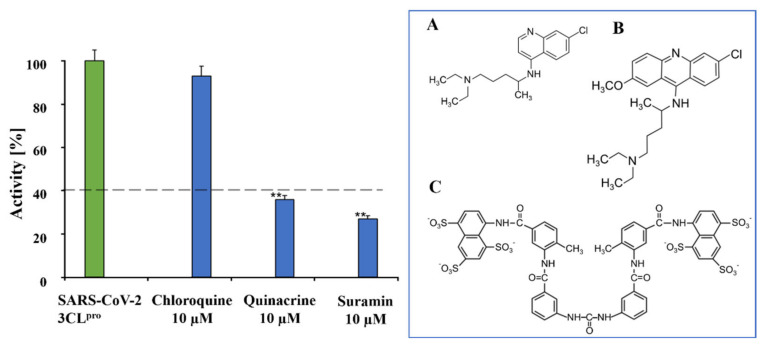
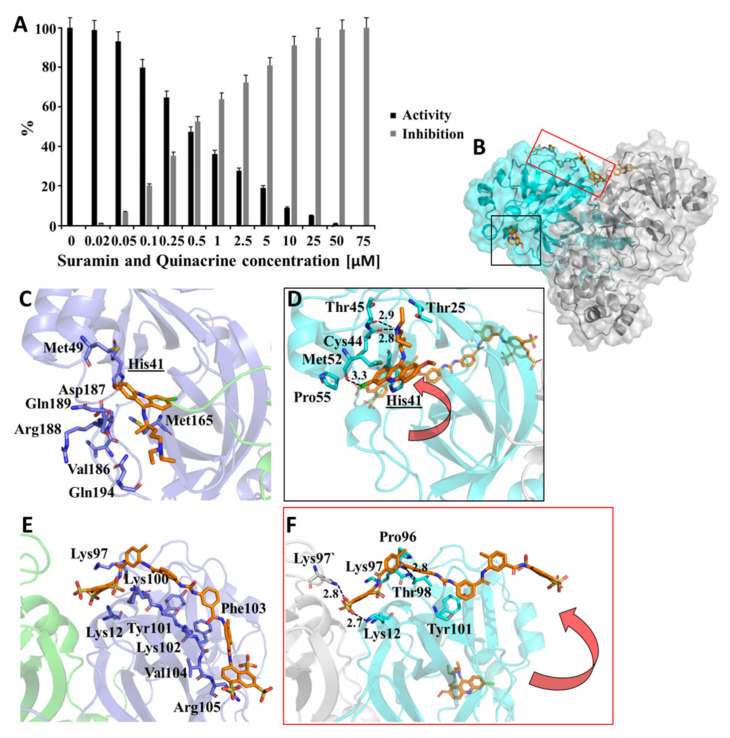
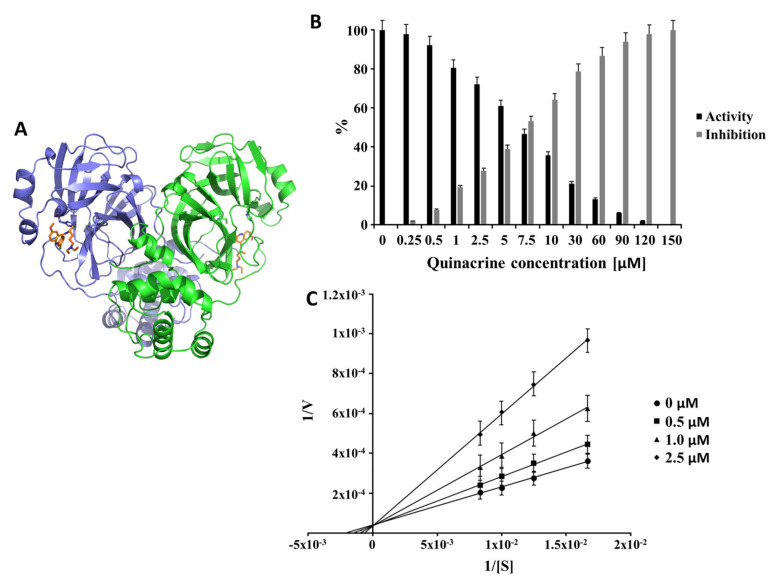
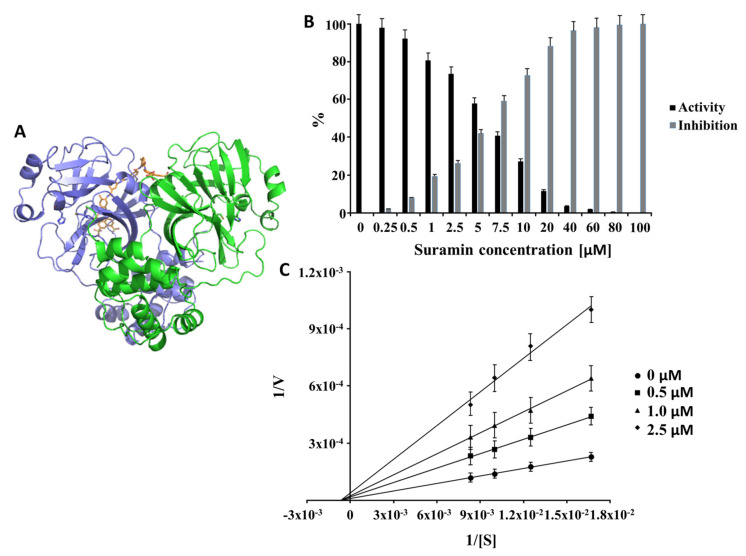
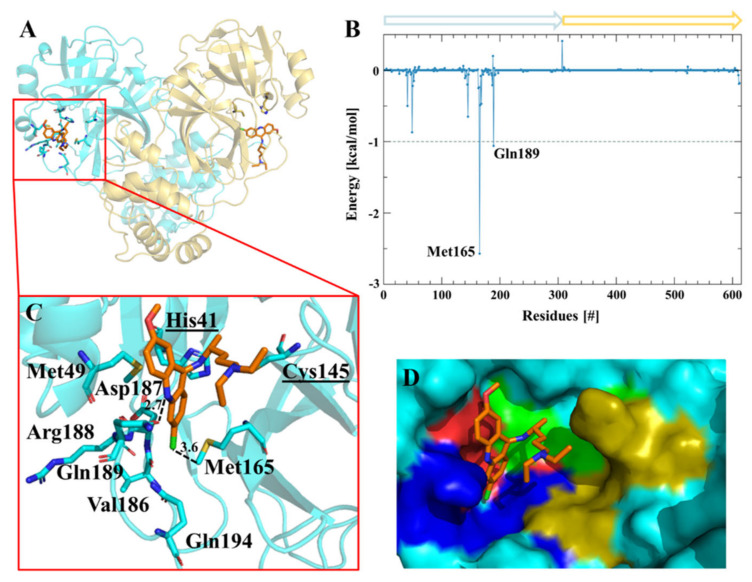
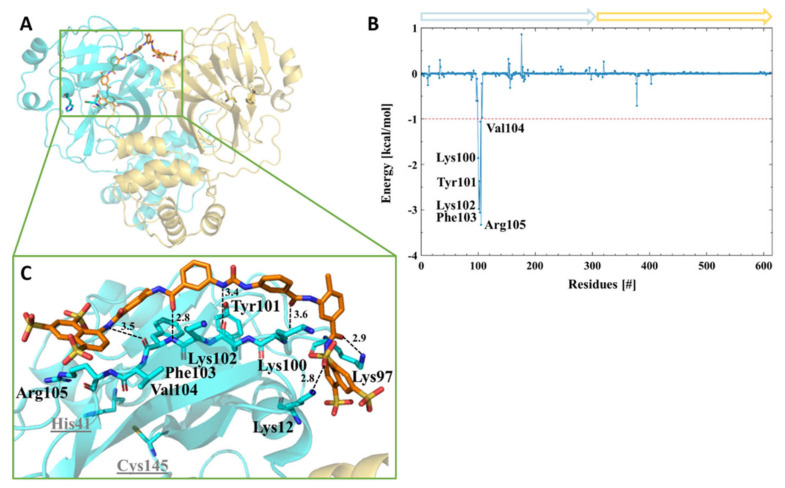
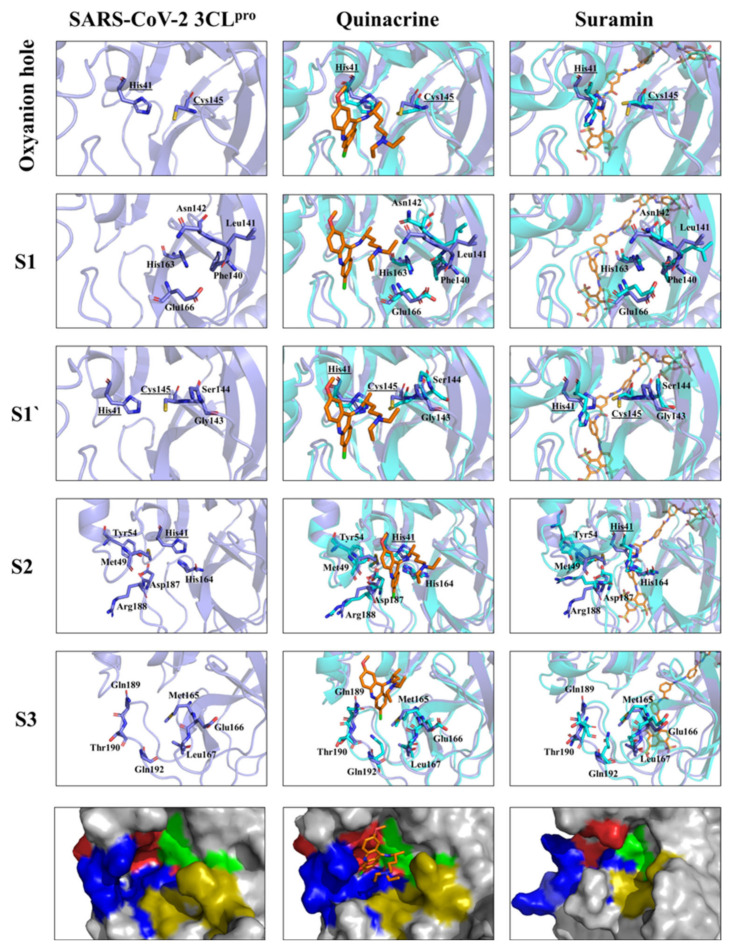
Since the first report of a new pneumonia disease in December 2019 (Wuhan, China) the WHO reported more than 148 million confirmed cases and 3.1 million losses globally up to now. The causative agent of COVID-19 (SARS-CoV-2) has spread worldwide, resulting in a pandemic of unprecedented magnitude. To date, several clinically safe and efficient vaccines (e.g., Pfizer-BioNTech, Moderna, Johnson & Johnson, and AstraZeneca COVID-19 vaccines) as well as drugs for emergency use have been approved. However, increasing numbers of SARS-Cov-2 variants make it imminent to identify an alternative way to treat SARS-CoV-2 infections. A well-known strategy to identify molecules with inhibitory potential against SARS-CoV-2 proteins is repurposing clinically developed drugs, e.g., antiparasitic drugs. The results described in this study demonstrated the inhibitory potential of quinacrine and suramin against SARS-CoV-2 main protease (3CL). Quinacrine and suramin molecules presented a competitive and noncompetitive inhibition mode, respectively, with IC values in the low micromolar range. Surface plasmon resonance (SPR) experiments demonstrated that quinacrine and suramin alone possessed a moderate or weak affinity with SARS-CoV-2 3CL but suramin binding increased quinacrine interaction by around a factor of eight. Using docking and molecular dynamics simulations, we identified a possible binding mode and the amino acids involved in these interactions. Our results suggested that suramin, in combination with quinacrine, showed promising synergistic efficacy to inhibit SARS-CoV-2 3CL. We suppose that the identification of effective, synergistic drug combinations could lead to the design of better treatments for the COVID-19 disease and repurposable drug candidates offer fast therapeutic breakthroughs, mainly in a pandemic moment.
自2019年12月(中国武汉)首次报告新型肺炎疾病以来,截至目前,世界卫生组织报告全球确诊病例超过1.48亿例,死亡病例310万例。新型冠状病毒肺炎(COVID-19)的病原体(严重急性呼吸综合征冠状病毒2,SARS-CoV-2)已在全球传播,导致了一场前所未有的大流行。迄今为止,几种临床安全有效的疫苗(如辉瑞-生物科技、莫德纳、强生和阿斯利康COVID-19疫苗)以及急救药物已获批准。然而,越来越多的SARS-CoV-2变体使得迫切需要找到一种替代方法来治疗SARS-CoV-2感染。一种识别对SARS-CoV-2蛋白具有抑制潜力分子的知名策略是重新利用临床已开发的药物,如抗寄生虫药物。本研究中描述的结果证明了奎纳克林和苏拉明对SARS-CoV-2主要蛋白酶(3CL)的抑制潜力。奎纳克林和苏拉明分子分别呈现竞争性和非竞争性抑制模式,IC值处于低微摩尔范围。表面等离子体共振(SPR)实验表明,单独的奎纳克林和苏拉明与SARS-CoV-2 3CL具有中等或较弱的亲和力,但苏拉明的结合使奎纳克林的相互作用增加了约8倍。通过对接和分子动力学模拟,我们确定了一种可能的结合模式以及参与这些相互作用的氨基酸。我们的结果表明,苏拉明与奎纳克林联合使用对抑制SARS-CoV-2 3CL显示出有前景的协同功效。我们认为,识别有效的协同药物组合可能会带来针对COVID-19疾病的更好治疗方案的设计,并且可重新利用的候选药物有望实现快速的治疗突破,尤其是在大流行时期。