
基于单颗金刚石磨粒模型的牙科氧化锆陶瓷超声振动辅助磨削表面粗糙度预测
Prediction of the Surface Roughness in Ultrasonic Vibration-Assisted Grinding of Dental Zirconia Ceramics Based on a Single-Diamond Grit Model.
作者信息
Xiao Xingzhi, Li Gang, Li Zhihua
机构信息
School of Mechanical Engineering, Nanjing University of Science and Technology, Nanjing 210094, China.
出版信息
Micromachines (Basel). 2021 May 10;12(5):543. doi: 10.3390/mi12050543.
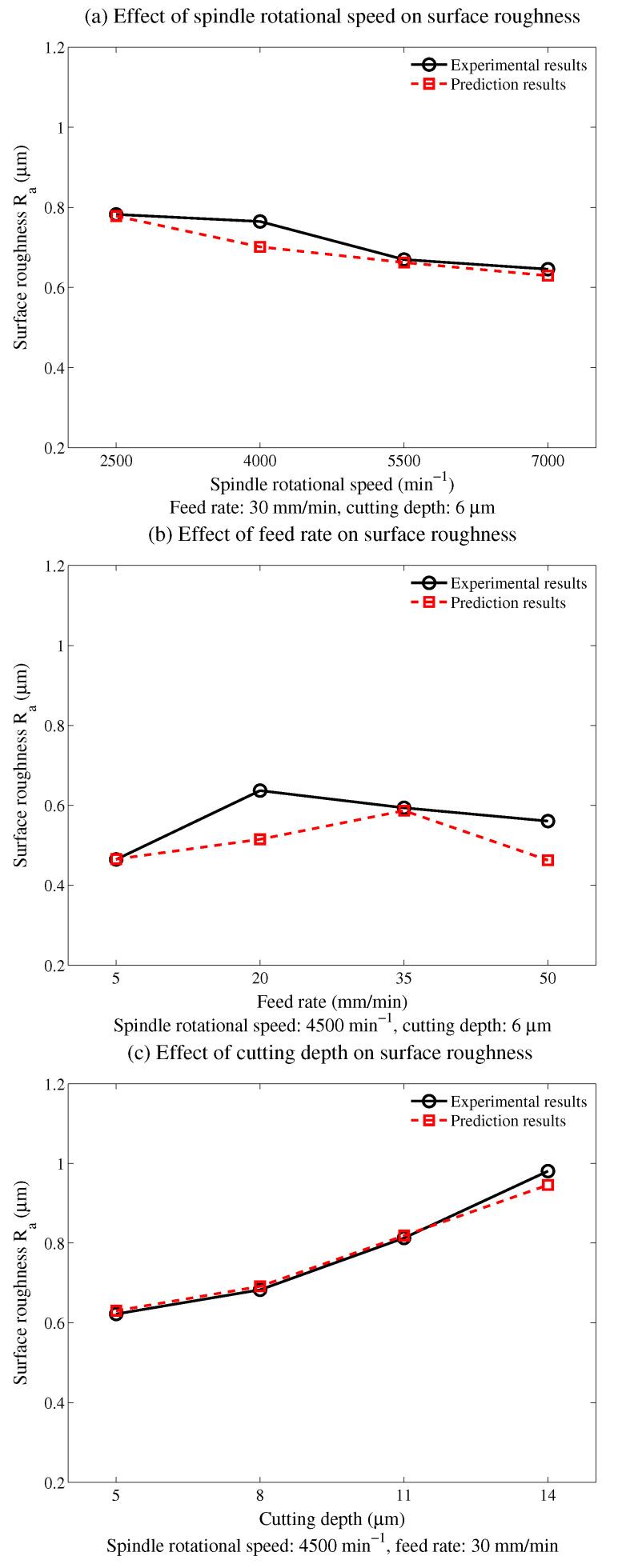
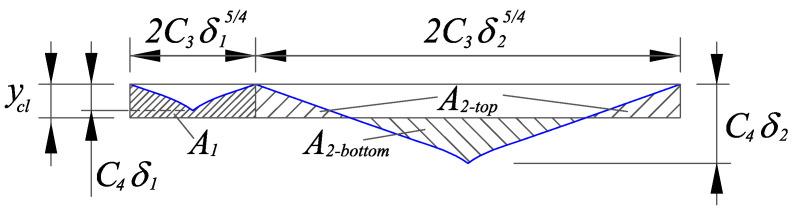
Ultrasonic vibration-assisted grinding (UVAG) is regarded as a superior method for the fabrication of ceramic dentures, due to its outstanding performance in hard and brittle materials' machining. The surface roughness of dentures has a critical effect on the bonding and wear performance between dentures and natural teeth. Accomplishing the prediction of surface roughness will promote the application of UVAG in dental restoration significantly. However, the investigation about surface roughness modeling in the UVAG of ceramics is limited. In this study, a comprehensive surface roughness model was proposed with the consideration of the diamond grits' random distribution, brittle fracture removal, and ultrasonic vibration characteristics. Based on the indentation fracture removal mechanism, the material removal process was modeled. Rayleigh's probability density function was introduced to characterize the random distribution of the grits. Besides, the ultrasonic vibration was considered via the analysis of the single-diamond grit motion. Finally, the comprehensive model was developed with the consideration of all the diamond grits. Afterward, the verification experiments were carried out. The experimental results agreed well with the model predictions. Therefore, the comprehensive model can be applied to evaluate the surface roughness and can provide an in-depth understanding of the surface formation in the UVAG of ceramics.
超声振动辅助磨削(UVAG)因其在硬脆材料加工方面的出色表现,被视为制造陶瓷假牙的一种优越方法。假牙的表面粗糙度对假牙与天然牙之间的粘结和磨损性能有着至关重要的影响。实现表面粗糙度的预测将显著促进UVAG在牙齿修复中的应用。然而,关于陶瓷UVAG中表面粗糙度建模的研究有限。在本研究中,考虑了金刚石磨粒的随机分布、脆性断裂去除和超声振动特性,提出了一个综合表面粗糙度模型。基于压痕断裂去除机制,对材料去除过程进行了建模。引入瑞利概率密度函数来表征磨粒的随机分布。此外,通过分析单颗金刚石磨粒的运动来考虑超声振动。最后,综合考虑所有金刚石磨粒建立了综合模型。随后进行了验证实验。实验结果与模型预测吻合良好。因此,该综合模型可用于评估表面粗糙度,并能深入了解陶瓷UVAG中的表面形成情况。




 Zotero 插件