Key Laboratory of Integrated Management of Crop Diseases and Pests, Ministry of Education, Department of Plant Pathology, College of Plant Protection, Nanjing Agricultural University, Nanjing 210095, China.
Department of Plant Pathology, University of Agriculture, Faisalabad P.O. Box 38040, Pakistan.
Int J Mol Sci. 2021 May 10;22(9):5049. doi: 10.3390/ijms22095049.
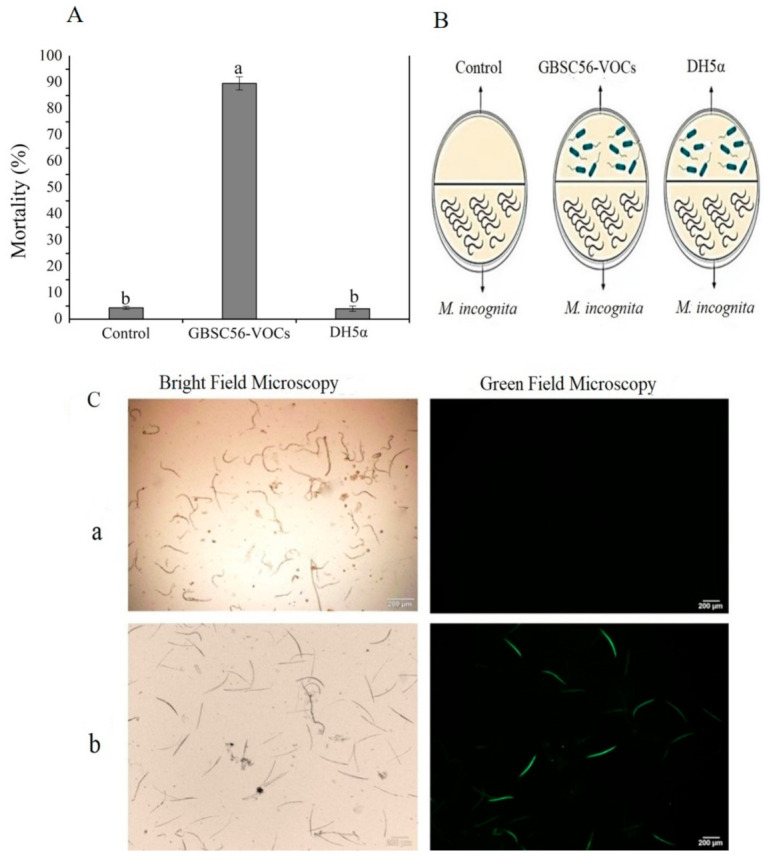
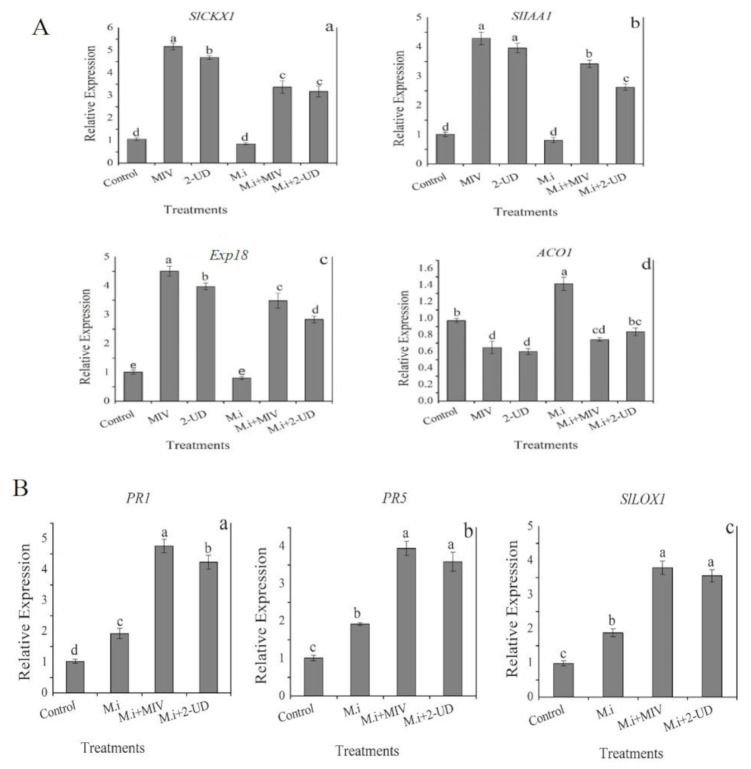
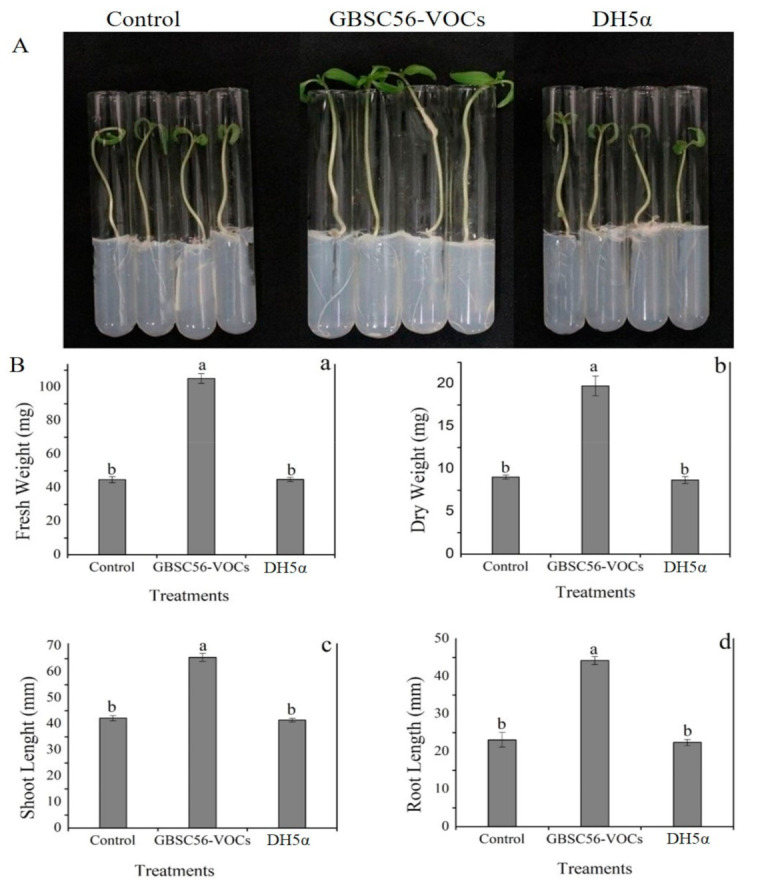
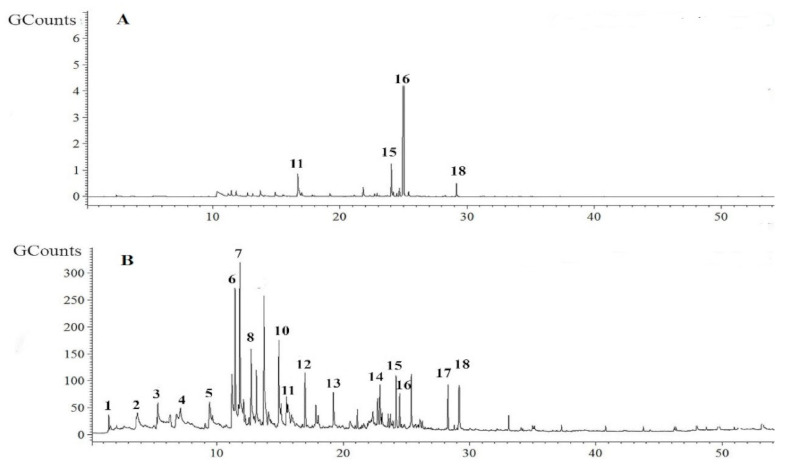
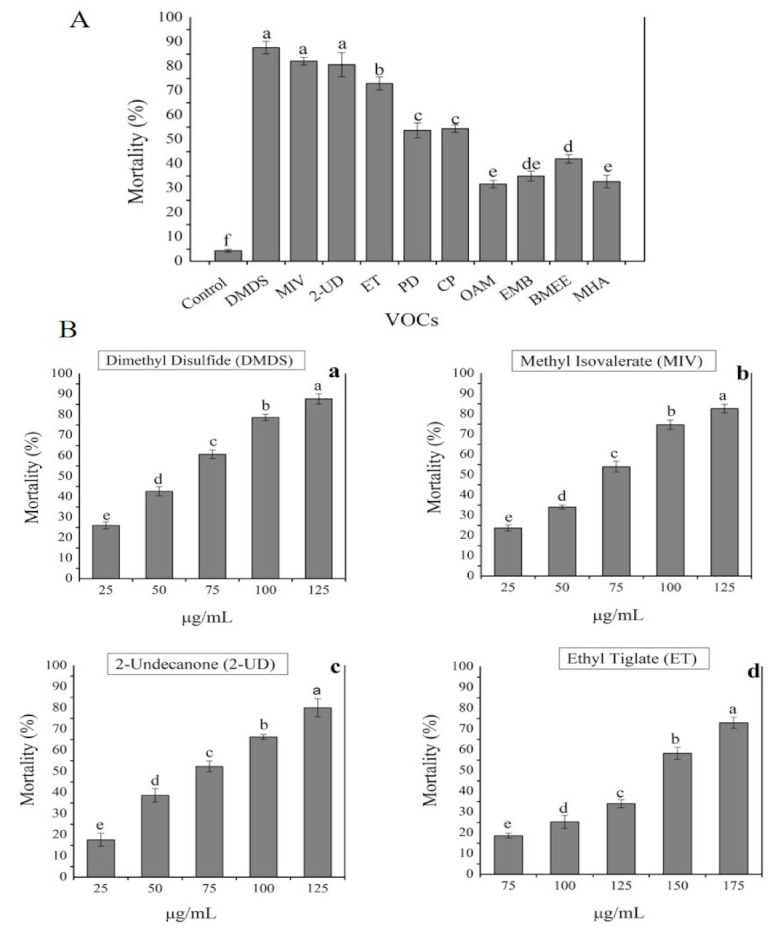
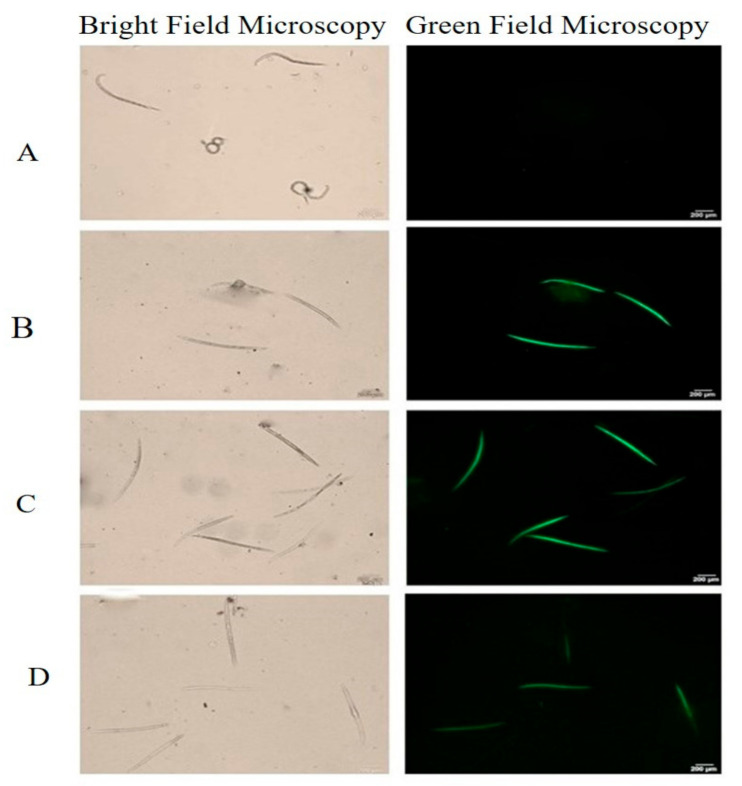
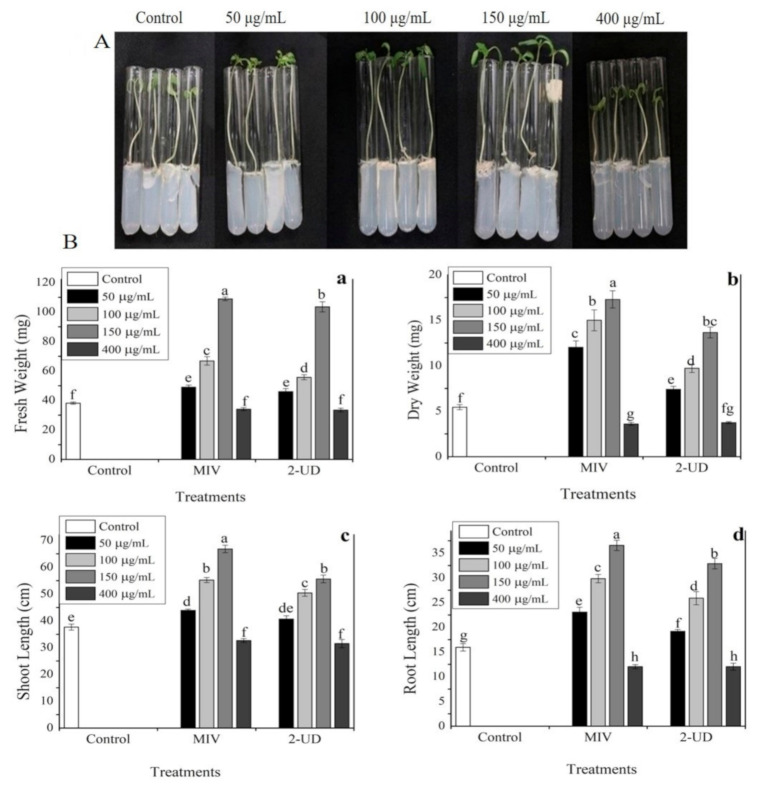
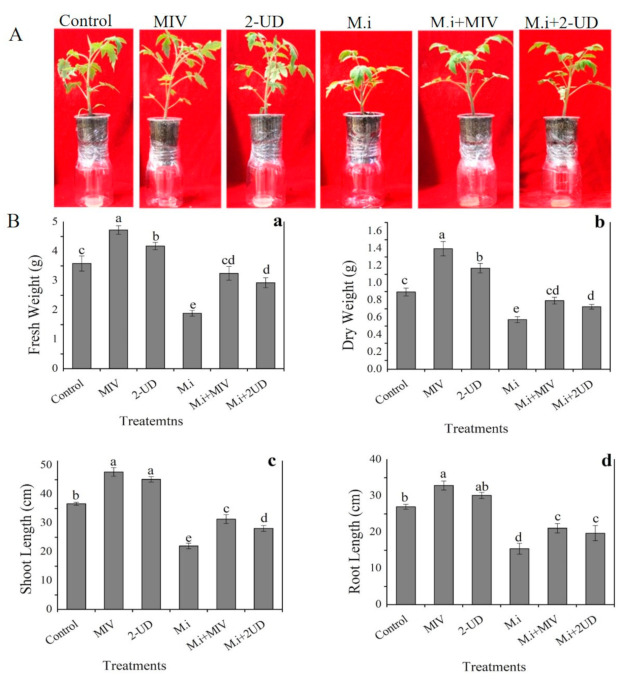
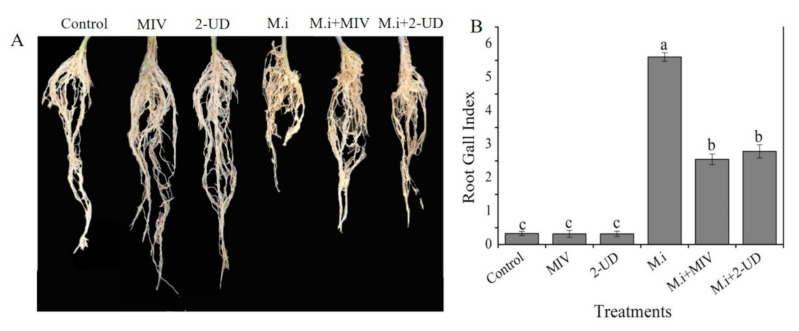
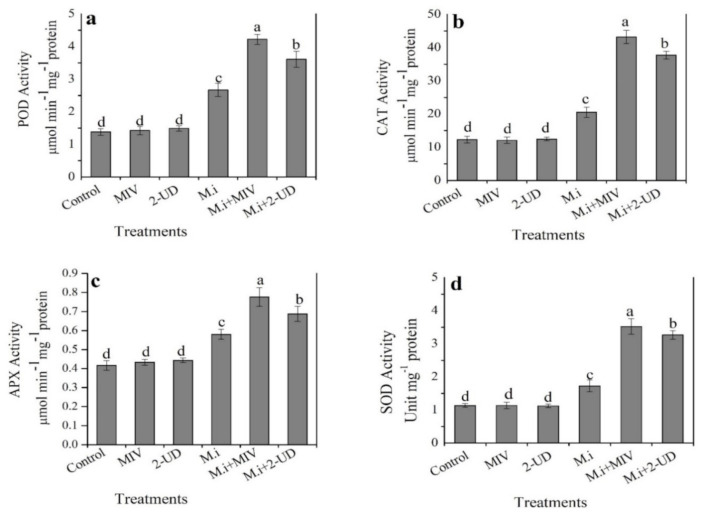
volatiles to control plant nematodes is a topic of great interest among researchers due to its safe and environmentally friendly nature. strain GBSC56 isolated from the Tibet region of China showed high nematicidal activity against , with 90% mortality as compared with control in a partition plate experiment. Pure volatiles produced by GBSC56 were identified through gas chromatography and mass spectrometry (GC-MS). Among 10 volatile organic compounds (VOCs), 3 volatiles, i.e., dimethyl disulfide (DMDS), methyl isovalerate (MIV), and 2-undecanone (2-UD) showed strong nematicidal activity with a mortality rate of 87%, 83%, and 80%, respectively, against . The VOCs induced severe oxidative stress in nematodes, which caused rapid death. Moreover, in the presence of volatiles, the activity of antioxidant enzymes, i.e., SOD, CAT, POD, and APX, was observed to be enhanced in -infested roots, which might reduce the adverse effect of oxidative stress-induced after infection. Moreover, genes responsible for plant growth promotion , , and showed an upsurge in expression, while was downregulated in infested plants. Furthermore, the defense-related genes (, , and ) in infested tomato plants were upregulated after treatment with MIV and 2-UD. These findings suggest that GBSC56 possesses excellent biocontrol potential against . Furthermore, the study provides new insight into the mechanism by which GBSC56 nematicidal volatiles regulate antioxidant enzymes, the key genes involved in plant growth promotion, and the defense mechanism -infested tomato plants use to efficiently manage root-knot disease.
从中国西藏地区分离得到的 GBSC56 菌株对 具有较高的杀线虫活性,在分区板实验中,与对照相比,其死亡率达到 90%。通过气相色谱和质谱联用(GC-MS)鉴定了 GBSC56 产生的纯挥发物。在 10 种挥发性有机化合物(VOCs)中,有 3 种挥发性化合物,即二甲基二硫(DMDS)、甲基异戊酸(MIV)和 2-十一酮(2-UD)对 表现出很强的杀线虫活性,死亡率分别为 87%、83%和 80%。VOCs 诱导线虫产生严重的氧化应激,导致线虫迅速死亡。此外,在 VOCs 的存在下,-侵染的根中抗氧化酶,即 SOD、CAT、POD 和 APX 的活性增强,这可能会减轻感染后氧化应激诱导的不利影响。此外,与植物生长促进有关的基因 、 、 和 表达上调,而 在侵染植物中下调。此外,用 MIV 和 2-UD 处理侵染番茄植物后,防御相关基因( 、 、 和 )表达上调。这些发现表明,GBSC56 对 具有良好的生物防治潜力。此外,该研究为 GBSC56 杀线虫挥发物调节抗氧化酶、与植物生长促进相关的关键基因以及 侵染番茄植物使用的防御机制提供了新的见解,以有效管理根结线虫病。