Qin Yan, Duan Beibei, Shin Jung-Ah, So Hee-Jin, Hong Eun-Sik, Jeong Hee-Gon, Lee Jeung-Hee, Lee Ki-Teak
Department of Food Science and Technology, Chungnam National University, 99 Daehak-ro, Yuseong-gu, Daejeon 34134, Korea.
Department of Food Processing and Distribution, Gangneung-Wonju National University, 7 Jukheon-gil, Gangneung, Gangwon-Do 25457, Korea.
Foods. 2021 May 14;10(5):1089. doi: 10.3390/foods10051089.
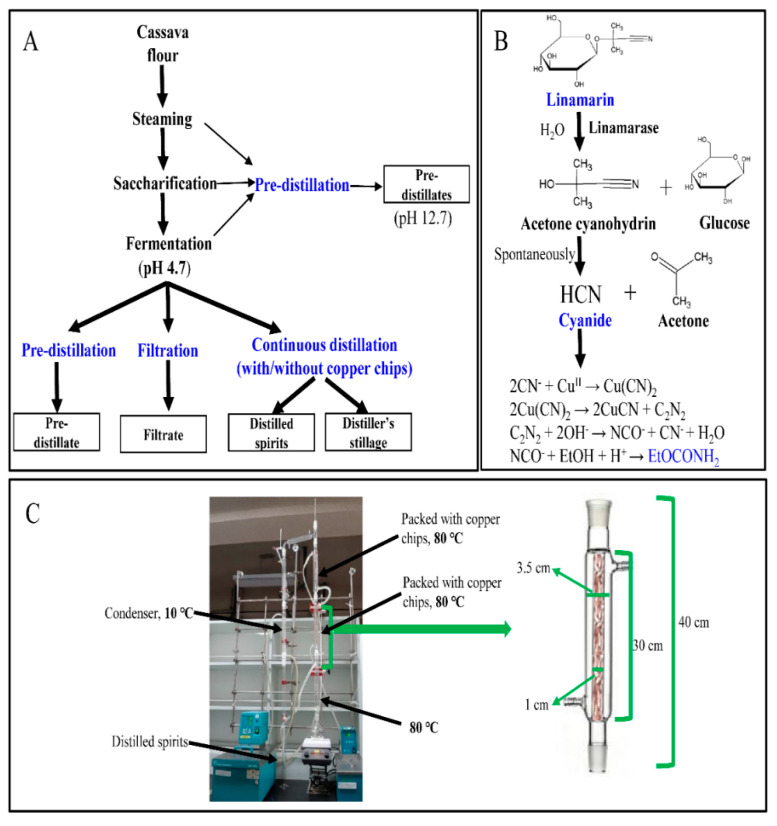
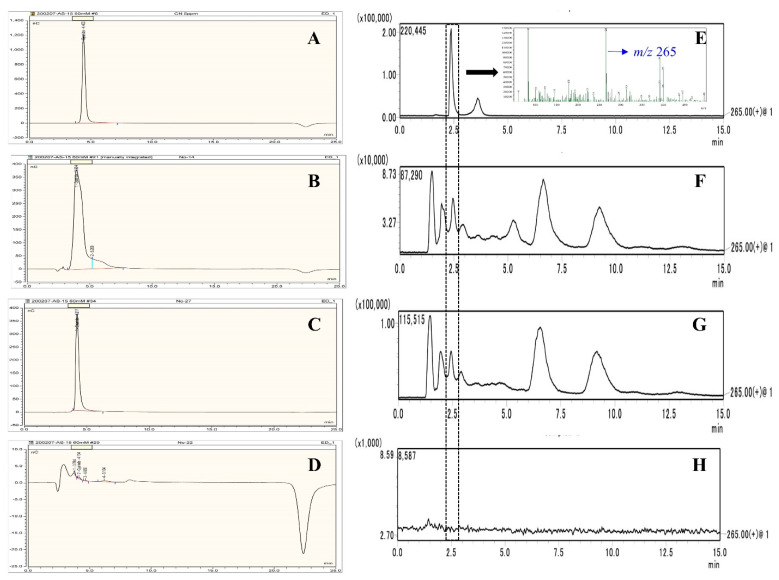
When cassava is used for the production of distilled spirits through fermentation and distillation, toxic hydrogen cyanide () is released from linamarin and carcinogenic ethyl carbamate is produced. Herein, cyanide and ethyl carbamate contents were monitored during the fermentation and lab-scale continuous distillation processes. Thereafter, mass balance and the influence of copper chips were evaluated. Results showed that 81.5% of cyanide was removed after fermentation. Use of copper chips completely prevented the migration of cyanide into the distilled spirits, while 88.3% of cyanide migrated from the fermented liquid in the absence of copper chips. Formation of ethyl carbamate was significantly promoted during distillation. Most of the produced ethyl carbamate (73.2%) was transferred into the distilled spirits in the absence of copper chips, only 9.6% of the ethyl carbamate was transferred when copper chips were used. Thus, copper chips effectively prevented the migration of cyanide and ethyl carbamate into the distilled spirts during continuous distillation.
当木薯通过发酵和蒸馏用于生产蒸馏酒时,亚麻苦苷会释放出有毒的氰化氢(),并产生致癌的氨基甲酸乙酯。在此,在发酵和实验室规模的连续蒸馏过程中监测了氰化物和氨基甲酸乙酯的含量。此后,评估了质量平衡和铜片的影响。结果表明,发酵后81.5%的氰化物被去除。使用铜片可完全防止氰化物迁移到蒸馏酒中,而在没有铜片的情况下,88.3%的氰化物从发酵液中迁移出来。蒸馏过程中氨基甲酸乙酯的形成显著增加。在没有铜片的情况下,大部分产生的氨基甲酸乙酯(73.2%)转移到蒸馏酒中,使用铜片时只有9.6%的氨基甲酸乙酯被转移。因此,铜片在连续蒸馏过程中有效地防止了氰化物和氨基甲酸乙酯迁移到蒸馏酒中。