Orthodontics, Department of Odontology, Umeå University, SE-901 85 Umeå, Sweden.
Oral and Maxillofacial Radiology, Department of Odontology, Umeå University, SE-901 85 Umeå, Sweden.
Int J Environ Res Public Health. 2021 May 14;18(10):5260. doi: 10.3390/ijerph18105260.
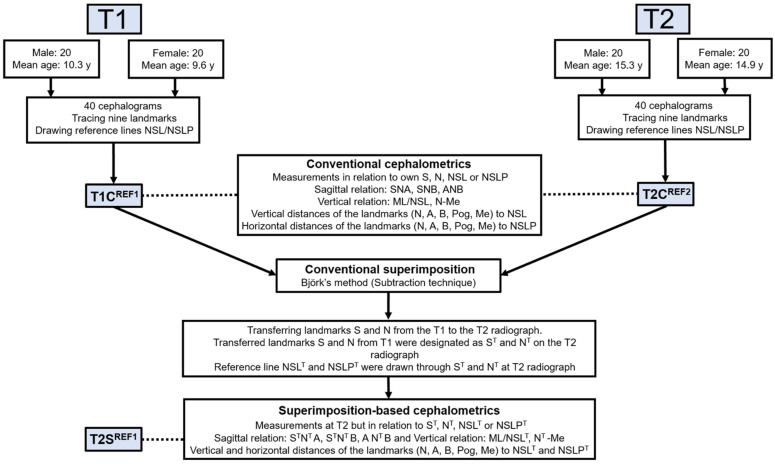
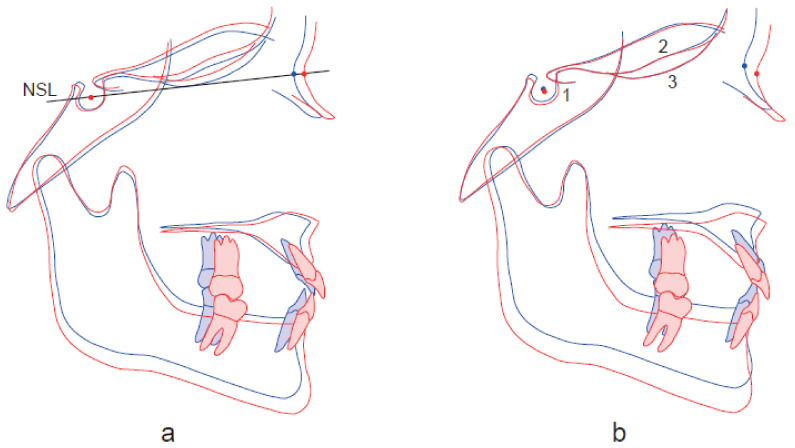
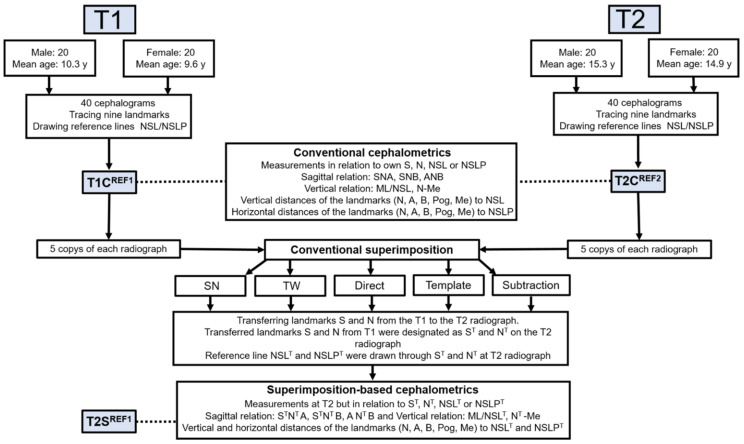
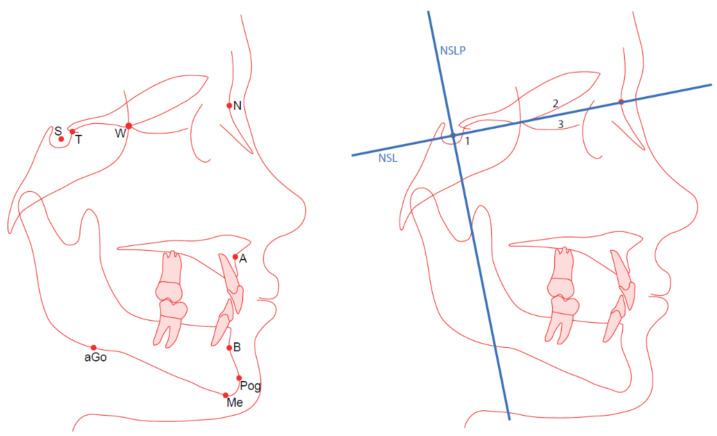
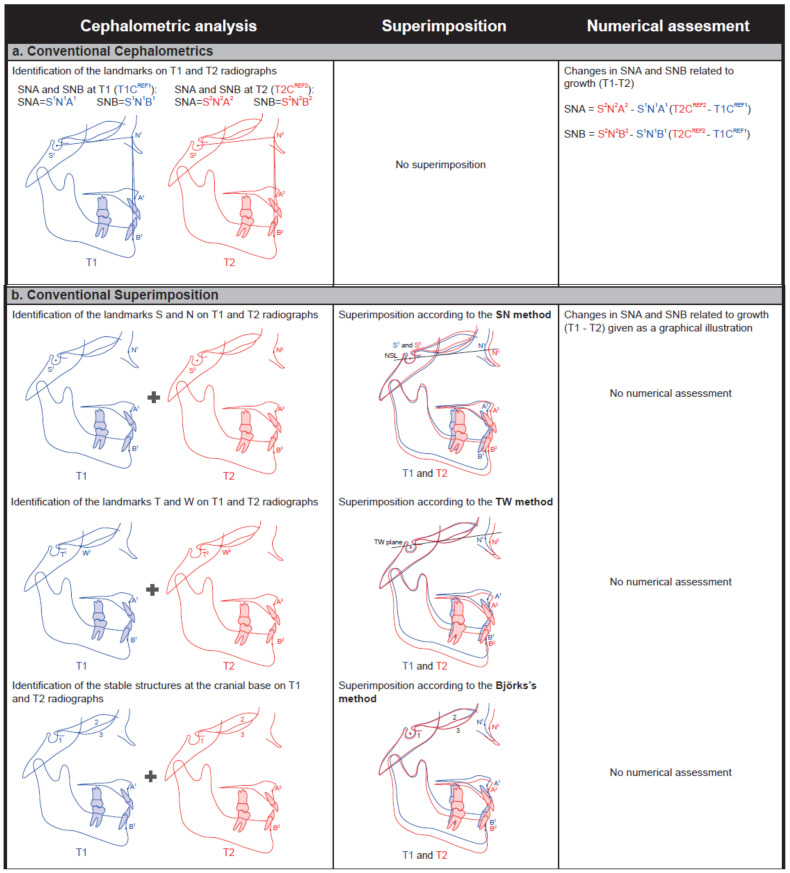
To assess the craniofacial changes related to growth and/or to orthodontic and orthognathic treatments, it is necessary to superimpose serial radiographs on stable structures. However, conventional superimposition provides only a graphical illustration of these changes. To increase the precision of growth and treatment evaluations, it is desirable to quantitate these craniofacial changes. The aims of this study were to (1) evaluate a superimposition-based cephalometric method to process numerical data for craniofacial growth changes and (2) identify a valid, reliable, and feasible method for superimposition. Forty pairs of cephalograms were analyzed at T1 and T2 (mean age 9.9 and 15.0 years, respectively). The superimposition-based cephalometric method involved relating the sagittal and vertical measurements on the T2 radiographs to the nasion and sella landmarks on the T1 radiographs. Validity and reliability were evaluated for three superimposition methods: the sella-nasion (SN); the tuberculum sella-wing (TW); and Björk's structural. Superimposition-based cephalometrics can be used to quantify craniofacial changes digitally. The numerical data from the superimposition-based cephalometrics reflected a graphical illustration of superimposition and differed significantly from the data acquired through conventional cephalometrics. Superimposition using the TW method is recommended as it is valid, reliable, and feasible.
为了评估与生长和/或正畸和正颌治疗相关的颅面变化,有必要将连续的射线照片叠加到稳定的结构上。然而,传统的叠加仅提供了这些变化的图形说明。为了提高生长和治疗评估的精度,量化这些颅面变化是可取的。本研究的目的是:(1)评估一种基于叠加的头影测量方法来处理颅面生长变化的数值数据;(2)确定一种有效、可靠和可行的叠加方法。在 T1 和 T2 时分析了 40 对头颅侧位片(平均年龄分别为 9.9 岁和 15.0 岁)。基于叠加的头影测量方法涉及将 T2 射线照片上的矢状和垂直测量值与 T1 射线照片上的鼻根和蝶鞍标志点相关联。评估了三种叠加方法的有效性和可靠性:蝶鞍-鼻根(SN);蝶鞍-翼突(TW);和 Björk 的结构。基于叠加的头影测量法可用于数字化定量颅面变化。基于叠加的头影测量法的数值数据反映了叠加的图形说明,与通过传统头影测量法获得的数据有显著差异。建议使用 TW 方法进行叠加,因为它是有效的、可靠的和可行的。