Department of Urology and Institute of Urology, Tongji Hospital, Tongji Medical College, Huazhong University of Science and Technology, Wuhan 430030, China.
Department of Molecular and Medical Pharmacology, David Geffen School of Medicine, University of California at Los Angeles, Los Angeles, CA 90095, USA.
Genes (Basel). 2021 May 19;12(5):773. doi: 10.3390/genes12050773.
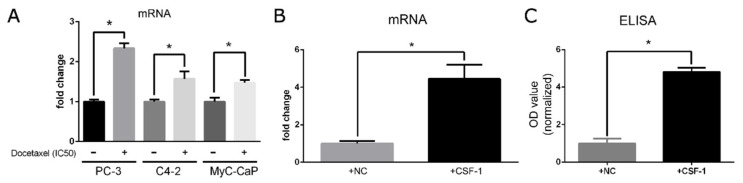
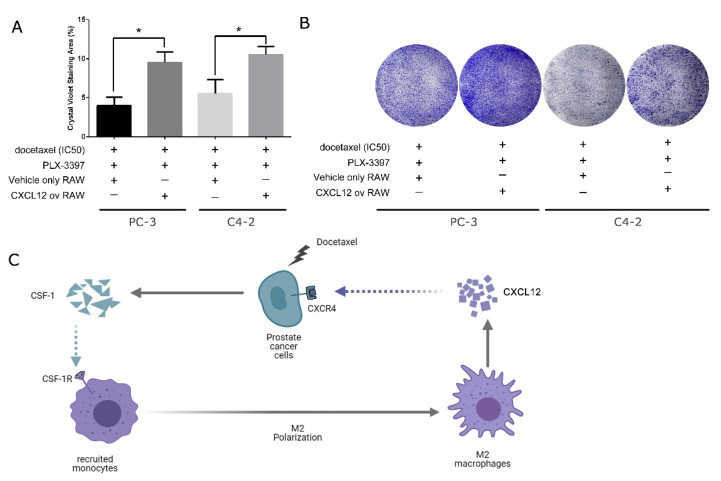
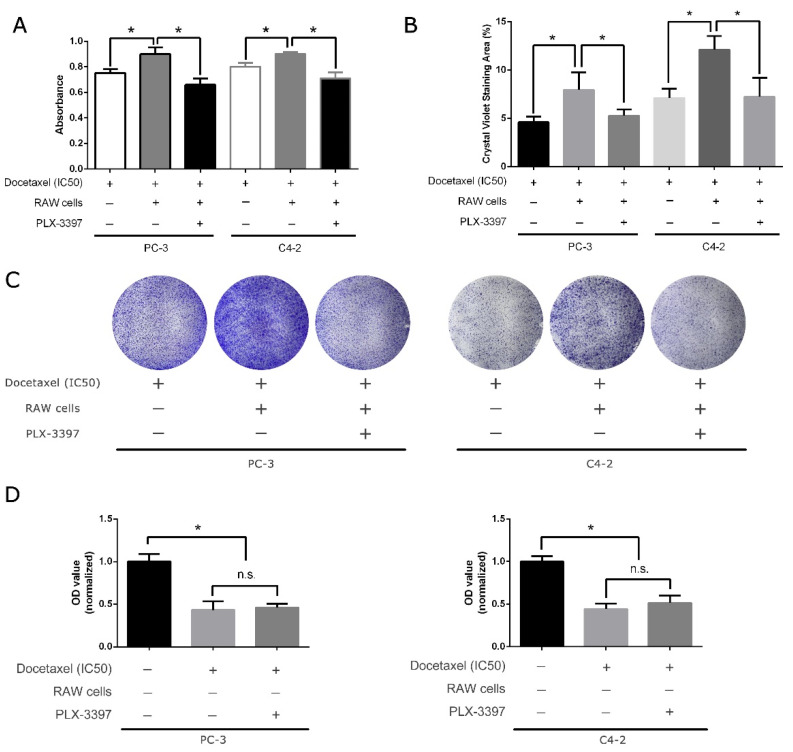
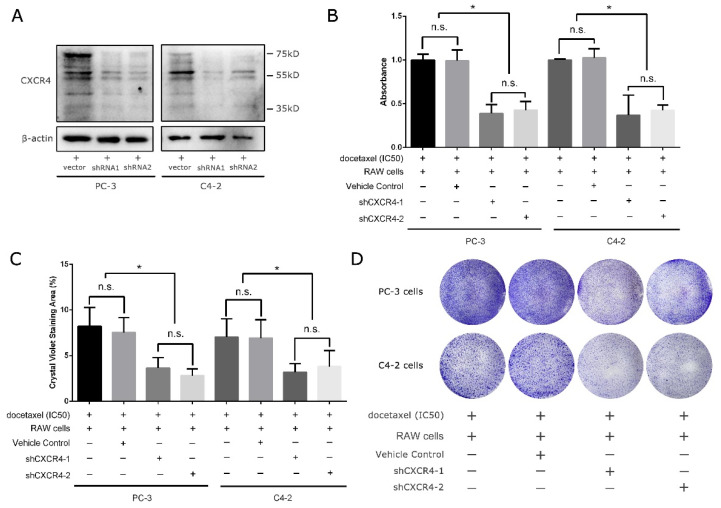
Castration-resistant prostate cancer (CRPC) is an advanced stage of prostate cancer that can progress rapidly even in patients treated with castration. Previously, we found that tumor-associated macrophages (TAM) can be recruited by CSF-1 secreted by docetaxel-treated prostate cancer cells and promote the survival of cancer cells in response to chemotherapy. The inhibition of CSF-1R can impede this effect and significantly prolong survival in xenograft mice. However, the actual mechanism of how TAM improves cancer cell survival still remains elusive and controversial. Here, for the first time, we found that the enhanced survival of cancer cells achieved by TAM was mainly mediated by CXCR4 activation from the increased secretion of CXCL12 from CSF-1 activated TAM. This finding helps to clarify the mechanism of chemoresistance for second-line chemotherapy using docetaxel, facilitating the development of novel drugs to overcome immune tolerance in castration-resistant prostate cancer.
去势抵抗性前列腺癌(CRPC)是前列腺癌的晚期阶段,即使在接受去势治疗的患者中也可能迅速进展。此前,我们发现 CSF-1 可被多西紫杉醇处理后的前列腺癌细胞分泌,并招募肿瘤相关巨噬细胞(TAM),从而促进癌细胞对化疗的存活。CSF-1R 的抑制作用可以阻碍这种作用,并显著延长异种移植小鼠的存活时间。然而,TAM 如何提高癌细胞存活的实际机制仍然难以捉摸,存在争议。在这里,我们首次发现,TAM 增强癌细胞的存活主要是通过 CXCL12 从 CSF-1 激活的 TAM 中增加分泌,从而激活 CXCR4 介导的。这一发现有助于阐明使用多西紫杉醇进行二线化疗的耐药机制,为克服去势抵抗性前列腺癌中的免疫耐受开发新型药物提供了帮助。