Department of Neuropsychiatry, Division of Neuroscience, Graduate School of Medicine, Mie University, Tsu, Mie 514-8507, Japan.
Department of Psychiatry, National Hospital Organization Sakakibara Hospital, 777 Sakakibara, Tsu, Mie 514-1292, Japan.
Int J Environ Res Public Health. 2021 May 25;18(11):5670. doi: 10.3390/ijerph18115670.
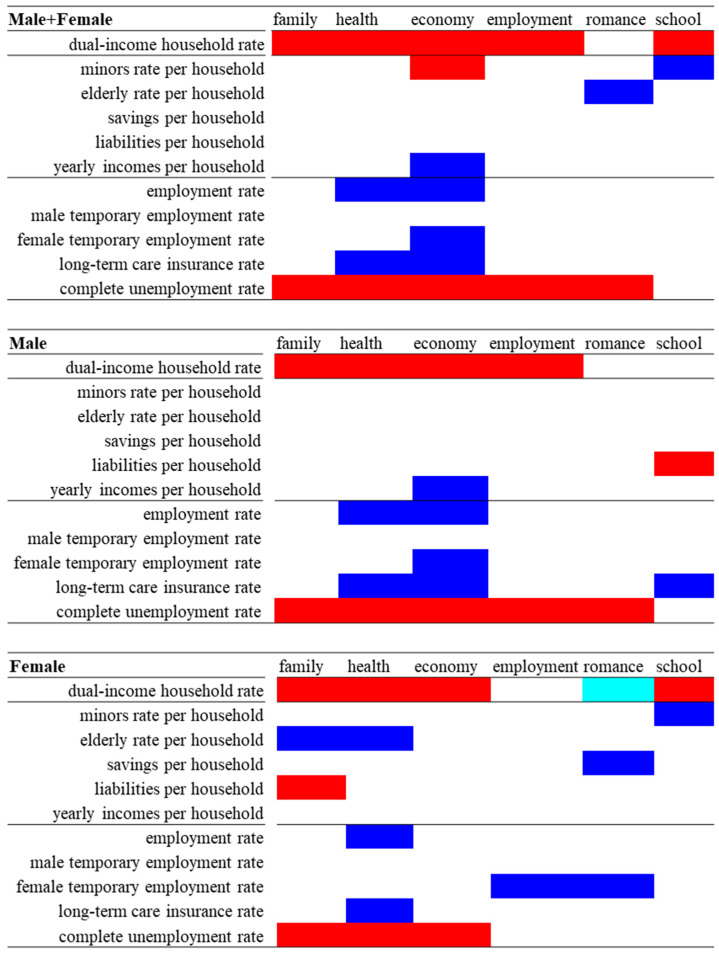
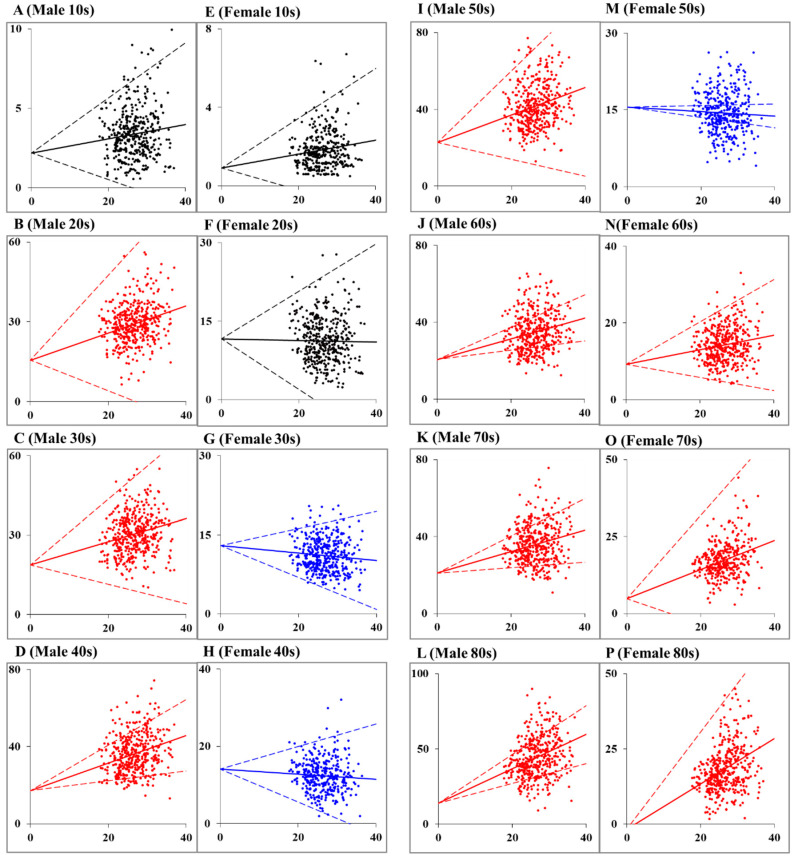
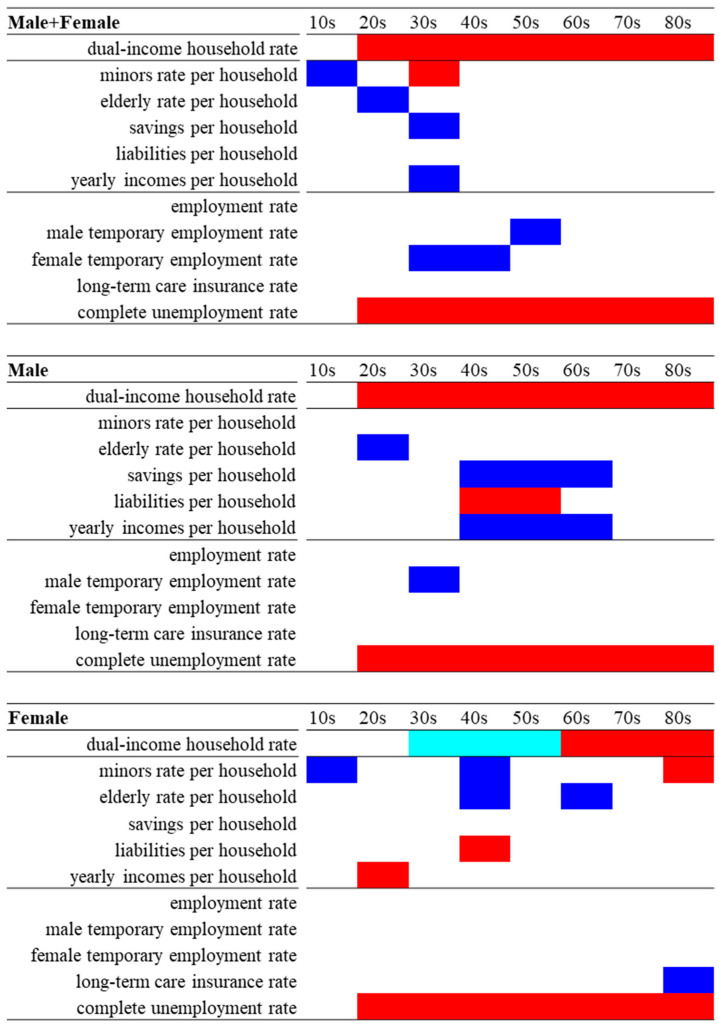
To explore impact of enhancing social advancement of females in Japan, this study determined the effects of the dual-income household rate on suicide mortalities disaggregated by attributes of gender, age, and motives between 2009 and 2017 in Japan. This study analysed impact of dual-income household rate, other household-related factors (savings, liabilities and yearly incomes per household, minors and elderly rate per household), and social/employment factors (complete unemployment rate, employment rate, temporary male and female employment rates and certification rate of long-term care insurance) on suicide mortalities disaggregated by attributes of gender, age, and motives using hierarchical linear-regression model. Dual-income household rate was significantly/negatively related to suicide mortality of the working-age female population, but significantly/positively related to that of the elderly female population. Suicide mortalities of the working-age male population and the elderly male population were significantly/positively related to dual-income household rate. Male suicide mortalities caused by family-, health-, economy- and employment-related motives were significantly/positively related to dual-income household rate; however, the dual-income household rate was significantly/positively related to female suicide mortalities caused by family-, health-, economy- and school-related motives, but significantly/negatively related to suicide mortalities caused by romance-related motives. Dual-income households suppress social-isolation and develop economical/psychological independence of females, leading to reduced suicide mortality in working-age females. However, elderly and school-age populations, who are supported by the working-age female, suffer from isolation. Working-age males also suffer from inability to adapt from the traditional concept of work-life and work-family balances to the novel work-family balance concept adapted to dual-income households. These results suggest occurrence of new social/family problems in the 21st century due to vulnerability of traditional Japanese culture and life-working-family balance concepts as well as novel sociofamilial disturbances induced by declining birth rate and ageing population in Japan.
为了探索提高日本女性社会地位的影响,本研究在 2009 年至 2017 年期间,确定了双收入家庭比例对按性别、年龄和动机细分的自杀死亡率的影响。本研究使用分层线性回归模型,分析了双收入家庭比例、其他家庭相关因素(储蓄、负债和家庭年收入、每户未成年人和老年人比例)以及社会/就业因素(完全失业率、就业率、临时男女就业率和长期护理保险认证率)对按性别、年龄和动机细分的自杀死亡率的影响。双收入家庭比例与劳动年龄女性人口的自杀死亡率呈显著负相关,但与老年女性人口的自杀死亡率呈显著正相关。劳动年龄男性人口和老年男性人口的自杀死亡率与双收入家庭比例呈显著正相关。与家庭、健康、经济和就业相关的动机导致的男性自杀死亡率与双收入家庭比例呈显著正相关;然而,双收入家庭比例与家庭、健康、经济和学校相关的动机导致的女性自杀死亡率呈显著正相关,但与浪漫相关的动机导致的自杀死亡率呈显著负相关。双收入家庭抑制了女性的社会孤立,发展了经济/心理独立性,从而降低了劳动年龄女性的自杀死亡率。然而,由劳动年龄女性抚养的老年和学龄人口则遭受孤立。劳动年龄男性也难以适应从传统的工作生活和工作家庭平衡观念向适应双收入家庭的新工作家庭平衡观念转变。这些结果表明,由于日本传统文化和生活工作家庭平衡观念的脆弱性以及由出生率下降和人口老龄化引起的新型社会家庭干扰,21 世纪出现了新的社会/家庭问题。