Peng Yi-Jen, Lu Jeng-Wei, Lee Chian-Her, Lee Herng-Sheng, Chu You-Hsiang, Ho Yi-Jung, Liu Feng-Cheng, Huang Chun-Jung, Wu Chia-Chun, Wang Chih-Chien
Department of Pathology, National Defense Medical Center, Tri-Service General Hospital, Taipei 114, Taiwan.
Department of Biological Sciences, National University of Singapore, Singapore 117543, Singapore.
Antioxidants (Basel). 2021 May 27;10(6):862. doi: 10.3390/antiox10060862.
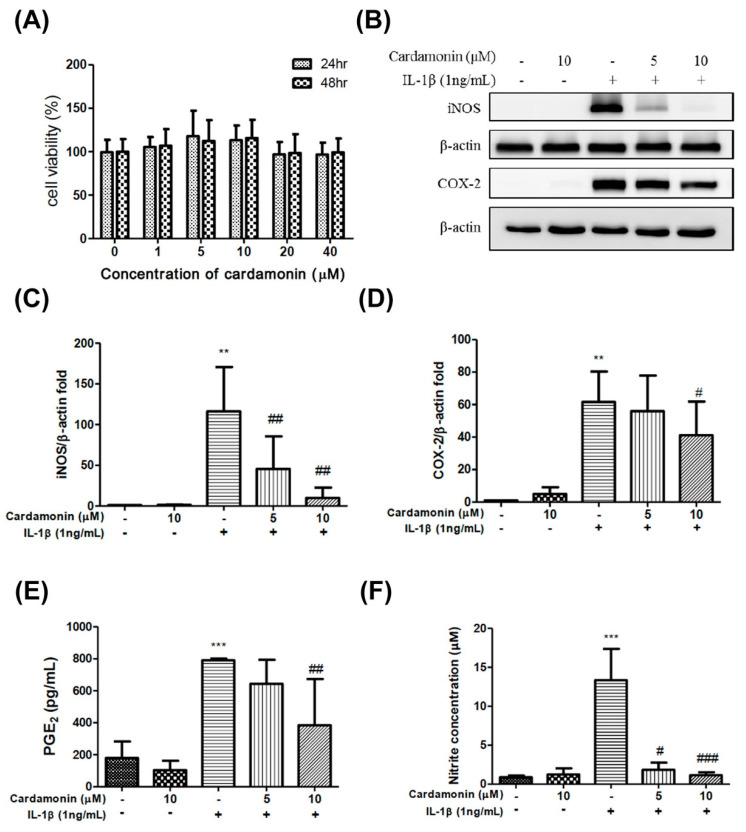
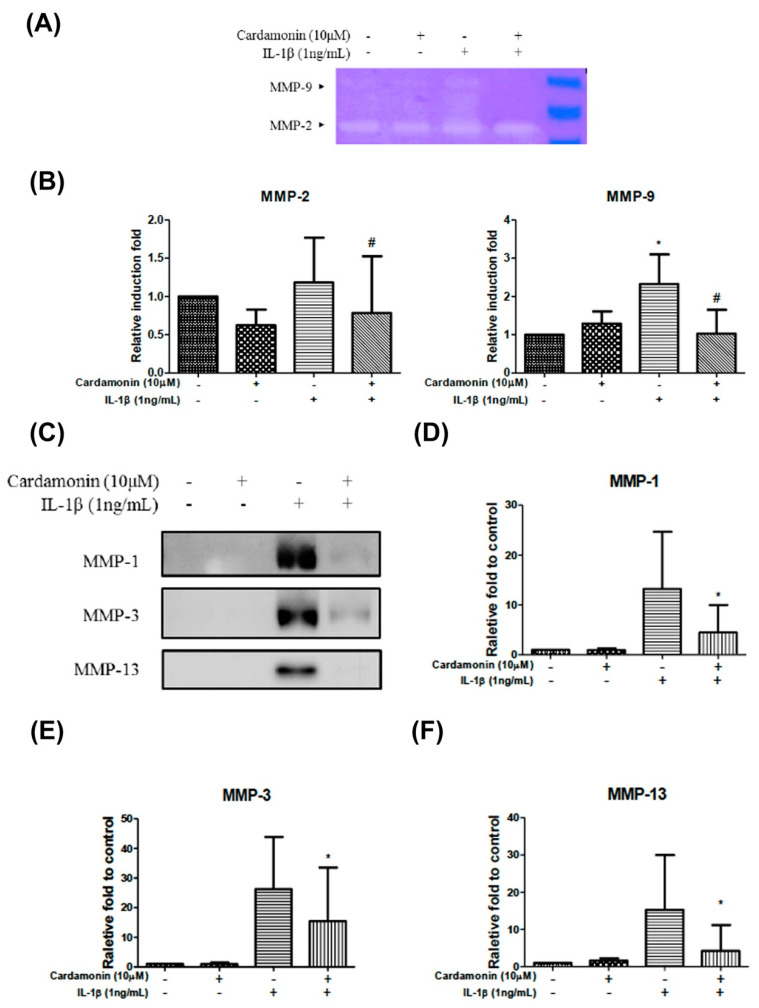
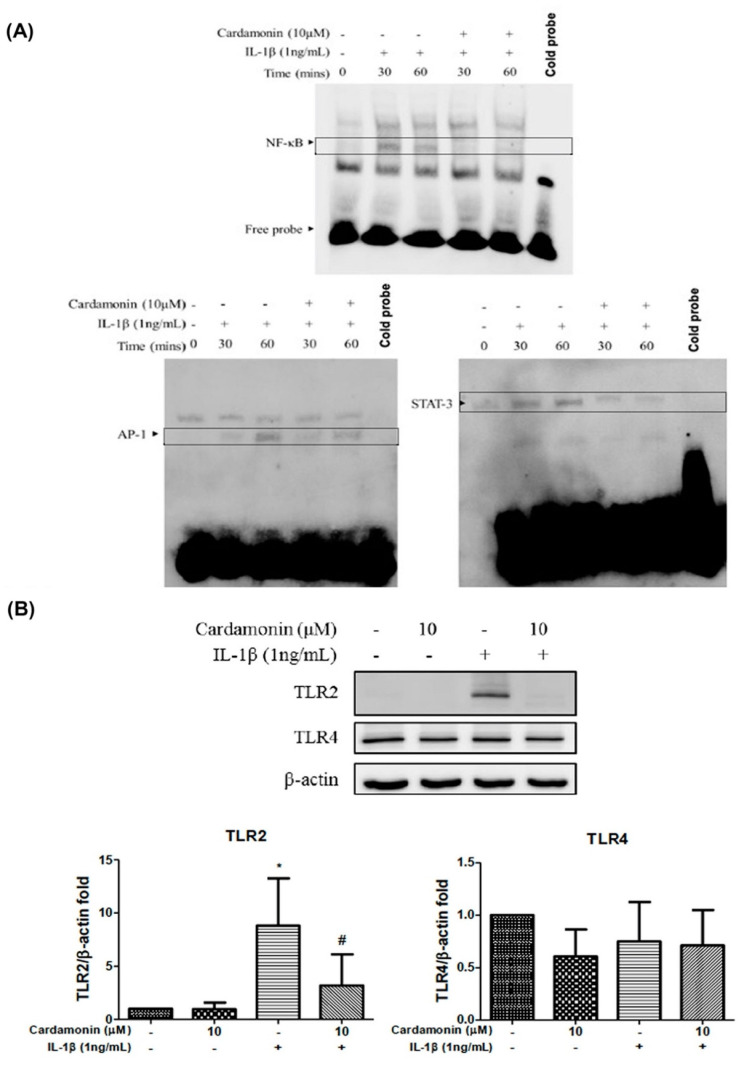
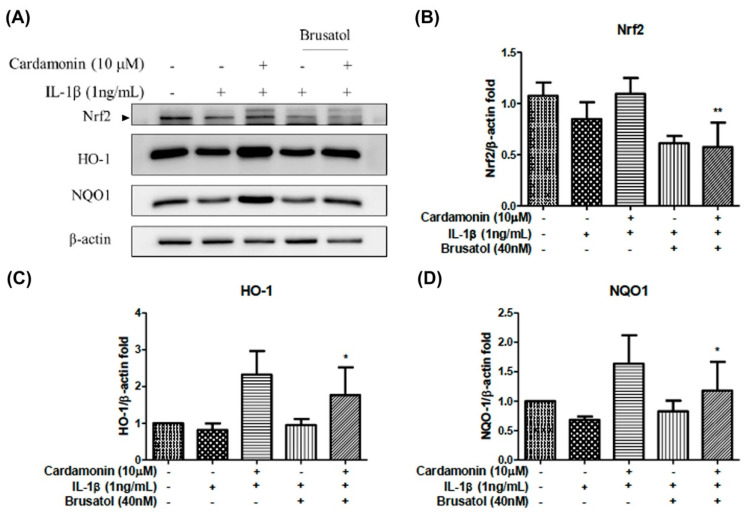
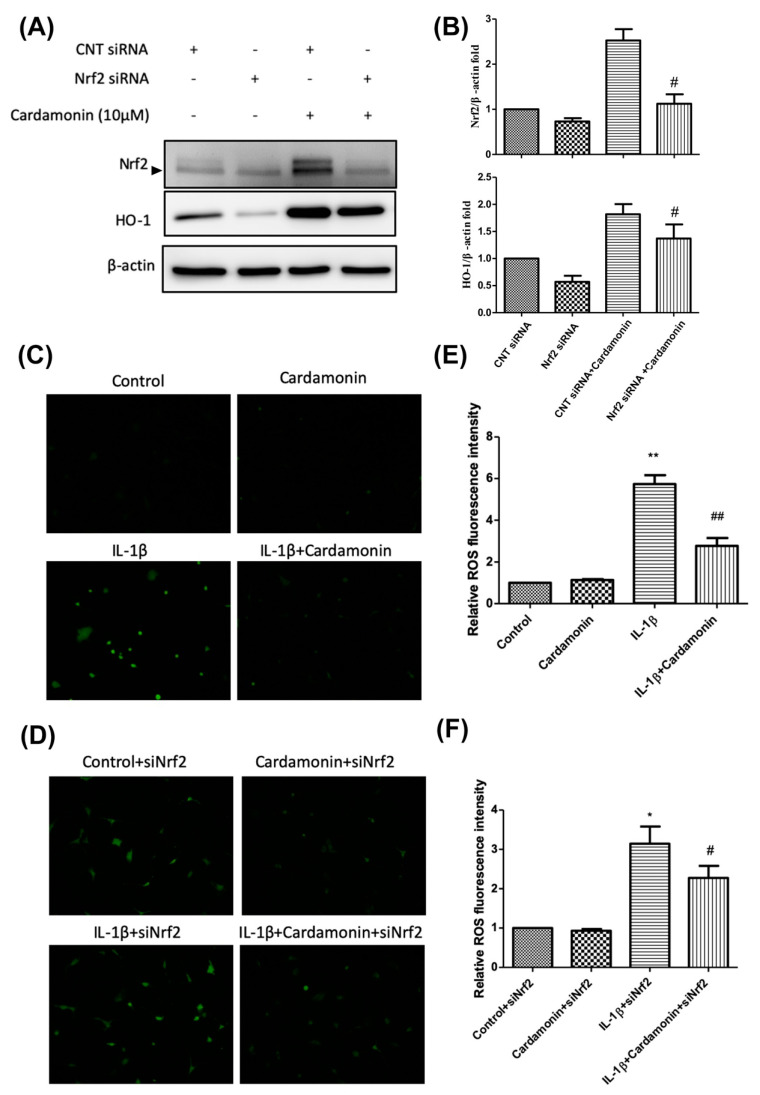
Osteoarthritis (OA) is a chronic degenerative joint disease characterized by the deterioration of articular cartilage. The progression of OA leads to an increase in inflammatory mediators in the joints, thereby promoting the destruction of the cartilage matrix. Recent studies have reported on the anti-inflammatory and antioxidant properties of cardamonin, which also appears to interact with cellular targets, such as nuclear erythroid 2-related factor 2 (Nrf2), extracellular signal-regulated kinase (ERK), and mammalian target of rapamycin (mTOR) during the progression of tumors. To date, few studies have investigated the effects of cardamonin on chondrocyte inflammation. In the current study, we determined that treating interleukin-1 beta (IL-1β-stimulated chondrocyte cells) with cardamonin significantly reduced the release of nitric oxide (NO) and prostaglandin E2 (PGE2) and significantly inhibited the expression of pro-inflammatory proteins, including inducible nitric oxide synthase (iNOS) and cyclooxygenase 2 (COX2). Cardamonin was also shown to: (1) inhibit the activation and production of matrix metalloproteinases (MMPs), (2) suppress the nuclear factor-κB (NF-κB) signaling pathway, (3) suppress the expression of toll-like receptor proteins, (4) activate the Nrf2 signaling pathway, and (5) increase the levels of antioxidant proteins heme oxygenase-1 (HO-1) and NAD(P)H:quinone oxidoreductase 1 (NQO1). The increase in antioxidant proteins led to corresponding antioxidant effects (which were abolished by Nrf2 siRNA). Our findings identify cardamonin as a candidate Nrf2 activator for the treatment and prevention of OA related to inflammation and oxidative stress.
骨关节炎(OA)是一种以关节软骨退化为特征的慢性退行性关节疾病。OA的进展导致关节中炎症介质增加,从而促进软骨基质的破坏。最近的研究报道了小豆蔻明的抗炎和抗氧化特性,在肿瘤进展过程中,它似乎还与细胞靶点相互作用,如核红细胞2相关因子2(Nrf2)、细胞外信号调节激酶(ERK)和雷帕霉素靶蛋白(mTOR)。迄今为止,很少有研究调查小豆蔻明对软骨细胞炎症的影响。在本研究中,我们确定用小豆蔻明处理白细胞介素-1β(IL-1β刺激的软骨细胞)可显著减少一氧化氮(NO)和前列腺素E2(PGE2)的释放,并显著抑制促炎蛋白的表达,包括诱导型一氧化氮合酶(iNOS)和环氧化酶2(COX2)。小豆蔻明还被证明:(1)抑制基质金属蛋白酶(MMPs)的激活和产生,(2)抑制核因子-κB(NF-κB)信号通路,(3)抑制Toll样受体蛋白的表达,(4)激活Nrf2信号通路,以及(5)增加抗氧化蛋白血红素加氧酶-1(HO-1)和NAD(P)H:醌氧化还原酶1(NQO1)的水平。抗氧化蛋白的增加导致相应的抗氧化作用(被Nrf2 siRNA消除)。我们的研究结果确定小豆蔻明是一种用于治疗和预防与炎症和氧化应激相关的OA的候选Nrf2激活剂。