Department of Biology and Center for Visual Sciences at Miami University, Miami University, Oxford, OH 45056, USA.
McPherson Eye Research Institute, University of Wisconsin-Madison, Madison, WI 53705, USA.
Genes (Basel). 2021 May 29;12(6):840. doi: 10.3390/genes12060840.
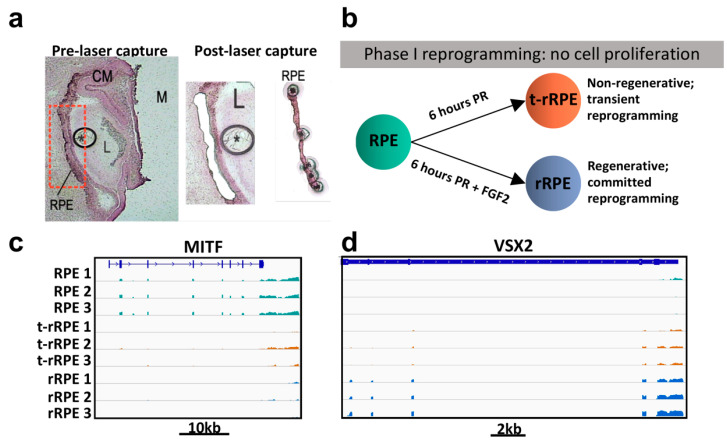
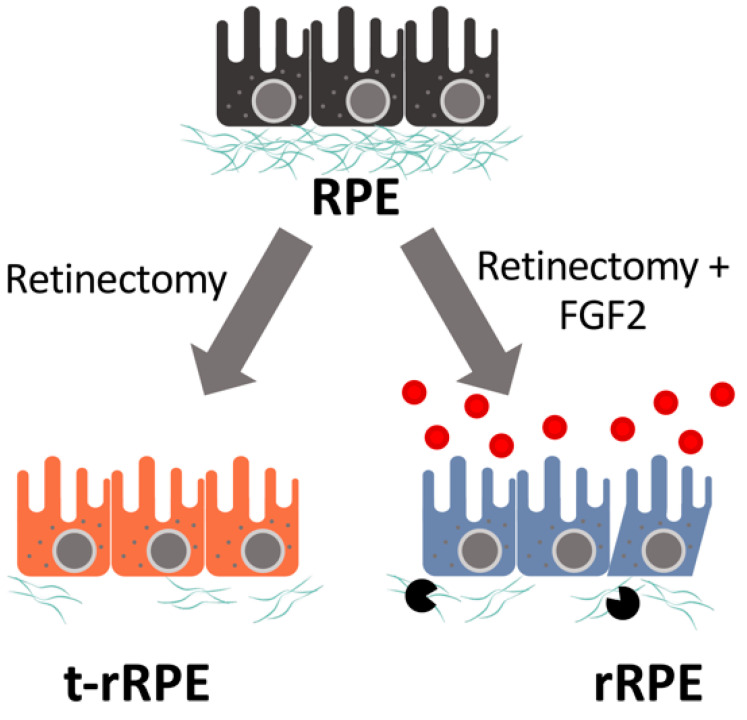
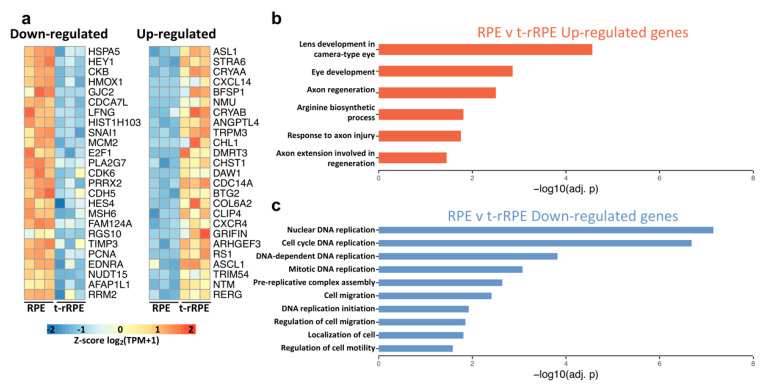
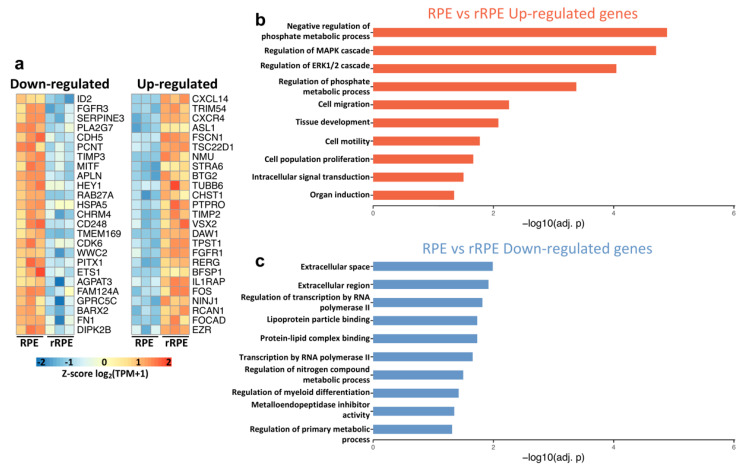
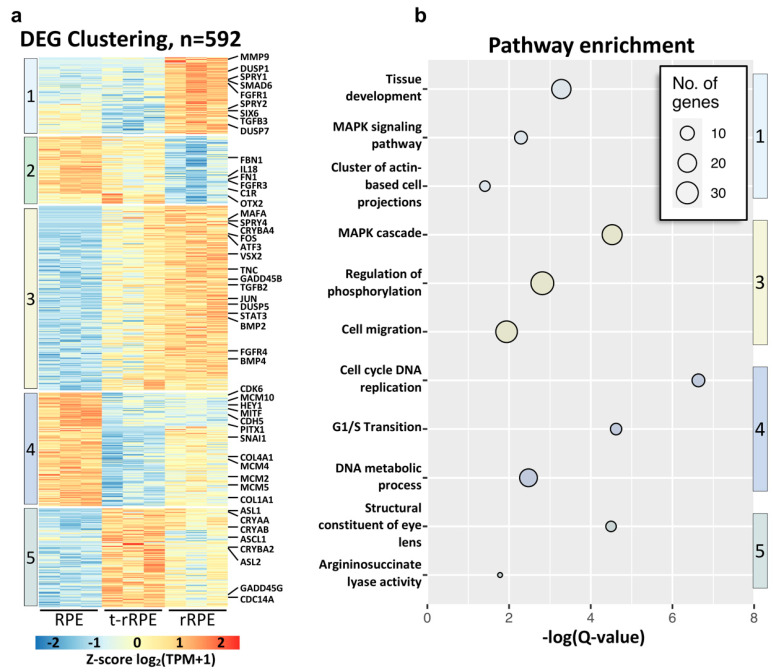
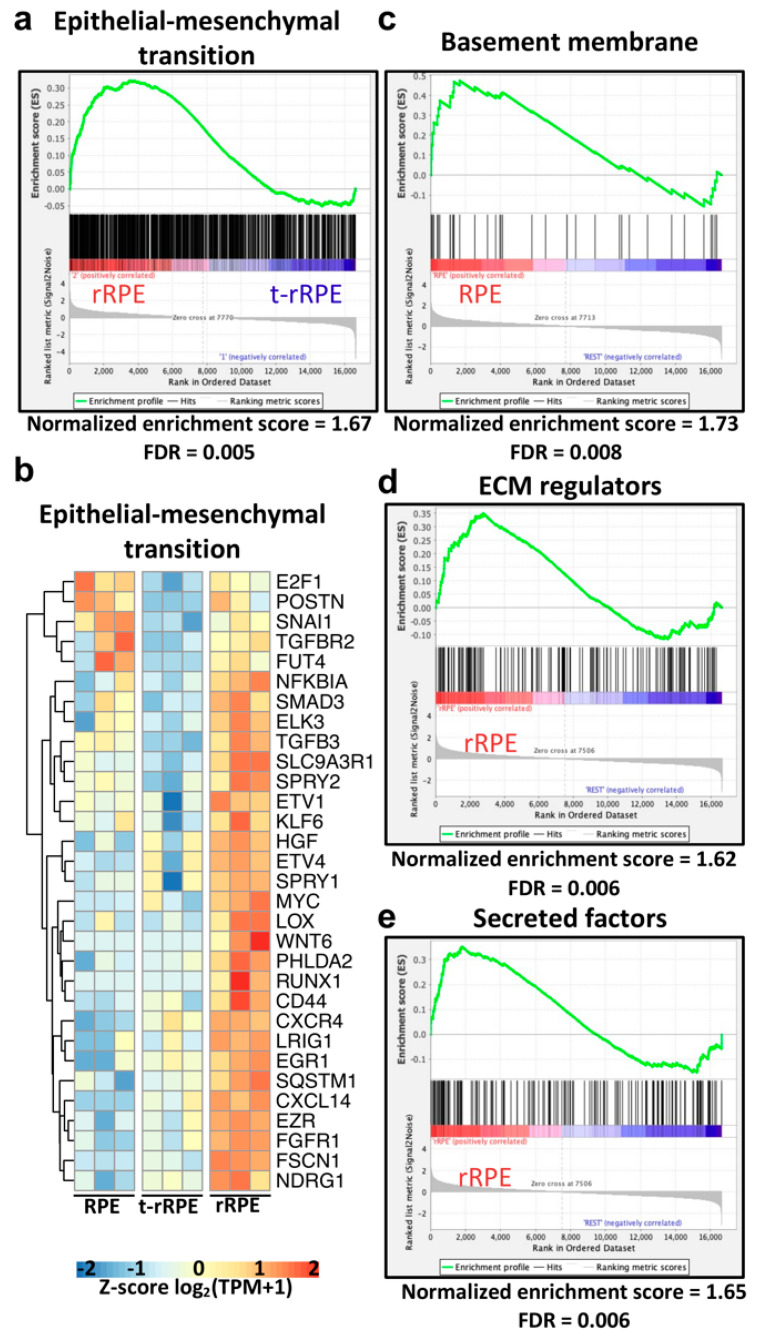
The plasticity of human retinal pigment epithelium (RPE) has been observed during proliferative vitreoretinopathy, a defective repair process during which injured RPE gives rise to fibrosis. In contrast, following injury, the RPE of the embryonic chicken can be reprogrammed to regenerate neural retina in a fibroblast growth factor 2 (FGF2)-dependent manner. To better explore the mechanisms underlying embryonic RPE reprogramming, we used laser capture microdissection to isolate RNA from (1) intact RPE, (2) transiently reprogrammed RPE (t-rRPE) 6 h post-retinectomy, and (3) reprogrammed RPE (rRPE) 6 h post-retinectomy with FGF2 treatment. Using RNA-seq, we observed the acute repression of genes related to cell cycle progression in the injured t-rRPE, as well as up-regulation of genes associated with injury. In contrast, the rRPE was strongly enriched for mitogen-activated protein kinase (MAPK)-responsive genes and retina development factors, confirming that FGF2 and the downstream MAPK cascade are the main drivers of embryonic RPE reprogramming. Clustering and pathway enrichment analysis was used to create an integrated network of the core processes associated with RPE reprogramming, including key terms pertaining to injury response, migration, actin dynamics, and cell cycle progression. Finally, we employed gene set enrichment analysis to suggest a previously uncovered role for epithelial-mesenchymal transition (EMT) machinery in the initiation of embryonic chick RPE reprogramming. The EMT program is accompanied by extensive, coordinated regulation of extracellular matrix (ECM) associated factors, and these observations together suggest an early role for ECM and EMT-like dynamics during reprogramming. Our study provides for the first time an in-depth transcriptomic analysis of embryonic RPE reprogramming and will prove useful in guiding future efforts to understand proliferative disorders of the RPE and to promote retinal regeneration.
人视网膜色素上皮 (RPE) 的可塑性已在增生性玻璃体视网膜病变中观察到,这是一种修复过程有缺陷的疾病,在此过程中,受伤的 RPE 会产生纤维化。相比之下,在受伤后,鸡胚的 RPE 可以通过成纤维细胞生长因子 2 (FGF2) 依赖性方式被重新编程以再生神经视网膜。为了更好地探索胚胎 RPE 重新编程的机制,我们使用激光捕获显微解剖从 (1) 完整的 RPE、(2) 视网膜切除后 6 小时的瞬时重编程 RPE (t-rRPE) 和 (3) 用 FGF2 处理视网膜切除后 6 小时的重编程 RPE (rRPE) 中分离 RNA。使用 RNA-seq,我们观察到受伤的 t-rRPE 中与细胞周期进展相关的基因被强烈抑制,同时与损伤相关的基因被上调。相比之下,rRPE 强烈富集了丝裂原活化蛋白激酶 (MAPK) 反应基因和视网膜发育因子,证实了 FGF2 和下游 MAPK 级联是胚胎 RPE 重新编程的主要驱动因素。聚类和途径富集分析用于创建与 RPE 重新编程相关的核心过程的综合网络,包括与损伤反应、迁移、肌动蛋白动力学和细胞周期进展相关的关键术语。最后,我们使用基因集富集分析来表明上皮-间充质转化 (EMT) 机制在启动鸡胚 RPE 重新编程中具有以前未被发现的作用。EMT 程序伴随着细胞外基质 (ECM) 相关因子的广泛、协调的调节,这些观察结果共同表明 ECM 和 EMT 样动力学在重新编程过程中的早期作用。我们的研究首次对胚胎 RPE 重新编程进行了深入的转录组分析,这将有助于指导未来理解 RPE 的增殖性疾病并促进视网膜再生的努力。