Le Bideau Marion, Wurtz Nathalie, Baudoin Jean-Pierre, La Scola Bernard
Microbes, Evolution, Phylogeny and Infection (MEPHI), UM63, Institut de Recherche pour le Développement (IRD), Assistance Publique-Hôpitaux de Marseille (AP-HM), Aix-Marseille University, 13005 Marseille, France.
IHU Méditerranée Infection, 13005 Marseille, France.
Microorganisms. 2021 May 31;9(6):1194. doi: 10.3390/microorganisms9061194.
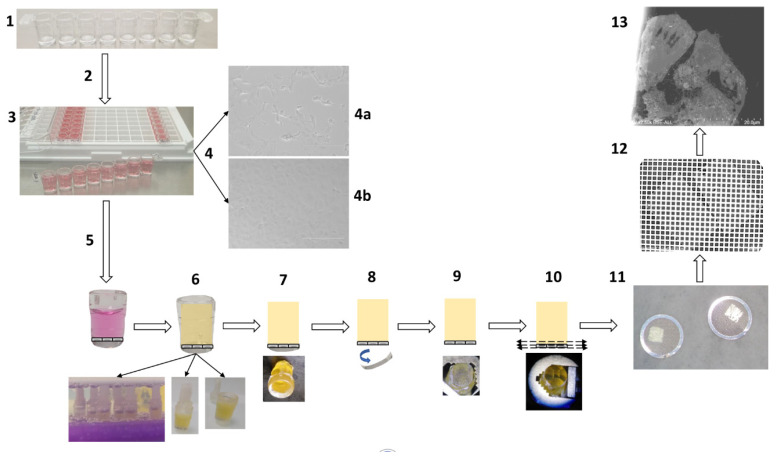
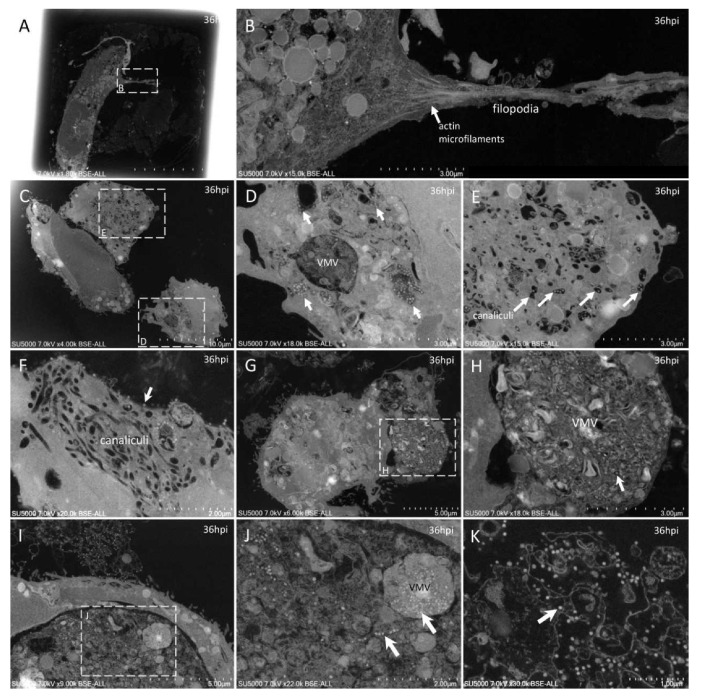
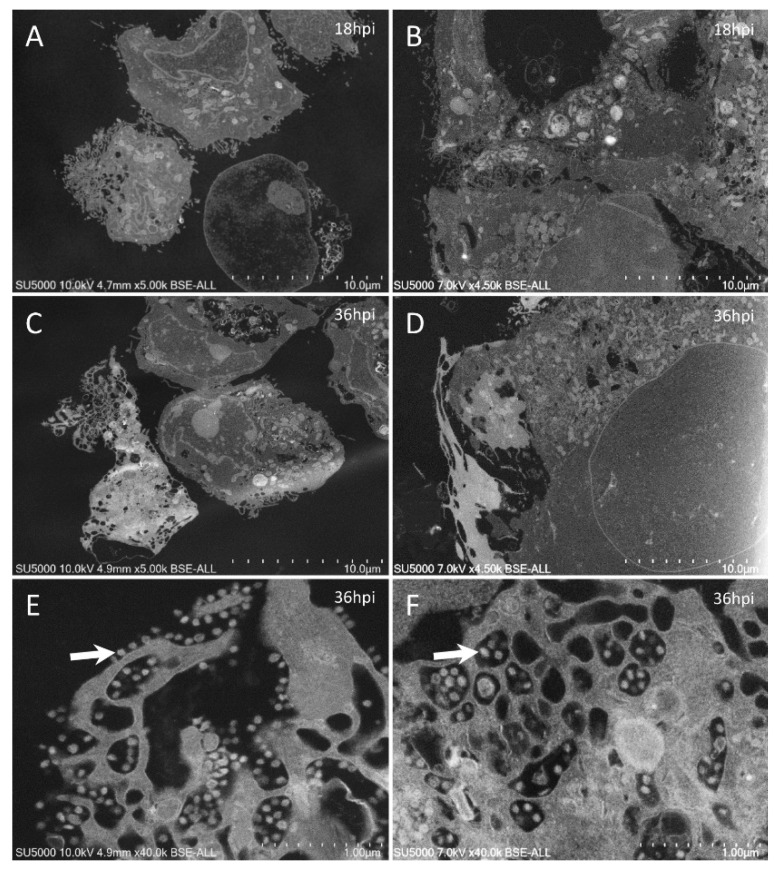
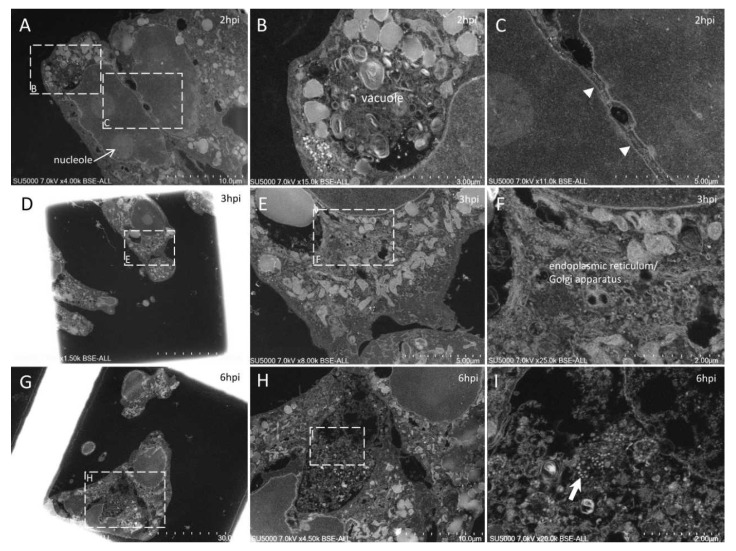
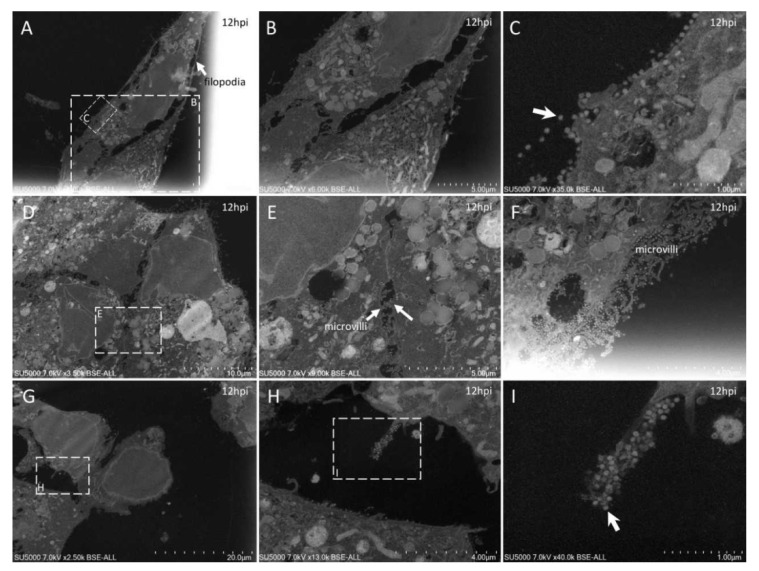
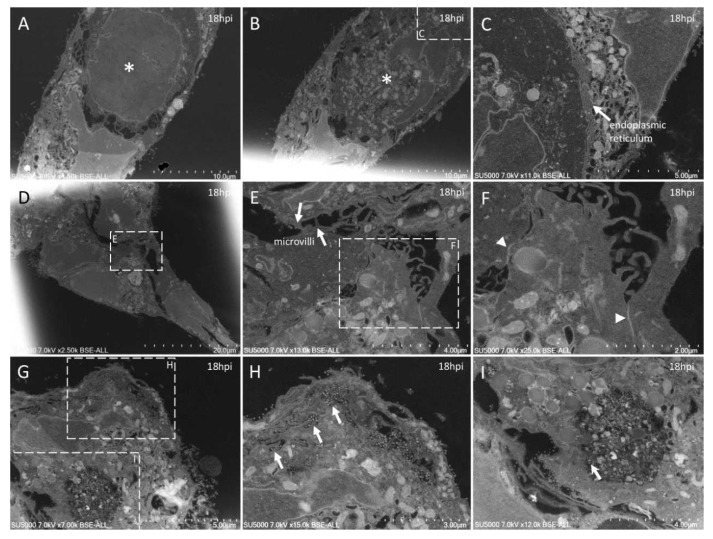
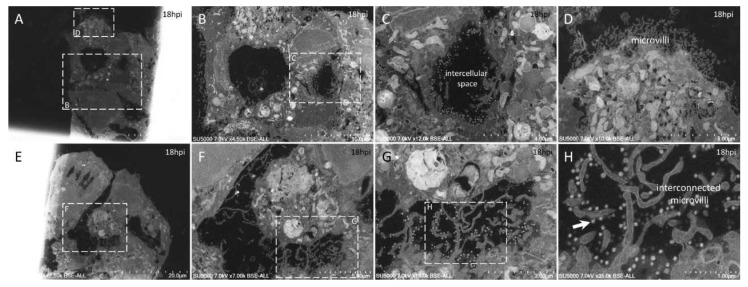
Despite the development of new diagnostic methods, co-culture, based on sample inoculation of cell monolayers coupled with electron microscopy (EM) observation, remains the gold standard in virology. Indeed, co-culture allows for the study of cell morphology (infected and not infected), the ultrastructure of the inoculated virus, and the different steps of the virus infectious cycle. Most EM methods for studying virus cycles are applied after infected cells are produced in large quantities and detached to obtain a pellet. Here, cell culture was performed in sterilized, collagen-coated single-break strip wells. After one day in culture, cells were infected with SARS-CoV-2. Wells of interest were fixed at different time points, from 2 to 36 h post-infection. Microwave-assisted resin embedding was accomplished directly in the wells in 4 h. Finally, ultra-thin sections were cut directly through the infected-cell monolayers. Our methodology requires, in total, less than four days for preparing and observing cells. Furthermore, by observing undetached infected cell monolayers, we were able to observe new ultrastructural findings, such as cell-cell interactions and baso-apical cellular organization related to the virus infectious cycle. Our innovative methodology thus not only saves time for preparation but also adds precision and new knowledge about viral infection, as shown here for SARS-CoV-2.
尽管新的诊断方法不断发展,但基于细胞单层接种并结合电子显微镜(EM)观察的共培养,仍然是病毒学的金标准。事实上,共培养能够研究细胞形态(感染和未感染的)、接种病毒的超微结构以及病毒感染周期的不同步骤。大多数用于研究病毒周期的EM方法是在大量生产并分离感染细胞以获得沉淀后应用的。在此,细胞培养在经过消毒、涂有胶原蛋白的单孔条孔板中进行。培养一天后,用严重急性呼吸综合征冠状病毒2(SARS-CoV-2)感染细胞。在感染后2至36小时的不同时间点固定感兴趣的孔板。4小时内在孔板中直接完成微波辅助树脂包埋。最后,直接穿过感染细胞单层切出超薄切片。我们的方法总共只需不到四天的时间来制备和观察细胞。此外,通过观察未分离的感染细胞单层,我们能够观察到新的超微结构发现,例如与病毒感染周期相关的细胞间相互作用和基底-顶端细胞组织。因此,我们的创新方法不仅节省了制备时间,还增加了关于病毒感染的精确性和新知识,如本文针对SARS-CoV-2所展示的。