Biomedical Research Center, Qatar University, Doha, Qatar.
Infectious Disease Division, Communicable Diseases Centre, Hamad Medical Corporation, Doha, Qatar.
Microb Drug Resist. 2021 Dec;27(12):1705-1725. doi: 10.1089/mdr.2020.0619. Epub 2021 Jun 1.
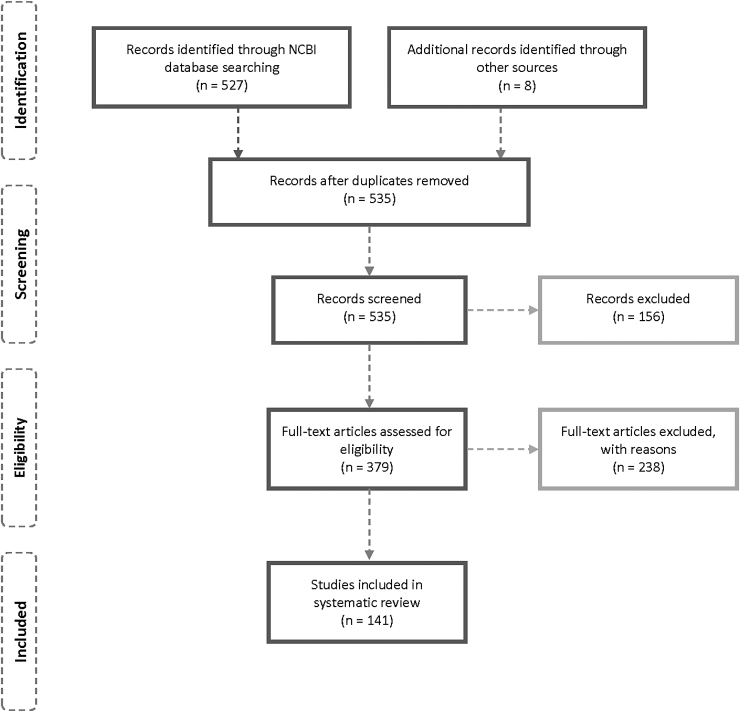
Over the last decades, there has been a significant increase in antimicrobial prescribing and consumption associated with the development of patients' adverse events and antimicrobial resistance (AMR) to the point of becoming a global priority. This study aims at evaluating antibiotic prescribing during COVID-19 pandemic from November 2019 to December 2020. A systematic review was conducted primarily through the NCBI database, using PRISMA guidelines to identify relevant literature for the period between November 1, 2019 and December 19, 2020, using the keywords: COVID-19 OR SARS-Cov-2 AND antibiotics restricted to the English language excluding nonclinical articles. Five hundred twenty-seven titles were identified; all articles fulfilling the study criteria were included, 133 through the NCBI, and 8 through Google Scholar with a combined total of 141 studies. The patient's spectrum included all ages from neonates to elderly with all associated comorbidities, including immune suppression. Of 28,093 patients included in the combined studies, 58.7% received antibiotics (16,490/28,093), ranging from 1.3% to 100% coverage. Antibiotics coverage was less in children (57%) than in adults with comorbidities (75%). Broad-spectrum antibiotics were prescribed presumptively without pathogen identifications, which might contribute to adverse outcomes. During the COVID-19 pandemic, there has been a significant and wide range of antibiotic prescribing in patients affected by the disease, particularly in adults with underlying comorbidities, despite the paucity of evidence of associated bacterial infections. The current practice might increase patients' immediate and long-term risks of adverse events, susceptibility to secondary infections as well as aggravating AMR.
在过去的几十年中,由于患者不良事件和抗菌药物耐药性(AMR)的发展,抗菌药物的处方和使用量显著增加,已成为全球优先事项。本研究旨在评估 COVID-19 大流行期间(2019 年 11 月至 2020 年 12 月)的抗生素处方情况。主要通过 NCBI 数据库进行系统评价,使用 PRISMA 指南,使用关键字:COVID-19 或 SARS-Cov-2 和抗生素,将研究时间限制在 2019 年 11 月 1 日至 2020 年 12 月 19 日,排除非临床文章,以确定相关文献。共确定了 527 个标题;所有符合研究标准的文章均被纳入,其中 133 篇来自 NCBI,8 篇来自 Google Scholar,总共 141 篇研究。患者谱包括从新生儿到老年人的所有年龄段,伴有所有相关合并症,包括免疫抑制。在纳入的 28093 例联合研究患者中,58.7%(16490/28093)接受了抗生素治疗,抗生素覆盖范围为 1.3%至 100%。患有合并症的成年人(75%)比儿童(57%)接受抗生素治疗的比例更低。广谱抗生素在没有病原体鉴定的情况下被假定使用,这可能导致不良结局。在 COVID-19 大流行期间,尽管缺乏相关细菌感染的证据,但受疾病影响的患者中抗生素的使用范围广泛且显著,尤其是患有潜在合并症的成年人。目前的做法可能会增加患者即时和长期发生不良事件、继发感染以及加重 AMR 的风险。