Shurko James F, Page Robert B, Mares Chris A, Nguyen Vivian, Lopez Kristina, Vanee Niti, Mishra Pramod K
Molecular Diagnostics Division, iGenomeDx, San Antonio, TX, United States.
Department of Life Sciences, Texas A&M University-San Antonio, San Antonio, TX, United States.
Front Epidemiol. 2023 Nov 1;3:1274800. doi: 10.3389/fepid.2023.1274800. eCollection 2023.
COVID-19 has emerged as a highly contagious and debilitating disease caused by the SARS-CoV-2 virus and has claimed the lives of over 7.7 million people worldwide. Bacterial co-infections are one of many co-morbidities that have been suggested to impact the outcome of COVID-19 in patients. The goals of this study are to elucidate the presence of bacteria in the nasopharynx of SARS-CoV-2 positive and negative patients and to describe demographic categories that may be associated with the detection of these organisms during one of the initial waves of the COVID-19 pandemic.
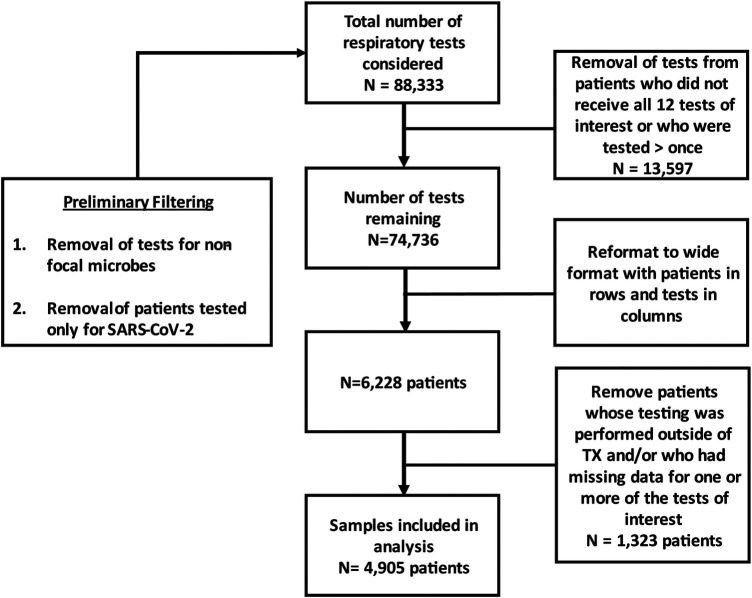
To this end, we investigated SARS-CoV-2 and bacterial co-detection from outpatient RT-PCR testing in Texas.
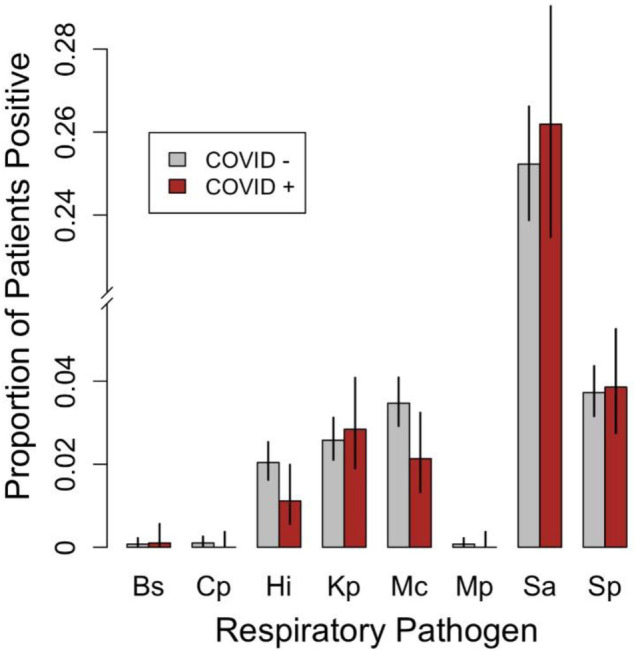
The results indicate that , , , , and were the most frequently detected bacteria in both SARS-CoV-2 positive and SARS-CoV-2 negative patients and that these bacteria were present in these two patient populations at similar proportions. We also detected in a significantly larger proportion of males relative to females and people under 65 years of age relative to those 65 and over. Finally, we observed that SARS-CoV-2 was more commonly detected in Hispanics compared to non-Hispanics; however, low disclosure rates make volunteer bias a concern when interpreting the effects of demographic variables.
This study describes the bacteria present in the nasopharynx of SARS-CoV-2 positive and negative patients, highlights associations between patient demographics and SARS-CoV-2 as well as bacterial co-detection. In addition, this study highlights RT-PCR based molecular testing as a tool to detect bacteria simultaneously when SARS-CoV-2 tests are performed.
新型冠状病毒肺炎(COVID-19)是由严重急性呼吸综合征冠状病毒2(SARS-CoV-2)病毒引起的一种高度传染性和使人衰弱的疾病,全球已有超过770万人死亡。细菌合并感染是众多被认为会影响COVID-19患者预后的合并症之一。本研究的目的是阐明SARS-CoV-2阳性和阴性患者鼻咽部细菌的存在情况,并描述在COVID-19大流行的第一波疫情期间可能与这些微生物检测相关的人口统计学类别。
为此,我们调查了德克萨斯州门诊逆转录聚合酶链反应(RT-PCR)检测中的SARS-CoV-2和细菌共同检测情况。
结果表明, 、 、 、 和 是SARS-CoV-2阳性和SARS-CoV-2阴性患者中最常检测到的细菌,并且这些细菌在这两类患者群体中的比例相似。我们还发现,男性中检测到 的比例明显高于女性,65岁以下人群中检测到 的比例明显高于65岁及以上人群。最后,我们观察到,与非西班牙裔相比,西班牙裔中更常检测到SARS-CoV-2;然而,低披露率使得在解释人口统计学变量的影响时,志愿者偏差成为一个问题。
本研究描述了SARS-CoV-2阳性和阴性患者鼻咽部存在的细菌,突出了患者人口统计学与SARS-CoV-2以及细菌共同检测之间的关联。此外,本研究强调基于RT-PCR的分子检测作为一种在进行SARS-CoV-2检测时同时检测细菌的工具。