Snitz Kobi, Andelman-Gur Michal, Pinchover Liron, Weissgross Reut, Weissbrod Aharon, Mishor Eva, Zoller Roni, Linetsky Vera, Medhanie Abebe, Shushan Sagit, Jaffe Eli, Sobel Noam
Department of Neurobiology and Azrieli Center for Human Brain Imaging and Research, Weizmann Institute of Science, Rehovot, Israel.
Department of Otolaryngology & Head and Neck Surgery, Edith Wolfson Medical Center, Holon, Israel.
PLoS One. 2021 Jun 2;16(6):e0252121. doi: 10.1371/journal.pone.0252121. eCollection 2021.
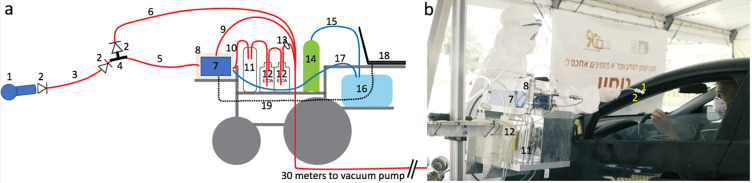
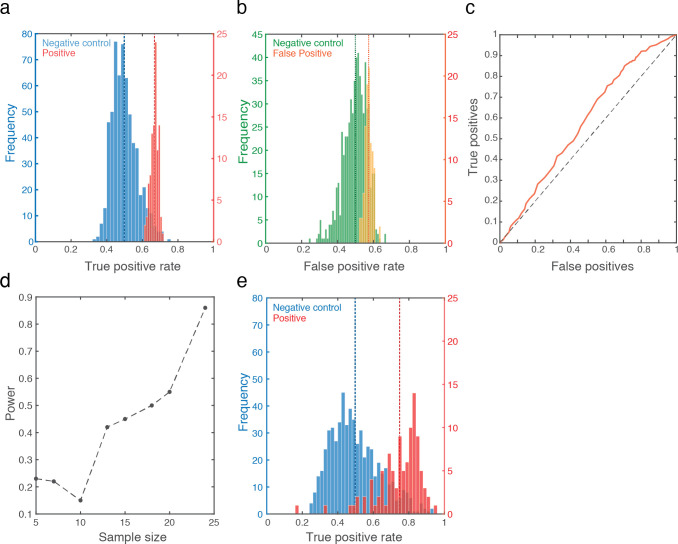
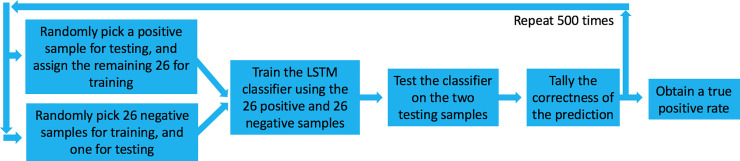
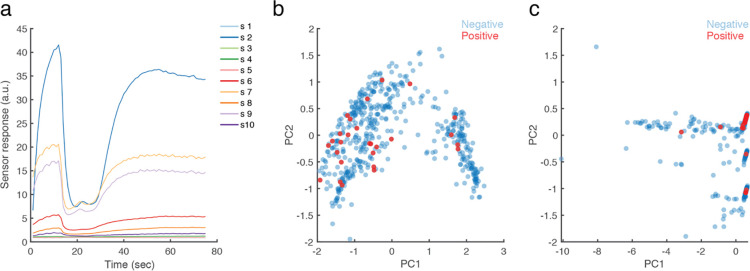
Rapid diagnosis is key to curtailing the Covid-19 pandemic. One path to such rapid diagnosis may rely on identifying volatile organic compounds (VOCs) emitted by the infected body, or in other words, identifying the smell of the infection. Consistent with this rationale, dogs can use their nose to identify Covid-19 patients. Given the scale of the pandemic, however, animal deployment is a challenging solution. In contrast, electronic noses (eNoses) are machines aimed at mimicking animal olfaction, and these can be deployed at scale. To test the hypothesis that SARS CoV-2 infection is associated with a body-odor detectable by an eNose, we placed a generic eNose in-line at a drive-through testing station. We applied a deep learning classifier to the eNose measurements, and achieved real-time detection of SARS CoV-2 infection at a level significantly better than chance, for both symptomatic and non-symptomatic participants. This proof of concept with a generic eNose implies that an optimized eNose may allow effective real-time diagnosis, which would provide for extensive relief in the Covid-19 pandemic.
快速诊断是遏制新冠疫情的关键。实现这种快速诊断的一种途径可能依赖于识别感染者身体散发的挥发性有机化合物(VOCs),或者换句话说,识别感染的气味。基于这一原理,狗可以用鼻子识别新冠患者。然而,考虑到疫情的规模,部署动物是一个具有挑战性的解决方案。相比之下,电子鼻(eNoses)是旨在模仿动物嗅觉的机器,并且可以大规模部署。为了验证新冠病毒(SARS CoV-2)感染与电子鼻可检测到的体臭有关这一假设,我们在一个免下车检测站将一台普通电子鼻串联安装。我们将深度学习分类器应用于电子鼻测量结果,并在有症状和无症状参与者中均实现了对新冠病毒感染的实时检测,检测水平显著高于随机水平。这种使用普通电子鼻的概念验证意味着,优化后的电子鼻可能实现有效的实时诊断,这将为缓解新冠疫情带来极大帮助。