Central Department of Microbiology, Tribhuvan University, Kirtipur, Kathmandu, Nepal.
Nepal Medical College, Jorpati, Kathmandu, Nepal.
Sci Rep. 2021 Jun 2;11(1):11554. doi: 10.1038/s41598-021-90812-4.
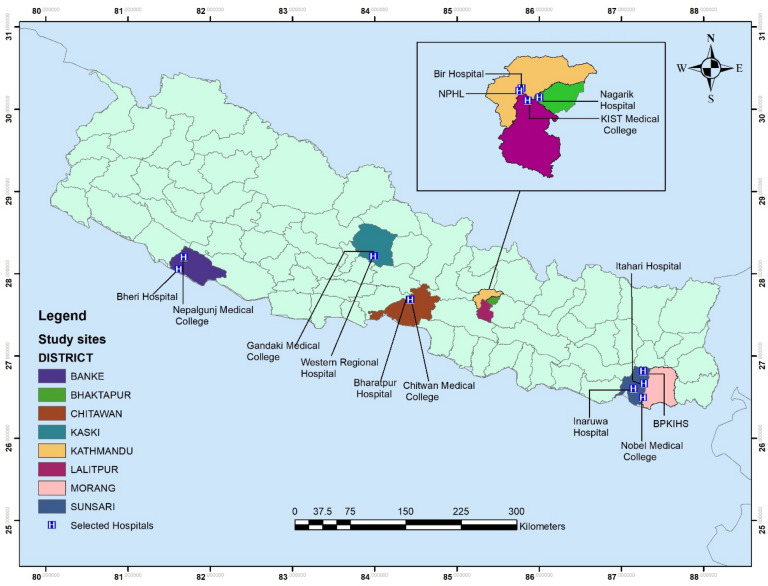
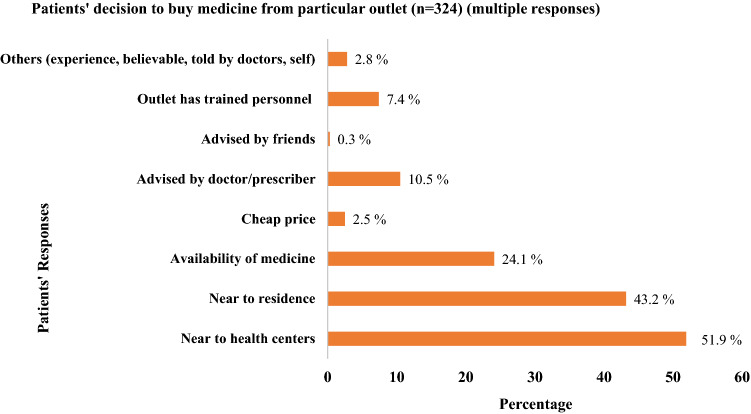
Nepal suffers from high burden of antimicrobial resistance (AMR) due to inappropriate use of antibiotics. The main objective of this study was to explore knowledge, attitude and practices of antibiotics uses among patients, healthcare workers, laboratories, drug sellers and farmers in eight districts of Nepal. A cross-sectional survey was conducted between April and July 2017. A total of 516 individuals participated in a face-to-face interview that included clinicians, private drug dispensers, patients, laboratories, public health centers/hospitals and, livestock and poultry farmers. Out of 516 respondents, 62.8% (324/516) were patients, 16.9% (87/516) were clinicians, 6.4% (33/516) were private drug dispensers. A significant proportion of patients (42.9%; 139/324) thought that fever could be treated with antibiotics. Majority (79%; 256/324) of the patients purchased antibiotics over the counter. The knowledge of antibiotics used among patients increased proportionately with the level of education: literate only [AOR = 1.4 (95% Cl = 0.6-4.4)], versus secondary education (8-10 grade) [AOR = 1.8 (95% Cl = 1.0-3.4)]. Adult patients were more aware of antibiotic resistance. Use of antibiotics over the counter was found high in this study. Knowledge, attitude and practice related to antibiotic among respondents showed significant gaps and need an urgent effort to mitigate such practice.
尼泊尔由于抗生素的不当使用而面临着很高的抗菌素耐药性负担。本研究的主要目的是探讨尼泊尔八个地区的患者、医护人员、实验室、药店和农民对抗生素使用的知识、态度和实践。本研究于 2017 年 4 月至 7 月间开展了一项横断面调查。共有 516 人参与了面对面访谈,包括临床医生、私人药品经销商、患者、实验室、公共卫生中心/医院以及畜牧业和家禽养殖户。在 516 名受访者中,62.8%(324/516)是患者,16.9%(87/516)是临床医生,6.4%(33/516)是私人药品经销商。相当一部分患者(42.9%;139/324)认为发烧可以用抗生素治疗。大多数(79%;256/324)患者会在药店购买抗生素。患者对抗生素的了解程度随着教育水平的提高而增加:识字者[比值比(AOR)=1.4(95%置信区间[CI]:0.6-4.4)],而受过 8-10 年级教育的人[AOR=1.8(95%CI:1.0-3.4)]。成年患者对抗生素耐药性的认识更高。本研究发现,药店的抗生素滥用现象较为普遍。受访者在抗生素使用方面的知识、态度和实践方面存在明显差距,需要紧急努力来减少这种情况。