Li Lin, Wang Xiaosheng
Biomedical Informatics Research Lab, School of Basic Medicine and Clinical Pharmacy, China Pharmaceutical University, Nanjing, China.
Cancer Genomics Research Center, School of Basic Medicine and Clinical Pharmacy, China Pharmaceutical University, Nanjing, China.
NPJ Precis Oncol. 2021 Jun 2;5(1):46. doi: 10.1038/s41698-021-00186-z.
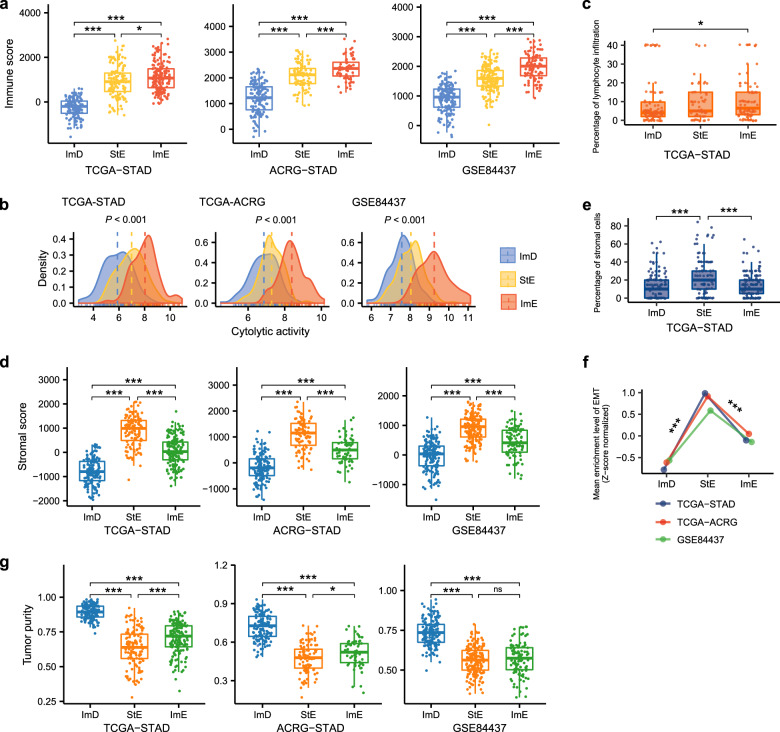
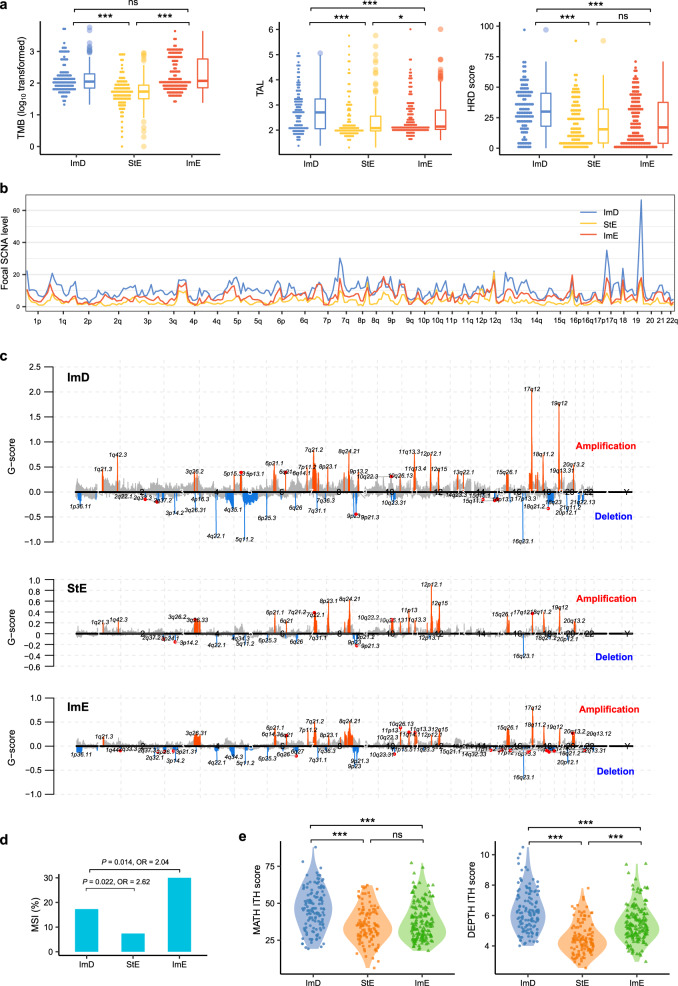
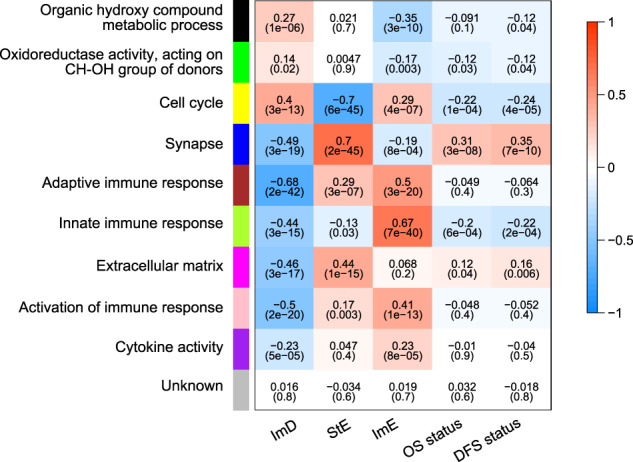
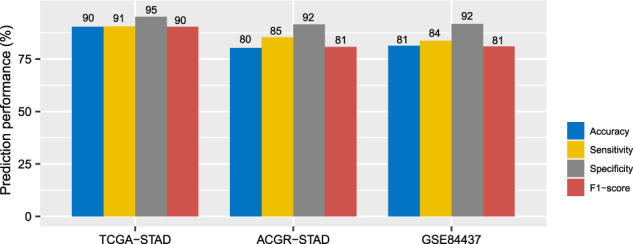
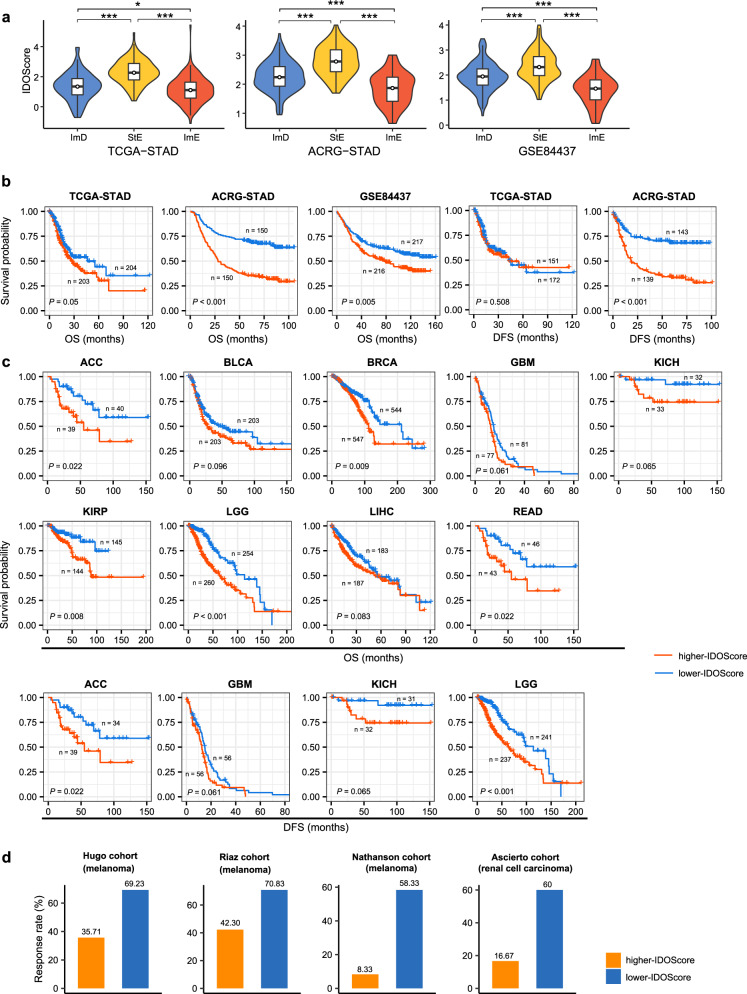
Gastric cancer (GC) is highly heterogeneous in the stromal and immune microenvironment, genome instability (GI), and oncogenic signatures. However, a classification of GC by combining these features remains lacking. Using the consensus clustering algorithm, we clustered GCs based on the activities of 15 pathways associated with immune, DNA repair, oncogenic, and stromal signatures in three GC datasets. We identified three GC subtypes: immunity-deprived (ImD), stroma-enriched (StE), and immunity-enriched (ImE). ImD showed low immune infiltration, high DNA damage repair activity, high tumor aneuploidy level, high intratumor heterogeneity (ITH), and frequent TP53 mutations. StE displayed high stromal signatures, low DNA damage repair activity, genomic stability, low ITH, and poor prognosis. ImE had strong immune infiltration, high DNA damage repair activity, high tumor mutation burden, prevalence of microsatellite instability, frequent ARID1A mutations, elevated PD-L1 expression, and favorable prognosis. Based on the expression levels of four genes (TAP2, SERPINB5, LTBP1, and LAMC1) in immune, DNA repair, oncogenic, and stromal pathways, we developed a prognostic model (IDOScore). The IDOScore was an adverse prognostic factor and correlated inversely with immunotherapy response in cancer. Our identification of new GC subtypes provides novel insights into tumor biology and has potential clinical implications for the management of GCs.
胃癌(GC)在基质和免疫微环境、基因组不稳定性(GI)以及致癌特征方面具有高度异质性。然而,目前仍缺乏结合这些特征对GC进行分类的方法。我们使用一致性聚类算法,基于三个GC数据集中与免疫、DNA修复、致癌和基质特征相关的15条通路的活性,对GC进行聚类。我们识别出三种GC亚型:免疫缺陷型(ImD)、基质丰富型(StE)和免疫丰富型(ImE)。ImD表现出低免疫浸润、高DNA损伤修复活性、高肿瘤非整倍体水平、高肿瘤内异质性(ITH)以及频繁的TP53突变。StE显示出高基质特征、低DNA损伤修复活性、基因组稳定性、低ITH以及不良预后。ImE具有强烈的免疫浸润、高DNA损伤修复活性、高肿瘤突变负荷、微卫星不稳定性的发生率、频繁的ARID1A突变、PD-L1表达升高以及良好的预后。基于免疫、DNA修复、致癌和基质通路中四个基因(TAP2、SERPINB5、LTBP1和LAMC1)的表达水平,我们开发了一种预后模型(IDOScore)。IDOScore是一个不良预后因素,并且与癌症免疫治疗反应呈负相关。我们对新GC亚型的识别为肿瘤生物学提供了新的见解,并对GC的管理具有潜在的临床意义。