• 文献检索
  • 文档翻译
  • 深度研究
  • 学术资讯
  • Suppr Zotero 插件Zotero 插件
  • 邀请有礼
  • 套餐&价格
  • 历史记录
应用&插件
Suppr Zotero 插件Zotero 插件浏览器插件Mac 客户端Windows 客户端微信小程序
定价
高级版会员购买积分包购买API积分包
服务
文献检索文档翻译深度研究API 文档MCP 服务
关于我们
关于 Suppr公司介绍联系我们用户协议隐私条款
关注我们

Suppr 超能文献

核心技术专利:CN118964589B侵权必究
粤ICP备2023148730 号-1Suppr @ 2026

文献检索

告别复杂PubMed语法,用中文像聊天一样搜索,搜遍4000万医学文献。AI智能推荐,让科研检索更轻松。

立即免费搜索

文件翻译

保留排版,准确专业,支持PDF/Word/PPT等文件格式,支持 12+语言互译。

免费翻译文档

深度研究

AI帮你快速写综述,25分钟生成高质量综述,智能提取关键信息,辅助科研写作。

立即免费体验

新型冠状病毒肺炎所致认知与情绪障碍:康复环境中的一项探索性研究

Cognitive and Emotional Disturbances Due to COVID-19: An Exploratory Study in the Rehabilitation Setting.

作者信息

Pistarini Caterina, Fiabane Elena, Houdayer Elise, Vassallo Claudio, Manera Marina Rita, Alemanno Federica

机构信息

Department of Neurorehabilitation, Istituti Clinici Scientifici Maugeri, Istituto di Ricovero e Cura a Carattere Scientifico (IRCCS), Pavia, Italy.

Department of Physical and Rehabilitation Medicine, Istituti Clinici Scientifici Maugeri, Genoa, Italy.

出版信息

Front Neurol. 2021 May 17;12:643646. doi: 10.3389/fneur.2021.643646. eCollection 2021.

DOI:10.3389/fneur.2021.643646
PMID:34079511
原文链接:https://pmc.ncbi.nlm.nih.gov/articles/PMC8165252/
Abstract

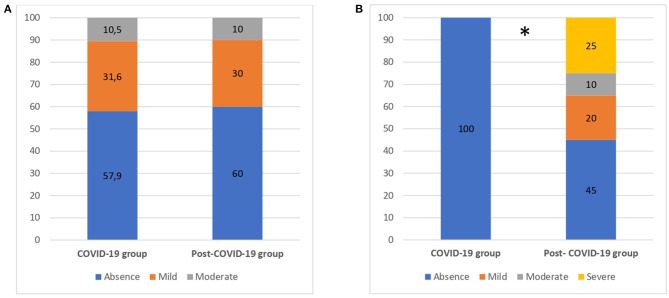
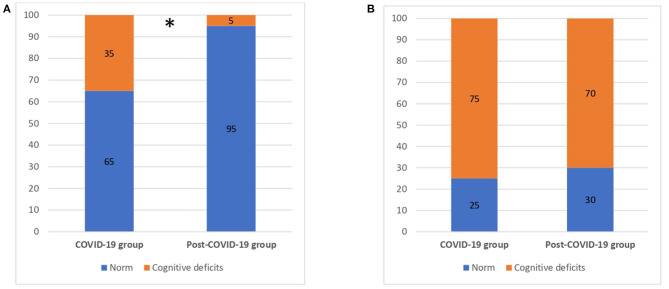
The coronavirus disease 19 (COVID-19) can cause neurological, psychiatric, psychological, and psychosocial impairments. Literature regarding cognitive impact of COVID-19 is still limited. The aim of this study was to evaluate cognitive deficits and emotional distress among COVID-19 and post-COVID-19 patients who required functional rehabilitation. Specifically, this study explored and compared cognitive and psychological status of patients in the subacute phase of the disease (COVID-19 group) and patients in the postillness period (post-COVID-19 group). Forty patients admitted to rehabilitation units were enrolled in the study and divided into two groups according to the phase of the disease: (a) COVID-19 group ( = 20) and (b) post-COVID-19 group ( = 20). All patients underwent a neuropsychological assessment including Mini-Mental State Evaluation (MMSE), Montreal Cognitive Assessment (MoCA), Hamilton Rating Scale for Depression, and Impact of Event Scale-Revised (IES-R). A larger part of the COVID group showed neuropsychological deficits in the total MMSE (35%) compared to the post-COVID group (5%), whereas the majority of both groups (75-70%) reported cognitive impairments in the total MoCA. The post-COVID group reported significantly higher score in MMSE subtests of language ( = 0.02) and in MoCA subtests of executive functions ( = 0.05), language ( = 0.01), and abstraction ( = 0.02) compared to the COVID group. Regarding emotional disturbances, ~40% of patients presented with mild to moderate depression (57.9-60%). The post-COVID-19 group reported significantly higher levels of distress at the IES-R compared to the COVID group ( = 0.02). These findings highlight the gravity of neuropsychological and psychological symptoms that can be induced by COVID-19 infection and the need for tailored rehabilitation, including cognitive training and psychological support.

摘要

新型冠状病毒肺炎(COVID-19)可导致神经、精神、心理和社会心理方面的损害。关于COVID-19认知影响的文献仍然有限。本研究的目的是评估需要功能康复的COVID-19患者及康复后患者的认知缺陷和情绪困扰。具体而言,本研究探讨并比较了疾病亚急性期患者(COVID-19组)和病后时期患者(康复后COVID-19组)的认知和心理状态。40名入住康复科的患者被纳入研究,并根据疾病阶段分为两组:(a)COVID-19组(n = 20)和(b)康复后COVID-19组(n = 20)。所有患者均接受了神经心理学评估,包括简易精神状态检查表(MMSE)、蒙特利尔认知评估量表(MoCA)、汉密尔顿抑郁评定量表以及事件影响量表修订版(IES-R)。与康复后COVID-19组(5%)相比,COVID组中更大比例的患者在MMSE总分上表现出神经心理学缺陷(35%),而两组中的大多数患者(75%-70%)在MoCA总分上报告有认知障碍。与COVID组相比,康复后COVID-19组在MMSE语言子测试(p = 0.02)、MoCA执行功能子测试(p = 0.05)、语言子测试(p = 0.01)和抽象子测试(p = 0.02)中的得分显著更高。关于情绪障碍,约40%的患者表现为轻度至中度抑郁(57.9%-60%)。与COVID组相比,康复后COVID-19组在IES-R上报告的痛苦水平显著更高(p = 0.02)。这些发现凸显了COVID-19感染可能引发的神经心理学和心理症状的严重性,以及进行针对性康复的必要性,包括认知训练和心理支持。
https://cdn.ncbi.nlm.nih.gov/pmc/blobs/9144/8165252/09d2f84a649e/fneur-12-643646-g0002.jpg
https://cdn.ncbi.nlm.nih.gov/pmc/blobs/9144/8165252/13f6a4655fa9/fneur-12-643646-g0001.jpg
https://cdn.ncbi.nlm.nih.gov/pmc/blobs/9144/8165252/09d2f84a649e/fneur-12-643646-g0002.jpg
https://cdn.ncbi.nlm.nih.gov/pmc/blobs/9144/8165252/13f6a4655fa9/fneur-12-643646-g0001.jpg
https://cdn.ncbi.nlm.nih.gov/pmc/blobs/9144/8165252/09d2f84a649e/fneur-12-643646-g0002.jpg

相似文献

1
Cognitive and Emotional Disturbances Due to COVID-19: An Exploratory Study in the Rehabilitation Setting.新型冠状病毒肺炎所致认知与情绪障碍:康复环境中的一项探索性研究
Front Neurol. 2021 May 17;12:643646. doi: 10.3389/fneur.2021.643646. eCollection 2021.
2
COVID-19 cognitive deficits after respiratory assistance in the subacute phase: A COVID-rehabilitation unit experience.COVID-19 患者在亚急性期接受呼吸支持后出现认知障碍:COVID-康复单元的经验。
PLoS One. 2021 Feb 8;16(2):e0246590. doi: 10.1371/journal.pone.0246590. eCollection 2021.
3
Comparison of the Mini-Mental State Examination and Montreal Cognitive Assessment executive subtests in detecting post-stroke cognitive impairment.简易精神状态检查与蒙特利尔认知评估执行分量表在检测脑卒中后认知障碍中的比较。
Geriatr Gerontol Int. 2017 Dec;17(12):2329-2335. doi: 10.1111/ggi.13069. Epub 2017 Jul 4.
4
Cognitive, behavioral, and psychological manifestations of COVID-19 in post-acute rehabilitation setting: preliminary data of an observational study.新冠病毒感染后康复期的认知、行为和心理表现:一项观察性研究的初步数据。
Neurol Sci. 2022 Jan;43(1):51-58. doi: 10.1007/s10072-021-05653-w. Epub 2021 Oct 12.
5
The Mini-Mental State Examination and Montreal Cognitive Assessment in persons with mild subacute stroke: relationship to functional outcome.轻度亚急性脑卒中患者的简易精神状态检查和蒙特利尔认知评估:与功能结局的关系。
Arch Phys Med Rehabil. 2011 May;92(5):792-8. doi: 10.1016/j.apmr.2010.12.034.
6
Usefulness of the Montreal Cognitive Assessment (MoCA) to monitor cognitive impairments in depressed patients receiving electroconvulsive therapy.蒙特利尔认知评估(MoCA)在监测接受电抽搐治疗的抑郁患者认知障碍中的作用。
Psychiatry Res. 2018 Jan;259:476-481. doi: 10.1016/j.psychres.2017.11.022. Epub 2017 Nov 7.
7
Suitability of the Montreal cognitive assessment versus the mini-mental state examination in detecting vascular cognitive impairment.蒙特利尔认知评估与简易精神状态检查在血管性认知障碍检测中的适用性。
J Stroke Cerebrovasc Dis. 2013 Aug;22(6):737-41. doi: 10.1016/j.jstrokecerebrovasdis.2012.01.001. Epub 2012 Feb 4.
8
Measuring cognitive impairment in young adults with polysubstance use disorder with MoCA or BRIEF-A - The significance of psychiatric symptoms.使用 MoCA 或 BRIEF-A 测量患有多种物质使用障碍的年轻成年人的认知障碍 - 精神症状的意义。
J Subst Abuse Treat. 2019 Feb;97:21-27. doi: 10.1016/j.jsat.2018.11.010. Epub 2018 Nov 22.
9
The Impact of Long COVID on Cognitive Performance and Sleep Quality: An Analysis of the Rancagua Chilean Study (RACHIS).新冠长期症状对认知能力和睡眠质量的影响:智利兰卡瓜研究(RACHIS)分析
Cureus. 2024 Feb 27;16(2):e55089. doi: 10.7759/cureus.55089. eCollection 2024 Feb.
10
Cognitive, Functional, and Emotional Changes During the COVID-19 Pandemic in Greek Patients with Neurocognitive Disorders.在 COVID-19 大流行期间希腊神经认知障碍患者的认知、功能和情绪变化。
J Alzheimers Dis. 2022;88(2):537-547. doi: 10.3233/JAD-220118.

引用本文的文献

1
Long-term neuropsychological consequences of severe COVID-19 infection: the NEUROCOG-COVID study.重症新型冠状病毒肺炎感染的长期神经心理学后果:NEUROCOG-COVID研究
J Neurol. 2025 Apr 28;272(5):363. doi: 10.1007/s00415-025-13097-x.
2
Correlation Between COVID-19 Recovery, Executive Function Decline, and Emotional State.新型冠状病毒肺炎康复、执行功能衰退与情绪状态之间的相关性
Psychol Res Behav Manag. 2025 Apr 23;18:1007-1019. doi: 10.2147/PRBM.S487382. eCollection 2025.
3
Cognitive Sequelae of COVID-19: Mechanistic Insights and Therapeutic Approaches.

本文引用的文献

1
COVID-19 cognitive deficits after respiratory assistance in the subacute phase: A COVID-rehabilitation unit experience.COVID-19 患者在亚急性期接受呼吸支持后出现认知障碍:COVID-康复单元的经验。
PLoS One. 2021 Feb 8;16(2):e0246590. doi: 10.1371/journal.pone.0246590. eCollection 2021.
2
Frequent neurocognitive deficits after recovery from mild COVID-19.轻度新型冠状病毒肺炎康复后频繁出现神经认知缺陷。
Brain Commun. 2020 Nov 23;2(2):fcaa205. doi: 10.1093/braincomms/fcaa205. eCollection 2020.
3
Mental health and risk perception among Italian healthcare workers during the second month of the Covid-19 pandemic.
新冠病毒病的认知后遗症:机制洞察与治疗方法
CNS Neurosci Ther. 2025 Mar;31(3):e70348. doi: 10.1111/cns.70348.
4
Investigation of the effect of green walking and intelligence games on the cognitive skills of individuals between the ages of 50-70 survived COVID-19 disease: A randomized controlled study.绿色步行和智力游戏对50至70岁新冠康复者认知技能影响的调查:一项随机对照研究。
J Alzheimers Dis Rep. 2024 Oct 18;8(1):1394-1404. doi: 10.1177/25424823241284500. eCollection 2024.
5
Long-COVID and postural orthostatic tachycardia syndrome: a preliminary comparison of neuropsychological performance.长新冠与体位性直立性心动过速综合征:神经心理学表现的初步比较
Clin Auton Res. 2025 Apr;35(2):285-299. doi: 10.1007/s10286-025-01106-y. Epub 2025 Jan 22.
6
Exploring Neurocognitive and Emotional Outcomes of Long COVID: A Study Among Pakistani Patients.探索新冠长期症状的神经认知和情绪后果:一项针对巴基斯坦患者的研究。
Cureus. 2024 Aug 26;16(8):e67815. doi: 10.7759/cureus.67815. eCollection 2024 Aug.
7
Factors associated with cognitive impairment and the quality-of-life among COVID-19 survivors working as healthcare workers.与 COVID-19 康复医护工作者认知障碍和生活质量相关的因素。
Narra J. 2024 Apr;4(1):e658. doi: 10.52225/narra.v4i1.658. Epub 2024 Mar 20.
8
Long COVID in Children, Adults, and Vulnerable Populations: A Comprehensive Overview for an Integrated Approach.儿童、成人及弱势群体中的新冠长期症状:综合概述与综合应对方法
Diseases. 2024 May 6;12(5):95. doi: 10.3390/diseases12050095.
9
Long COVID and its association with neurodegenerative diseases: pathogenesis, neuroimaging, and treatment.长期新冠及其与神经退行性疾病的关联:发病机制、神经影像学及治疗
Front Neurol. 2024 Apr 4;15:1367974. doi: 10.3389/fneur.2024.1367974. eCollection 2024.
10
Cognitive symptoms after COVID-19.新冠病毒感染后的认知症状
Neurol Perspect. 2021 Dec;1:S16-S24. doi: 10.1016/j.neurop.2021.10.005. Epub 2021 Dec 14.
意大利医护人员在新冠疫情大流行的第二个月期间的心理健康和风险认知。
Arch Psychiatr Nurs. 2020 Dec;34(6):537-544. doi: 10.1016/j.apnu.2020.10.007. Epub 2020 Oct 21.
4
The cognitive consequences of the COVID-19 epidemic: collateral damage?新冠疫情的认知后果:附带损害?
Brain Commun. 2020 May 28;2(2):fcaa069. doi: 10.1093/braincomms/fcaa069. eCollection 2020.
5
Qualitative study of the psychological experience of COVID-19 patients during hospitalization.对 COVID-19 患者住院期间心理体验的定性研究。
J Affect Disord. 2021 Jan 1;278:15-22. doi: 10.1016/j.jad.2020.08.040. Epub 2020 Aug 24.
6
The landscape of cognitive function in recovered COVID-19 patients.康复的 COVID-19 患者认知功能全景。
J Psychiatr Res. 2020 Oct;129:98-102. doi: 10.1016/j.jpsychires.2020.06.022. Epub 2020 Jun 30.
7
How the COVID-19 Pandemic is Changing Mental Health Disease Management: The Growing Need of Telecounseling in Italy.新冠疫情如何改变心理健康疾病管理:意大利对远程心理咨询的需求日益增长。
Innov Clin Neurosci. 2020 Apr 1;17(4-6):16-17.
8
Anxiety and depression in COVID-19 survivors: Role of inflammatory and clinical predictors.COVID-19 幸存者的焦虑和抑郁:炎症和临床预测因子的作用。
Brain Behav Immun. 2020 Oct;89:594-600. doi: 10.1016/j.bbi.2020.07.037. Epub 2020 Jul 30.
9
Persistent Symptoms in Patients After Acute COVID-19.急性 COVID-19 后患者的持续症状。
JAMA. 2020 Aug 11;324(6):603-605. doi: 10.1001/jama.2020.12603.
10
Neurological and neuropsychiatric complications of COVID-19 in 153 patients: a UK-wide surveillance study.153例新冠肺炎患者的神经及神经精神并发症:一项全英国范围的监测研究
Lancet Psychiatry. 2020 Oct;7(10):875-882. doi: 10.1016/S2215-0366(20)30287-X. Epub 2020 Jun 25.