Mahmood Saqib, Afzal Beenish, Perveen Shagufta, Wahid Abdul, Azeem Muhammad, Iqbal Naeem
Department of Botany, Government College University, Faisalabad, Pakistan.
Department of Botany, University of Agriculture, Faisalabad, Pakistan.
Front Plant Sci. 2021 May 17;12:579429. doi: 10.3389/fpls.2021.579429. eCollection 2021.
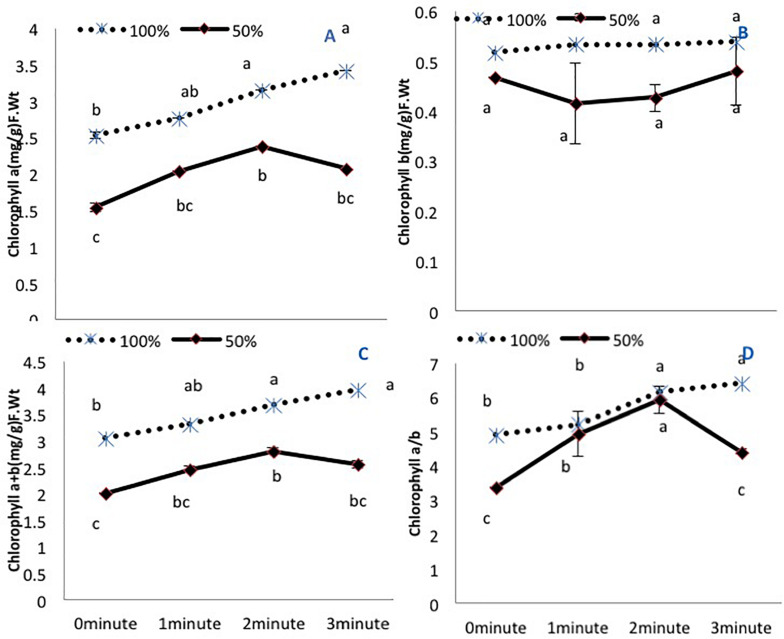
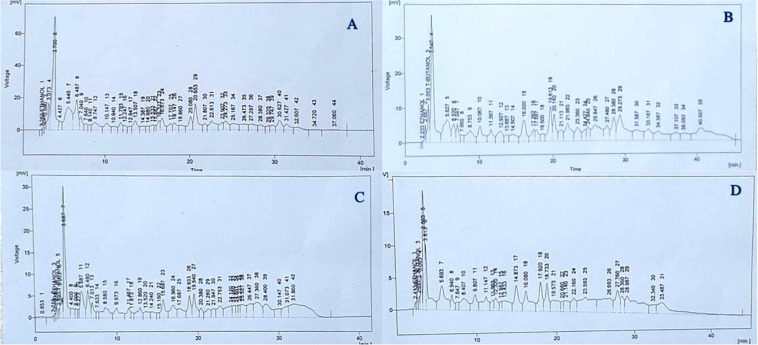
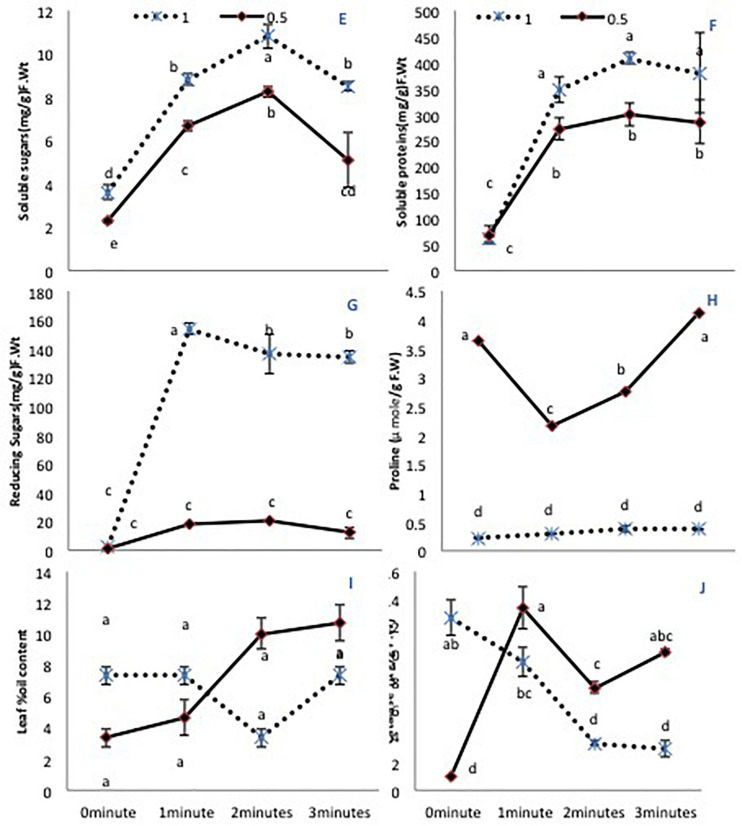
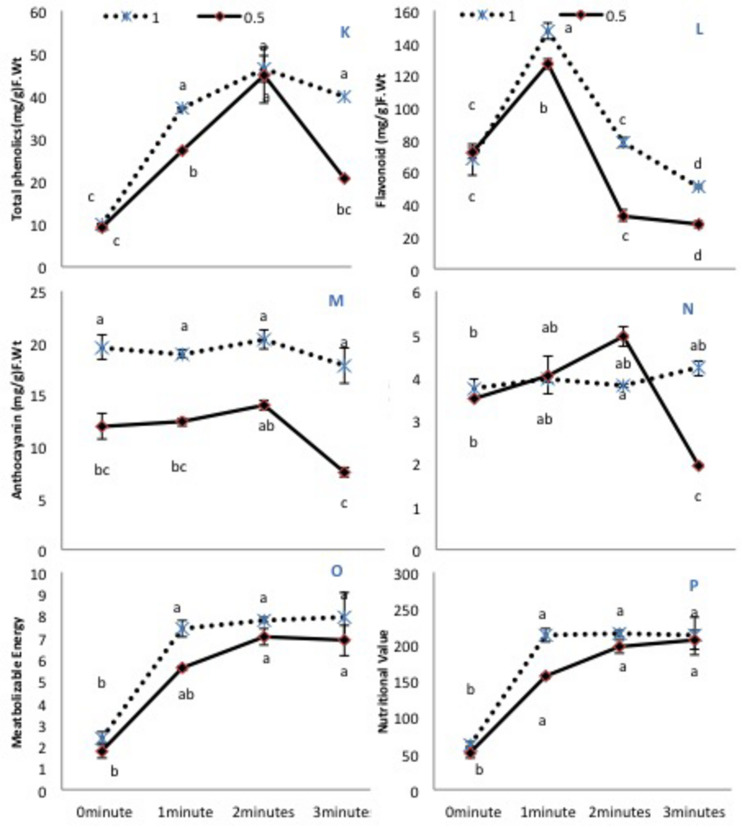
Water-scarce areas are continually increasing worldwide. This factor reduces the quantity and quality of crops produced in affected areas. Physical seed treatments are considered economical and ecofriendly solutions for such problems. It was hypothesized that a moderately drought-tolerant crop grown from seeds treated with a He-Ne laser utilizes water-limited conditions better than plants grown from untreated seeds. A field study was conducted, growing a moderately drought tolerant crop (sunflower) with supportive seed treatment (He-Ne laser treatment at 300 mJ) for 0, 1, 2, and 3 min. Thirty-day-old plants were subjected to two irrigation conditions: 100% (normal) and 50% (water stress). Harvesting was done at flowering (60-day-old plants) at full maturity. The sunflowers maintained growth and yield under water limitation with a reduced achene number. At 50%, irrigation, there was a reduction in chlorophyll , + and /; catalase activity; soluble sugars; and anthocyanin, alongside elevated proline. The improved chlorophyll , + and /; metabolisable energy; nutritional value; and yield in the plants grown from He-Ne-laser-treated seeds support our hypothesis. Seeds with 2-min exposure to a He-Ne laser performed best regarding leaf area; leaf number; leaf biomass; chlorophyll , + and /; per cent oil yield; 50-achene weight; achene weight per plant; carotenoid content; and total soluble phenolic compound content. Thereafter, the leaves from the best performing level of treatment (2 min) were subjected to high-performance-liquid-chromatography-based phenolic profiling and gas-chromatography-based fatty acid profiling of the oil yield. The He-Ne laser treatment led to the accumulation of nutraceutical phenolic compounds and improved the unsaturated-to-saturated fatty acid ratio of the oil. In conclusion, 2-min He-Ne laser seed treatment could be the best strategy to improve the yield and nutritional value of sunflowers grown in water-limited areas.
全球缺水地区正在不断增加。这一因素降低了受影响地区农作物的产量和质量。物理种子处理被认为是解决此类问题的经济且环保的方法。据推测,用氦氖激光处理过的种子培育出的中度耐旱作物,比未处理种子培育出的植物能更好地利用水分有限的条件。开展了一项田间研究,种植中度耐旱作物(向日葵),并对种子进行支持性处理(300 mJ的氦氖激光处理0、1、2和3分钟)。30日龄的植株接受两种灌溉条件:100%(正常)和50%(水分胁迫)。在开花期(60日龄植株)完全成熟时进行收获。向日葵在水分受限的情况下保持生长和产量,但瘦果数量减少。在50%灌溉量时,叶绿素、过氧化氢酶活性、可溶性糖和花青素减少,同时脯氨酸含量升高。用氦氖激光处理过的种子培育出的植株,其叶绿素、可代谢能量、营养价值和产量的提高支持了我们的假设。暴露于氦氖激光2分钟的种子在叶面积、叶片数量、叶片生物量、叶绿素、含油率、50粒瘦果重量、单株瘦果重量、类胡萝卜素含量和总可溶性酚类化合物含量方面表现最佳。此后,对表现最佳的处理水平(2分钟)的叶片进行基于高效液相色谱的酚类分析和基于气相色谱的含油率脂肪酸分析。氦氖激光处理导致营养酚类化合物的积累,并改善了油的不饱和脂肪酸与饱和脂肪酸的比例。总之,2分钟的氦氖激光种子处理可能是提高在水分有限地区种植的向日葵产量和营养价值的最佳策略。