Riches John Charles
Centre for Haemato-Oncology, Barts Cancer Institute - a Cancer Research UK Centre of Excellence, Queen Mary University of London, John Vane Science Centre, Charterhouse Square, London EC1M 6BQ, United Kingdom.
World J Virol. 2021 May 25;10(3):97-110. doi: 10.5501/wjv.v10.i3.97.
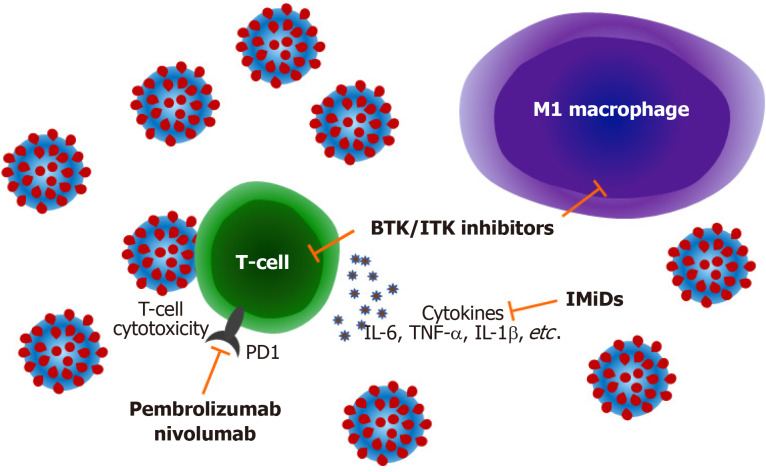
The first cases of coronavirus disease 2019 (COVID-19) were detected in Wuhan, China, in December 2019. Since this time a concerted global effort of research and observational data gathering has meant that a great deal has been learnt about the impact of COVID-19 in patients with lymphoid malignancies. Approximately one-third of patients with lymphoid malignancies who acquire COVID-19 and have it severely enough to require hospital assessment will die from this infection. Major risk factors for a poor outcome are age and co-morbidities, but when these are taken into account lymphoma patients have a slightly greater than 2-fold increased risk compared to the general population. Notably, despite early concerns regarding the particular vulnerability of lymphoma patients due to the immunosuppressive effects of therapy, active treatment, including B-cell depleting agents such as rituximab, do not appear to be associated with an increased risk of a poorer outcome. Indeed, some treatments such as ibrutinib may be beneficial due to their modulation of the potential fatal hyperinflammatory phase of infection. There are risks associated with hemopoietic stem cell transplantation, but the collective experience is that these can be minimized by preventive strategies and that the majority of transplant recipients with COVID-19 infection will survive. Many questions remain including those regarding the outcome of COVID-19 infection in the rarer lymphoid malignancies and the efficacy of COVID-19 vaccines in lymphoma patients. This review aims to discuss these issues and present a summary of the current knowledge of the impact of COVID-19 in lymphoid malignancies.
2019年12月,中国武汉发现了首例2019冠状病毒病(COVID-19)病例。自那时以来,全球齐心协力开展研究并收集观察数据,这意味着我们已经对COVID-19对淋巴系统恶性肿瘤患者的影响有了很多了解。在感染COVID-19且病情严重到需要住院评估的淋巴系统恶性肿瘤患者中,约有三分之一会死于这种感染。预后不良的主要风险因素是年龄和合并症,但考虑到这些因素后,淋巴瘤患者的风险比普通人群略高出两倍多。值得注意的是,尽管早期有人担心由于治疗的免疫抑制作用,淋巴瘤患者特别容易感染,但包括利妥昔单抗等B细胞耗竭剂在内的积极治疗似乎与预后较差的风险增加无关。事实上,一些治疗方法,如伊布替尼,可能因其对感染潜在致命性高炎症阶段的调节作用而有益。造血干细胞移植存在风险,但总体经验表明,通过预防策略可以将这些风险降至最低,大多数感染COVID-19的移植受者将存活下来。许多问题仍然存在,包括关于COVID-19感染在罕见淋巴系统恶性肿瘤中的结局以及COVID-19疫苗在淋巴瘤患者中的疗效等问题。本综述旨在讨论这些问题,并总结目前关于COVID-19对淋巴系统恶性肿瘤影响的知识。