Mangiavillano Benedetto, Frazzoni Leonardo, Togliani Thomas, Fabbri Carlo, Tarantino Ilaria, De Luca Luca, Staiano Teresa, Binda Cecilia, Signoretti Marianna, Eusebi Leonardo H, Auriemma Francesco, Lamonaca Laura, Paduano Danilo, Di Leo Milena, Carrara Silvia, Fuccio Lorenzo, Repici Alessandro
Gastrointestinal Endoscopy Unit - Humanitas Mater Domini - Castellanza (VA).
Humamitas Huniversity.
Endosc Int Open. 2021 Jun;9(6):E901-E906. doi: 10.1055/a-1395-7129. Epub 2021 May 27.
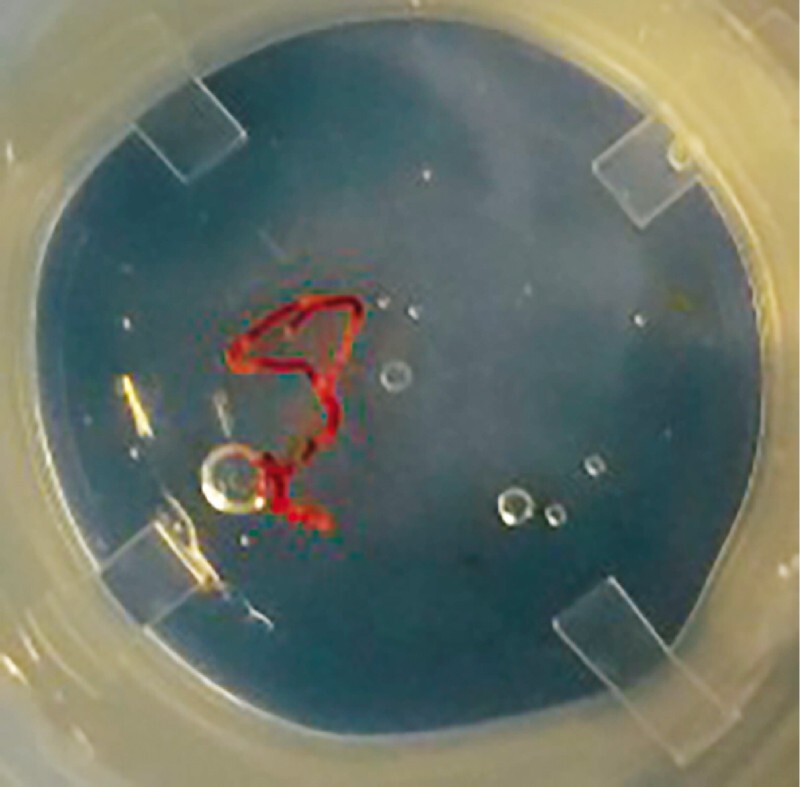
The standard method for obtaining samples during endoscopic ultrasonography (EUS) is fine-needle aspiration (FNA), the accuracy of which can be affected by the presence of a cytopathologist in endoscopy room (rapid on-site evaluation [ROSE]). With the introduction of fine-needle biopsy (FNB), macroscopic on-site evaluation (MOSE) of a acquired specimen has been proposed. Only a few studies have evaluated the role of MOSE and in all except one, a 19G needle was used. Our primary aim was to evaluate the diagnostic yield and accuracy of MOSE with different needle sizes and the secondary aim was to identify factors influencing the yield of MOSE. Data from patients who underwent EUS-FNB for solid lesions, with MOSE evaluation of the specimen, were collected in six endoscopic referral centers. A total of 378 patients (145 F and 233 M) were enrolled. Needles sizes used during the procedures were 20G (42 %), 22G (45 %), and 25G (13 %). The median number of needle passes was two (IQR 2-3). The overall diagnostic yield of MOSE was of 90 % (confidence interval [CI] 86 %-92 %). On multivariable logistic regression analysis, variables independently associated with the diagnostic yield of MOSE were a larger needle diameter (20G vs. 25G, OR 11.64, 95 %CI 3.5-38.71; 22G vs. 25G, OR 6.20, 95 %CI 2.41-15.90) and three of more needle passes (OR 3.39, 95 %CI 1.38-8.31). MOSE showed high diagnostic yield and accuracy. Its yield was further increased if performed with a large size FNB needles and more than two passes.
内镜超声检查(EUS)期间获取样本的标准方法是细针抽吸(FNA),其准确性可能会受到内镜检查室中细胞病理学家在场情况(快速现场评估[ROSE])的影响。随着细针活检(FNB)的引入,人们提出了对获取标本进行宏观现场评估(MOSE)。只有少数研究评估了MOSE的作用,除一项研究外,其他所有研究均使用19G针。我们的主要目的是评估不同针径的MOSE的诊断率和准确性,次要目的是确定影响MOSE诊断率的因素。在六个内镜转诊中心收集了接受EUS-FNB检查实体病变且对标本进行MOSE评估的患者数据。共纳入378例患者(145例女性和233例男性)。手术过程中使用的针径为20G(42%)、22G(45%)和25G(13%)。针穿刺的中位数为两次(四分位间距2-3)。MOSE的总体诊断率为90%(置信区间[CI]86%-92%)。多变量逻辑回归分析显示,与MOSE诊断率独立相关的变量是较大的针径(20G与25G相比,OR 11.64,95%CI 3.5-38.71;22G与25G相比,OR 6.20,95%CI 2.41-15.90)以及三次或更多次针穿刺(OR 3.39,95%CI 1.38-8.31)。MOSE显示出较高的诊断率和准确性。如果使用大尺寸FNB针且穿刺次数超过两次,其诊断率会进一步提高。