Department of Microbiology and Immunology, University of Illinois College of Medicine, Chicago, IL, United States.
Department of Biochemistry and Molecular Genetics, University of Louisville School of Medicine, Louisville, KY, United States.
Front Immunol. 2021 May 18;12:682589. doi: 10.3389/fimmu.2021.682589. eCollection 2021.
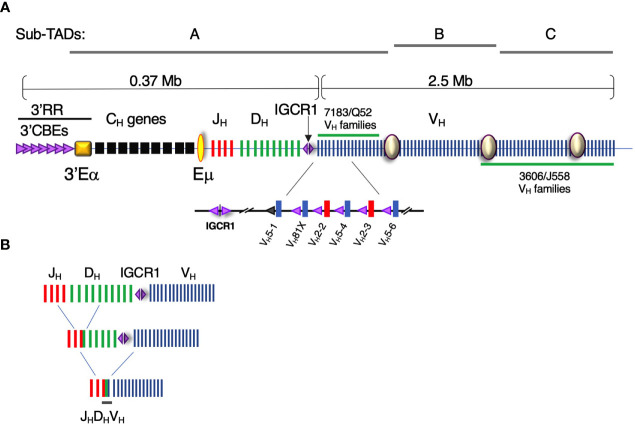
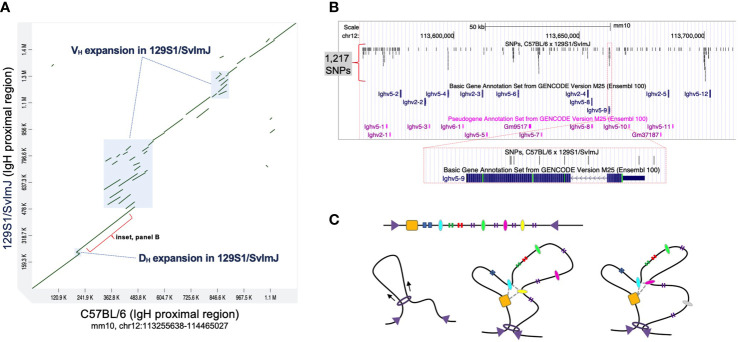
Vast repertoires of unique antigen receptors are created in developing B and T lymphocytes. The antigen receptor loci contain many variable (V), diversity (D) and joining (J) gene segments that are arrayed across very large genomic expanses and are joined to form variable-region exons of expressed immunoglobulins and T cell receptors. This process creates the potential for an organism to respond to large numbers of different pathogens. Here, we consider the possibility that genetic polymorphisms with alterations in a vast array of regulatory elements in the immunoglobulin heavy chain (IgH) locus lead to changes in locus topology and impact immune-repertoire formation.
在发育中的 B 和 T 淋巴细胞中,会产生大量独特的抗原受体。抗原受体基因座包含许多可变 (V)、多样性 (D) 和连接 (J) 基因片段,它们排列在非常大的基因组区域上,并连接在一起形成表达的免疫球蛋白和 T 细胞受体的可变区外显子。这个过程使生物体有可能对大量不同的病原体作出反应。在这里,我们考虑了这样一种可能性,即免疫球蛋白重链 (IgH) 基因座中大量调节元件的遗传多态性改变导致了基因座拓扑结构的变化,并影响了免疫反应的形成。