Ryan Michael C, Kim Yeon Jung, Gerken James B, Wang Fei, Aristov Michael M, Martinelli Joseph R, Stahl Shannon S
Department of Chemistry, University of Wisconsin-Madison 1101 University Avenue Madison Wisconsin 53706 USA
Small Molecule Design and Development, Lilly Research Laboratories, Eli Lilly and Company Indianapolis Indiana 46285 USA.
Chem Sci. 2019 Dec 10;11(4):1170-1175. doi: 10.1039/c9sc04305e.
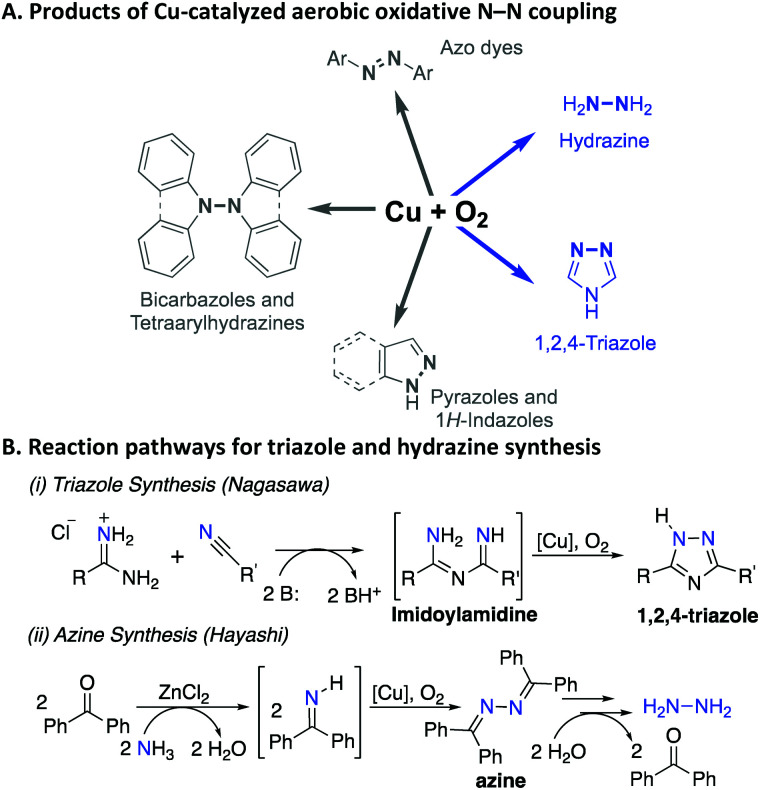
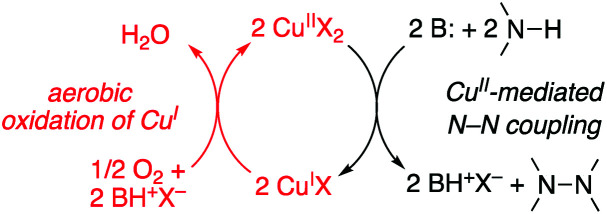
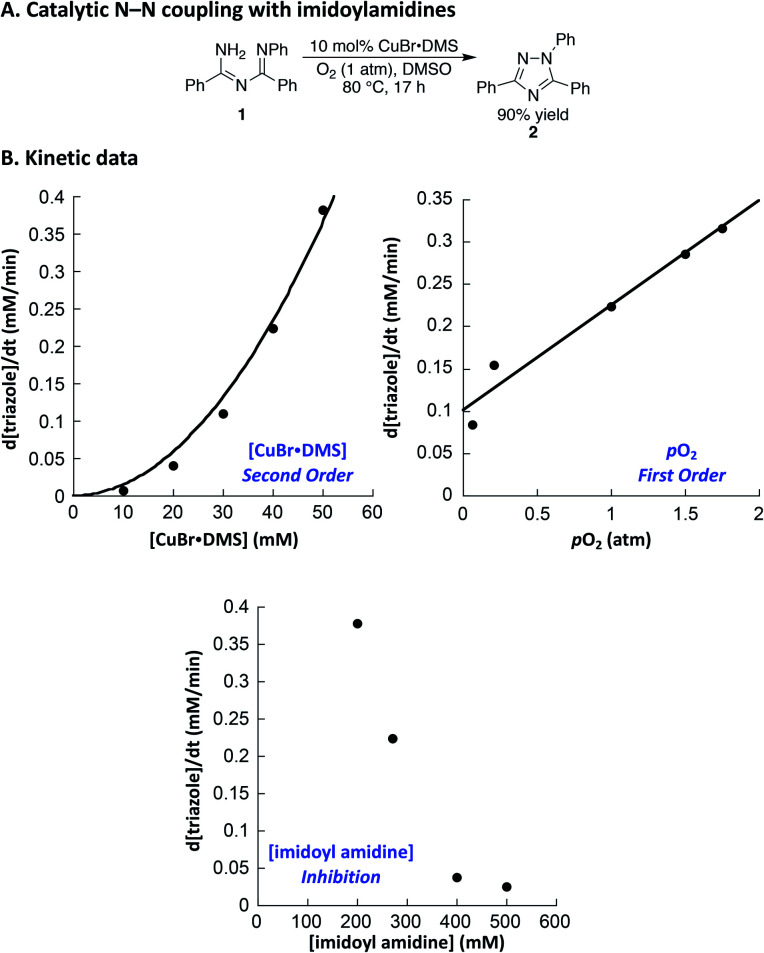
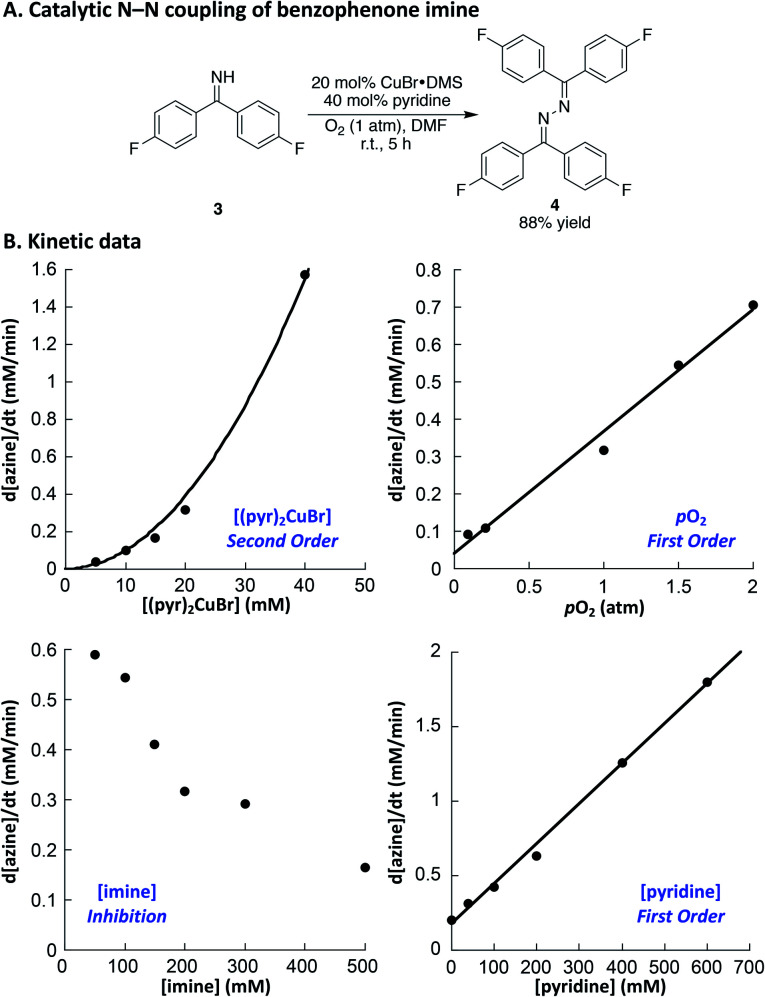
Catalytic N-N coupling is a valuable transformation for chemical synthesis and energy conversion. Here, mechanistic studies are presented for two related copper-catalyzed oxidative aerobic N-N coupling reactions, one involving the synthesis of a pharmaceutically relevant triazole and the other relevant to the oxidative conversion of ammonia to hydrazine. Analysis of catalytic and stoichiometric N-N coupling reactions support an "oxidase"-type catalytic mechanism with two redox half-reactions: (1) aerobic oxidation of a Cu catalyst and (2) Cu-promoted N-N coupling. Both reactions feature turnover-limiting oxidation of Cu by O, and this step is inhibited by the N-H substrate(s). The results highlight the unexpected facility of the N-N coupling step and establish a foundation for development of improved catalysts for these transformations.
催化氮-氮偶联是化学合成和能量转换中一种有价值的转化反应。本文介绍了对两个相关的铜催化氧化需氧氮-氮偶联反应的机理研究,一个涉及合成具有药物相关性的三唑,另一个与氨氧化转化为肼有关。对催化和化学计量的氮-氮偶联反应的分析支持了一种具有两个氧化还原半反应的“氧化酶”型催化机理:(1)铜催化剂的需氧氧化和(2)铜促进的氮-氮偶联。这两个反应的特征都是铜被氧气进行的周转限制氧化,并且该步骤受到含氮氢底物的抑制。这些结果突出了氮-氮偶联步骤出人意料的易发性,并为开发用于这些转化的改进催化剂奠定了基础。