• 文献检索
  • 文档翻译
  • 深度研究
  • 学术资讯
  • Suppr Zotero 插件Zotero 插件
  • 邀请有礼
  • 套餐&价格
  • 历史记录
应用&插件
Suppr Zotero 插件Zotero 插件浏览器插件Mac 客户端Windows 客户端微信小程序
定价
高级版会员购买积分包购买API积分包
服务
文献检索文档翻译深度研究API 文档MCP 服务
关于我们
关于 Suppr公司介绍联系我们用户协议隐私条款
关注我们

Suppr 超能文献

核心技术专利:CN118964589B侵权必究
粤ICP备2023148730 号-1Suppr @ 2026

文献检索

告别复杂PubMed语法,用中文像聊天一样搜索,搜遍4000万医学文献。AI智能推荐,让科研检索更轻松。

立即免费搜索

文件翻译

保留排版,准确专业,支持PDF/Word/PPT等文件格式,支持 12+语言互译。

免费翻译文档

深度研究

AI帮你快速写综述,25分钟生成高质量综述,智能提取关键信息,辅助科研写作。

立即免费体验

鼻腔脂质体和纳米粒载药瑞伐斯的明制剂在阿尔茨海默病急、慢性模型中的药代动力学和药效学评价。

Pharmacokinetic and pharmacodynamic evaluation of nasal liposome and nanoparticle based rivastigmine formulations in acute and chronic models of Alzheimer's disease.

机构信息

Department of Pharmacology, Manipal College of Pharmaceutical Sciences, Manipal Academy of Higher Education, Manipal, Karnataka, 576104, India.

Department of Pharmacology and Toxicology, National Institute of Pharmaceutical Education and Research, Hajipur, Bihar, 844102, India.

出版信息

Naunyn Schmiedebergs Arch Pharmacol. 2021 Aug;394(8):1737-1755. doi: 10.1007/s00210-021-02096-0. Epub 2021 Jun 4.

DOI:10.1007/s00210-021-02096-0
PMID:34086100
原文链接:https://pmc.ncbi.nlm.nih.gov/articles/PMC8298375/
Abstract

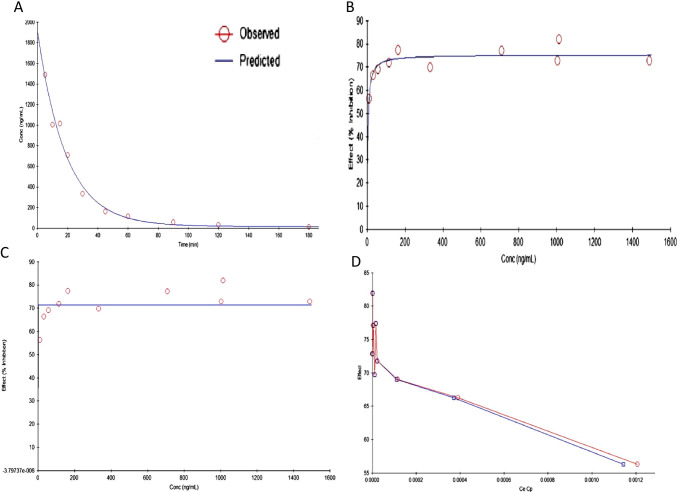
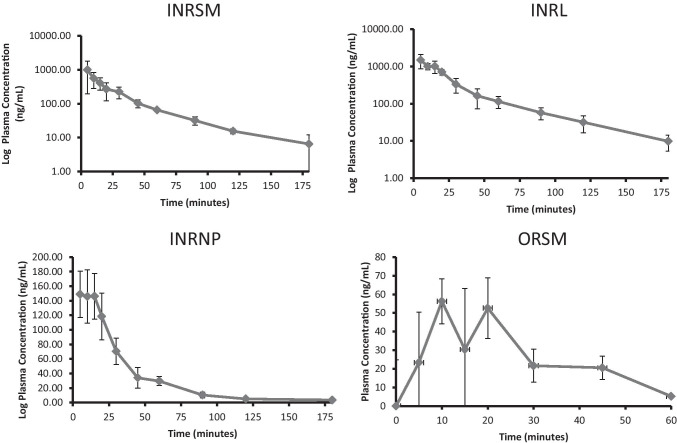
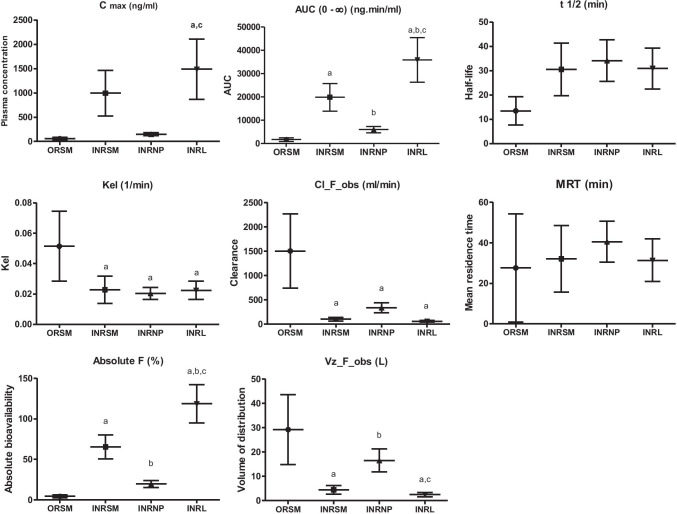
With the increasing aging population and progressive nature of the disease, Alzheimer's disease (AD) poses to be an oncoming epidemic with limited therapeutic strategies. It is characterized by memory loss, behavioral instability, impaired cognitive function, predominantly, cognitive inability manifested due to the accumulation of β-amyloid, with malfunctioned cholinergic system. Rivastigmine, a reversible dual cholinesterase inhibitor, is a more tolerable and widely used choice of drug for AD. However, rivastigmine being hydrophilic and undergoing the first-pass metabolism exhibits low CNS bioavailability. Nanoformulations including liposomes and PLGA nanoparticles can encapsulate hydrophilic drugs and deliver them efficiently to the brain. Besides, the nasal route is receiving considerable attention recently, due to its direct access to the brain. Therefore, the present study attempts to evaluate the pharmacokinetic and pharmacodynamic properties of nasal liposomal and PLGA nanoparticle formulations of rivastigmine in acute scopolamine-induced amnesia and chronic colchicine induced cognitive dysfunction animal models, and validate the best formulation by employing pharmacokinetic and pharmacodynamic (PK-PD) modeling. Nasal liposomal rivastigmine formulation showed the best pharmacokinetic features with rapid onset of action (Tmax = 5 min), higher Cmax (1489.5 ± 620.71), enhanced systemic bioavailability (F = 118.65 ± 23.54; AUC = 35,921.75 ± 9559.46), increased half-life (30.92 ± 8.38 min), and reduced clearance rate (Kel (1/min) = 0.0224 ± 0.006) compared to oral rivastigmine (Tmax = 15 min; Cmax = 56.29 ± 27.05; F = 4.39 ± 1.82; AUC = 1663.79 ± 813.54; t1/2 = 13.48 ± 5.79; Kel (1/min) = 0.0514 ± 0.023). Further, the liposomal formulation significantly rescued the memory deficit induced by scopolamine as well as colchicine superior to other formulations as assessed in Morris water maze and passive avoidance tasks. PK-PD modeling demonstrated a strong correlation between the pharmacokinetic parameters and acetylcholinesterase inhibition of liposomal formulation.

摘要

随着人口老龄化和疾病的进展,阿尔茨海默病(AD)即将成为一种流行疾病,而目前治疗方法有限。AD 的特征是记忆丧失、行为不稳定、认知功能受损,主要表现为由于β-淀粉样蛋白的积累而导致的认知能力下降,同时胆碱能系统功能障碍。利伐斯的明是一种可逆的双重胆碱酯酶抑制剂,是治疗 AD 的一种更耐受和广泛使用的药物选择。然而,利伐斯的明亲水性强,首过代谢,中枢神经系统生物利用度低。包括脂质体和 PLGA 纳米粒在内的纳米制剂可以包裹亲水性药物,并有效地将其递送到大脑。此外,由于其可直接进入大脑,因此鼻内途径最近受到了相当大的关注。因此,本研究试图评估利伐斯的明鼻用脂质体和 PLGA 纳米粒制剂在急性东莨菪碱诱导的遗忘和慢性秋水仙碱诱导的认知功能障碍动物模型中的药代动力学和药效学特性,并通过药代动力学和药效学(PK-PD)建模验证最佳制剂。鼻用脂质体利伐斯的明制剂具有起效快(Tmax=5 分钟)、Cmax 更高(1489.5±620.71)、系统生物利用度增强(F=118.65±23.54;AUC=35921.75±9559.46)、半衰期延长(30.92±8.38 分钟)和清除率降低(Kel(1/min)=0.0224±0.006)等最佳药代动力学特征,与口服利伐斯的明(Tmax=15 分钟;Cmax=56.29±27.05;F=4.39±1.82;AUC=1663.79±813.54;t1/2=13.48±5.79;Kel(1/min)=0.0514±0.023)相比。此外,脂质体制剂在 Morris 水迷宫和被动回避任务中显著改善了东莨菪碱和秋水仙碱引起的记忆障碍,优于其他制剂。PK-PD 模型表明,脂质体制剂的药代动力学参数与乙酰胆碱酯酶抑制之间存在很强的相关性。
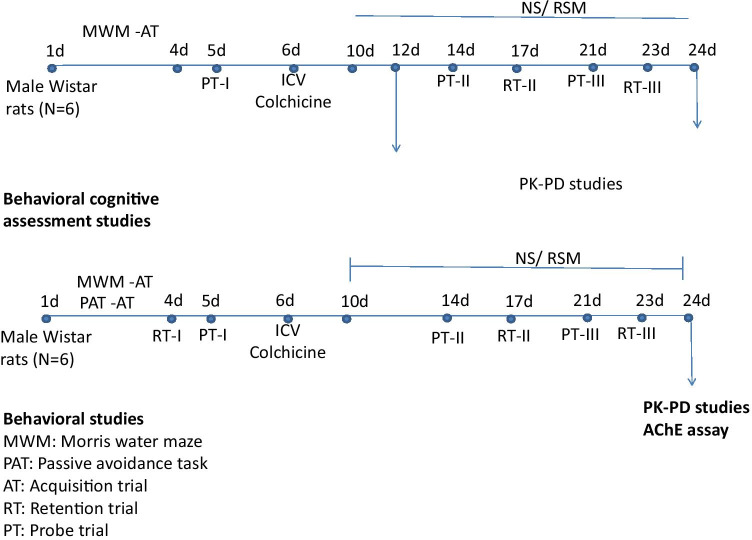
https://cdn.ncbi.nlm.nih.gov/pmc/blobs/0d2f/8298375/ce88a7203266/210_2021_2096_Fig13_HTML.jpg
https://cdn.ncbi.nlm.nih.gov/pmc/blobs/0d2f/8298375/e93bcb6b8f33/210_2021_2096_Fig1_HTML.jpg
https://cdn.ncbi.nlm.nih.gov/pmc/blobs/0d2f/8298375/fa00cf3d24b9/210_2021_2096_Fig2_HTML.jpg
https://cdn.ncbi.nlm.nih.gov/pmc/blobs/0d2f/8298375/4059d4ddce27/210_2021_2096_Fig3_HTML.jpg
https://cdn.ncbi.nlm.nih.gov/pmc/blobs/0d2f/8298375/0ec038200875/210_2021_2096_Fig4_HTML.jpg
https://cdn.ncbi.nlm.nih.gov/pmc/blobs/0d2f/8298375/90f64069808f/210_2021_2096_Fig5_HTML.jpg
https://cdn.ncbi.nlm.nih.gov/pmc/blobs/0d2f/8298375/2c497db93877/210_2021_2096_Fig6_HTML.jpg
https://cdn.ncbi.nlm.nih.gov/pmc/blobs/0d2f/8298375/e95a0fb45d1d/210_2021_2096_Fig7_HTML.jpg
https://cdn.ncbi.nlm.nih.gov/pmc/blobs/0d2f/8298375/11c38a35ebf2/210_2021_2096_Fig8_HTML.jpg
https://cdn.ncbi.nlm.nih.gov/pmc/blobs/0d2f/8298375/d83e429c9772/210_2021_2096_Fig9_HTML.jpg
https://cdn.ncbi.nlm.nih.gov/pmc/blobs/0d2f/8298375/8689c163ed40/210_2021_2096_Fig10_HTML.jpg
https://cdn.ncbi.nlm.nih.gov/pmc/blobs/0d2f/8298375/13ba82a7cc33/210_2021_2096_Fig11_HTML.jpg
https://cdn.ncbi.nlm.nih.gov/pmc/blobs/0d2f/8298375/0975a9fd666e/210_2021_2096_Fig12_HTML.jpg
https://cdn.ncbi.nlm.nih.gov/pmc/blobs/0d2f/8298375/ce88a7203266/210_2021_2096_Fig13_HTML.jpg
https://cdn.ncbi.nlm.nih.gov/pmc/blobs/0d2f/8298375/e93bcb6b8f33/210_2021_2096_Fig1_HTML.jpg
https://cdn.ncbi.nlm.nih.gov/pmc/blobs/0d2f/8298375/fa00cf3d24b9/210_2021_2096_Fig2_HTML.jpg
https://cdn.ncbi.nlm.nih.gov/pmc/blobs/0d2f/8298375/4059d4ddce27/210_2021_2096_Fig3_HTML.jpg
https://cdn.ncbi.nlm.nih.gov/pmc/blobs/0d2f/8298375/0ec038200875/210_2021_2096_Fig4_HTML.jpg
https://cdn.ncbi.nlm.nih.gov/pmc/blobs/0d2f/8298375/90f64069808f/210_2021_2096_Fig5_HTML.jpg
https://cdn.ncbi.nlm.nih.gov/pmc/blobs/0d2f/8298375/2c497db93877/210_2021_2096_Fig6_HTML.jpg
https://cdn.ncbi.nlm.nih.gov/pmc/blobs/0d2f/8298375/e95a0fb45d1d/210_2021_2096_Fig7_HTML.jpg
https://cdn.ncbi.nlm.nih.gov/pmc/blobs/0d2f/8298375/11c38a35ebf2/210_2021_2096_Fig8_HTML.jpg
https://cdn.ncbi.nlm.nih.gov/pmc/blobs/0d2f/8298375/d83e429c9772/210_2021_2096_Fig9_HTML.jpg
https://cdn.ncbi.nlm.nih.gov/pmc/blobs/0d2f/8298375/8689c163ed40/210_2021_2096_Fig10_HTML.jpg
https://cdn.ncbi.nlm.nih.gov/pmc/blobs/0d2f/8298375/13ba82a7cc33/210_2021_2096_Fig11_HTML.jpg
https://cdn.ncbi.nlm.nih.gov/pmc/blobs/0d2f/8298375/0975a9fd666e/210_2021_2096_Fig12_HTML.jpg
https://cdn.ncbi.nlm.nih.gov/pmc/blobs/0d2f/8298375/ce88a7203266/210_2021_2096_Fig13_HTML.jpg

相似文献

1
Pharmacokinetic and pharmacodynamic evaluation of nasal liposome and nanoparticle based rivastigmine formulations in acute and chronic models of Alzheimer's disease.鼻腔脂质体和纳米粒载药瑞伐斯的明制剂在阿尔茨海默病急、慢性模型中的药代动力学和药效学评价。
Naunyn Schmiedebergs Arch Pharmacol. 2021 Aug;394(8):1737-1755. doi: 10.1007/s00210-021-02096-0. Epub 2021 Jun 4.
2
Formulation and In-vivo Pharmacokinetic Consideration of Intranasal Microemulsion and Mucoadhesive Microemulsion of Rivastigmine for Brain Targeting.瑞伐斯的明鼻腔微乳剂和黏膜黏附型微乳剂的制剂及体内药代动力学研究。
Pharm Res. 2018 Jan 2;35(1):8. doi: 10.1007/s11095-017-2279-z.
3
Nose to brain microemulsion-based drug delivery system of rivastigmine: formulation and ex-vivo characterization.基于微乳的卡巴拉汀鼻脑给药系统:制剂与体外特性研究
Drug Deliv. 2015;22(7):918-30. doi: 10.3109/10717544.2013.878857. Epub 2014 Jan 27.
4
Behavioral and Biochemical Implications of Dendrimeric Rivastigmine in Memory-Deficit and Alzheimer's Induced Rodents.树状聚合物利伐斯的明在记忆缺损和阿尔茨海默病诱导的啮齿动物中的行为和生化意义。
ACS Chem Neurosci. 2019 Aug 21;10(8):3789-3795. doi: 10.1021/acschemneuro.9b00286. Epub 2019 Jul 30.
5
Nose to Brain Delivery of Galantamine Loaded Nanoparticles: In-vivo Pharmacodynamic and Biochemical Study in Mice.载有加兰他敏的纳米颗粒经鼻至脑递送:小鼠体内药效学和生化研究
Curr Drug Deliv. 2019;16(1):51-58. doi: 10.2174/1567201815666181004094707.
6
Design, development and in-vitro/in-vivo evaluation of intranasally delivered Rivastigmine and N-Acetyl Cysteine loaded bifunctional niosomes for applications in combinative treatment of Alzheimer's disease.设计、开发并评价鼻腔递药瑞伐斯的明和 N-乙酰半胱氨酸双功能尼莫司汀用于阿尔茨海默病联合治疗的应用。
Eur J Pharm Biopharm. 2021 Jun;163:1-15. doi: 10.1016/j.ejpb.2021.02.015. Epub 2021 Mar 24.
7
Cholinergic Modification of Neurogenesis and Gliosis Improves the Memory of AβPPswe/PSEN1dE9 Alzheimer's Disease Model Mice Fed a High-Fat Diet.胆碱能对神经发生和神经胶质增生的调节改善了喂食高脂饮食的AβPPswe/PSEN1dE9阿尔茨海默病模型小鼠的记忆。
J Alzheimers Dis. 2017;56(1):1-23. doi: 10.3233/JAD-160761.
8
Potential therapeutic effect of nanobased formulation of rivastigmine on rat model of Alzheimer's disease.纳米制剂瑞伐斯的明治疗阿尔茨海默病大鼠模型的潜在疗效。
Int J Nanomedicine. 2013;8:393-406. doi: 10.2147/IJN.S39232. Epub 2013 Jan 23.
9
DL0410, a novel dual cholinesterase inhibitor, protects mouse brains against Aβ-induced neuronal damage via the Akt/JNK signaling pathway.新型双胆碱酯酶抑制剂DL0410通过Akt/JNK信号通路保护小鼠大脑免受Aβ诱导的神经元损伤。
Acta Pharmacol Sin. 2016 Nov;37(11):1401-1412. doi: 10.1038/aps.2016.87. Epub 2016 Aug 8.
10
Cholinesterase inhibitors, donepezil and rivastigmine, attenuate spatial memory and cognitive flexibility impairment induced by acute ethanol in the Barnes maze task in rats.胆碱酯酶抑制剂多奈哌齐和卡巴拉汀可减轻急性乙醇诱导的大鼠巴恩斯迷宫实验中的空间记忆和认知灵活性损伤。
Naunyn Schmiedebergs Arch Pharmacol. 2016 Oct;389(10):1059-71. doi: 10.1007/s00210-016-1269-8. Epub 2016 Jul 4.

引用本文的文献

1
The Nasal-Brain Drug Delivery Route: Mechanisms and Applications to Central Nervous System Diseases.鼻-脑给药途径:作用机制及其在中枢神经系统疾病中的应用
MedComm (2020). 2025 Jun 6;6(6):e70213. doi: 10.1002/mco2.70213. eCollection 2025 Jun.
2
Preparation, and ex vivo and in vivo Characterization of Favipiravir-Loaded Aspasomes and Niosomes for Nose-to-Brain Administration.用于鼻脑给药的载法匹拉韦阿帕索姆和非离子表面活性剂囊泡的制备及其体外和体内表征
Int J Nanomedicine. 2025 May 22;20:6489-6514. doi: 10.2147/IJN.S518486. eCollection 2025.
3
Emerging nano-derived therapy for the treatment of dementia: a comprehensive review.

本文引用的文献

1
2020 Alzheimer's disease facts and figures.2020年阿尔茨海默病事实与数据。
Alzheimers Dement. 2020 Mar 10. doi: 10.1002/alz.12068.
2
Liposomal Formulations for Nose-to-Brain Delivery: Recent Advances and Future Perspectives.用于鼻-脑递送的脂质体制剂:最新进展与未来展望
Pharmaceutics. 2019 Oct 17;11(10):540. doi: 10.3390/pharmaceutics11100540.
3
The neuropathological diagnosis of Alzheimer's disease.阿尔茨海默病的神经病理学诊断。
新兴的纳米衍生疗法治疗痴呆症:综述
Drug Deliv Transl Res. 2025 Apr 23. doi: 10.1007/s13346-025-01863-3.
4
Nanotherapeutic smart approaches for combating Alzheimer's disease and overcoming existing obstacles: A novel eco-friendly green approach.用于对抗阿尔茨海默病和克服现有障碍的纳米治疗智能方法:一种新型环保绿色方法。
Toxicol Rep. 2025 Jan 27;14:101906. doi: 10.1016/j.toxrep.2025.101906. eCollection 2025 Jun.
5
Metformin carbon dots enhance neurogenesis and neuroprotection in Alzheimer's disease: A potential nanomedicine approach.二甲双胍碳点增强阿尔茨海默病中的神经发生和神经保护作用:一种潜在的纳米医学方法。
Mater Today Bio. 2024 Nov 16;29:101347. doi: 10.1016/j.mtbio.2024.101347. eCollection 2024 Dec.
6
Recent Advances in Therapeutics for the Treatment of Alzheimer's Disease.治疗阿尔茨海默病的治疗方法的最新进展。
Molecules. 2024 Oct 30;29(21):5131. doi: 10.3390/molecules29215131.
7
Alzheimer's disease and drug delivery across the blood-brain barrier: approaches and challenges.阿尔茨海默病与血脑屏障药物递送:方法与挑战。
Eur J Med Res. 2024 Jun 8;29(1):313. doi: 10.1186/s40001-024-01915-3.
8
ADME/PK Insights of Crocetin: A Molecule Having an Unusual Chemical Structure with Druglike Features.西红花酸的药代动力学/药物代谢动力学见解:一种具有类药物特性的特殊化学结构分子。
ACS Omega. 2024 May 2;9(19):21494-21509. doi: 10.1021/acsomega.4c02116. eCollection 2024 May 14.
9
Nanoparticle-based Gene Therapy for Neurodegenerative Disorders.基于纳米颗粒的基因治疗神经退行性疾病。
Mini Rev Med Chem. 2024;24(19):1723-1745. doi: 10.2174/0113895575301011240407082559.
10
Formulation of Metoclopramide Hydrochloride-Loaded Lipid Carriers by QbD Approach for Combating Nausea: Safety and Bioavailability Evaluation in New Zealand Rabbit.采用 QbD 方法制备盐酸甲氧氯普胺载药脂质载体以对抗恶心:新西兰兔的安全性和生物利用度评价。
AAPS PharmSciTech. 2024 Apr 4;25(4):73. doi: 10.1208/s12249-024-02791-0.
Mol Neurodegener. 2019 Aug 2;14(1):32. doi: 10.1186/s13024-019-0333-5.
4
Cholinesterase inhibitors as Alzheimer's therapeutics (Review).胆碱酯酶抑制剂作为阿尔茨海默病的治疗药物(综述)。
Mol Med Rep. 2019 Aug;20(2):1479-1487. doi: 10.3892/mmr.2019.10374. Epub 2019 Jun 11.
5
Global, regional, and national burden of neurological disorders, 1990-2016: a systematic analysis for the Global Burden of Disease Study 2016.全球、区域和国家神经障碍负担,1990-2016 年:2016 年全球疾病负担研究的系统分析。
Lancet Neurol. 2019 May;18(5):459-480. doi: 10.1016/S1474-4422(18)30499-X. Epub 2019 Mar 14.
6
Evaluation of intranasal delivery route of drug administration for brain targeting.评价经鼻给药途径用于脑部给药的效果。
Brain Res Bull. 2018 Oct;143:155-170. doi: 10.1016/j.brainresbull.2018.10.009. Epub 2018 Oct 25.
7
Nose-to-brain drug delivery: An update on clinical challenges and progress towards approval of anti-Alzheimer drugs.经鼻腔脑递药:抗阿尔茨海默病药物的临床挑战和审批进展更新。
J Control Release. 2018 Jul 10;281:139-177. doi: 10.1016/j.jconrel.2018.05.011. Epub 2018 May 24.
8
5-HT6 receptor agonist and antagonist modulates ICV-STZ-induced memory impairment in rats.5-HT6 受体激动剂和拮抗剂调节脑室注射 STZ 诱导的大鼠记忆障碍。
Psychopharmacology (Berl). 2018 May;235(5):1557-1570. doi: 10.1007/s00213-018-4866-z. Epub 2018 Mar 3.
9
An update on the safety of current therapies for Alzheimer's disease: focus on rivastigmine.阿尔茨海默病当前治疗方法的安全性更新:聚焦于卡巴拉汀
Ther Adv Drug Saf. 2018 Mar;9(3):171-178. doi: 10.1177/2042098617750555. Epub 2018 Jan 8.
10
Cellular uptake of nanoparticles: journey inside the cell.纳米颗粒的细胞摄取:细胞内之旅
Chem Soc Rev. 2017 Jul 17;46(14):4218-4244. doi: 10.1039/c6cs00636a.