Department of Internal Medicine, University of Michigan Medical School, University of Michigan, Ann Arbor, MI, USA.
Departments of Biological Sciences and Medicinal Chemistry and Pharmacology, Purdue University, West Lafayette, IN, USA.
J Lipid Res. 2021;62:100089. doi: 10.1016/j.jlr.2021.100089. Epub 2021 Jun 1.
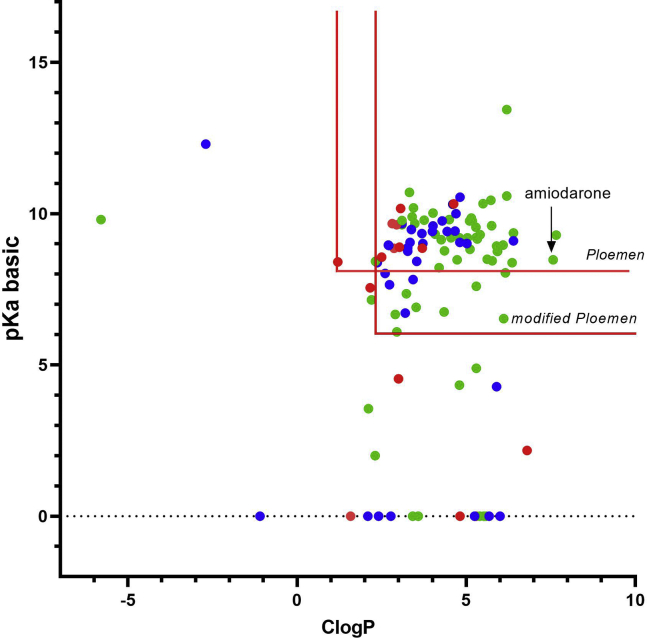
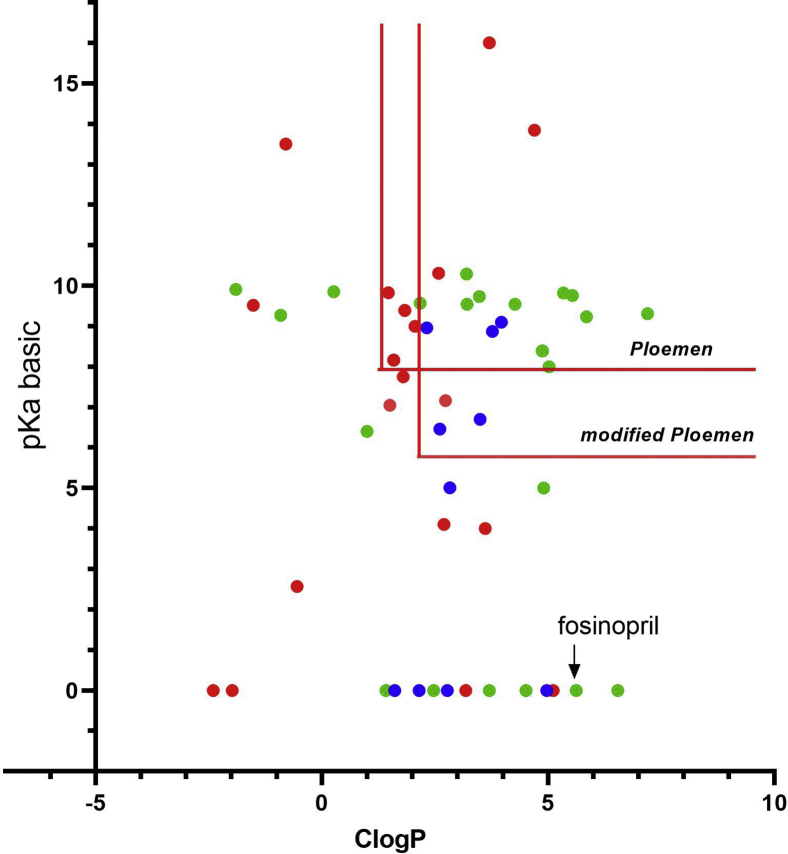
Phospholipidosis, the excessive accumulation of phospholipids within lysosomes, is a pathological response observed following exposure to many drugs across multiple therapeutic groups. A clear mechanistic understanding of the causes and implications of this form of drug toxicity has remained elusive. We previously reported the discovery and characterization of a lysosome-specific phospholipase A2 (PLA2G15) and later reported that amiodarone, a known cause of drug-induced phospholipidosis, inhibits this enzyme. Here, we assayed a library of 163 drugs for inhibition of PLA2G15 to determine whether this phospholipase was the cellular target for therapeutics other than amiodarone that cause phospholipidosis. We observed that 144 compounds inhibited PLA2G15 activity. Thirty-six compounds not previously reported to cause phospholipidosis inhibited PLA2G15 with IC values less than 1 mM and were confirmed to cause phospholipidosis in an in vitro assay. Within this group, fosinopril was the most potent inhibitor (IC 0.18 μM). Additional characterization of the inhibition of PLA2G15 by fosinopril was consistent with interference of PLA2G15 binding to liposomes. PLA2G15 inhibition was more accurate in predicting phospholipidosis compared with in silico models based on pKa and ClogP, measures of protonation, and transport-independent distribution in the lysosome, respectively. In summary, PLA2G15 is a primary target for cationic amphiphilic drugs that cause phospholipidosis, and PLA2G15 inhibition by cationic amphiphilic compounds provides a potentially robust screening platform for potential toxicity during drug development.
磷脂病,即溶酶体内磷脂过度积累,是多种治疗类别药物暴露后观察到的一种病理反应。人们对这种药物毒性形式的原因和影响仍缺乏明确的机制理解。我们之前报道了溶酶体特异性磷脂酶 A2(PLA2G15)的发现和特征,并随后报道了胺碘酮(一种已知的药物诱导性磷脂病的原因)抑制这种酶。在这里,我们检测了 163 种药物的文库,以确定 PLA2G15 是否是除胺碘酮以外导致磷脂病的治疗药物的细胞靶标。我们观察到 144 种化合物抑制 PLA2G15 活性。36 种以前未报道导致磷脂病的化合物以小于 1mM 的 IC 值抑制 PLA2G15,并在体外测定中证实导致磷脂病。在这一组中,福辛普利是最有效的抑制剂(IC0.18μM)。福辛普利对 PLA2G15 的抑制作用的进一步特征与 PLA2G15 与脂质体结合的干扰一致。与基于 pKa 和 ClogP、质子化度量以及溶酶体中与转运无关的分布的计算模型相比,PLA2G15 抑制更准确地预测了磷脂病。总之,PLA2G15 是导致磷脂病的阳离子两亲性药物的主要靶标,阳离子两亲性化合物对 PLA2G15 的抑制为药物开发过程中的潜在毒性提供了一个潜在的强大筛选平台。