Infectious Diseases Translational Research Program, Yong Loo Lin School of Medicine, National University of Singapore, Singapore; Department of Biochemistry, National University of Singapore, 8 Medical Drive, 117596, Singapore.
Infectious Diseases Translational Research Program, Yong Loo Lin School of Medicine, National University of Singapore, Singapore; Department of Biochemistry, National University of Singapore, 8 Medical Drive, 117596, Singapore.
Redox Biol. 2021 Aug;44:102012. doi: 10.1016/j.redox.2021.102012. Epub 2021 May 29.
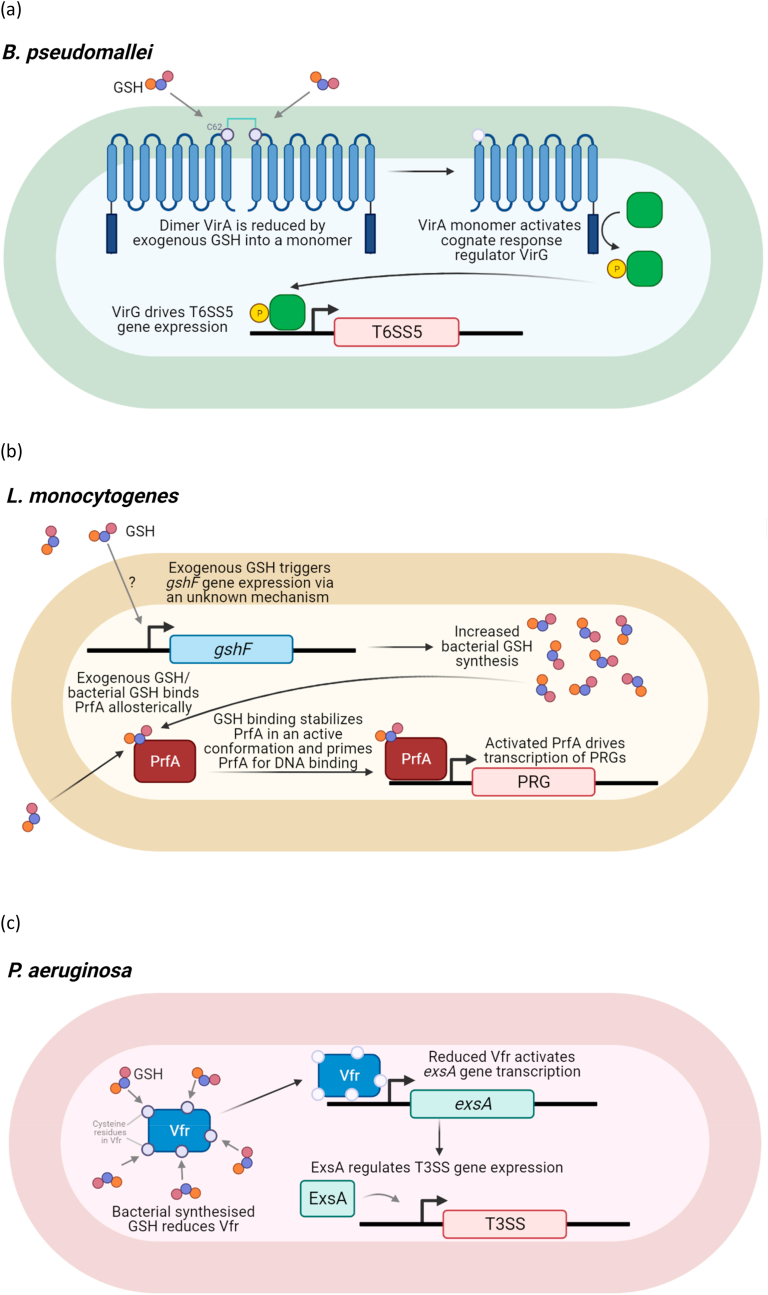
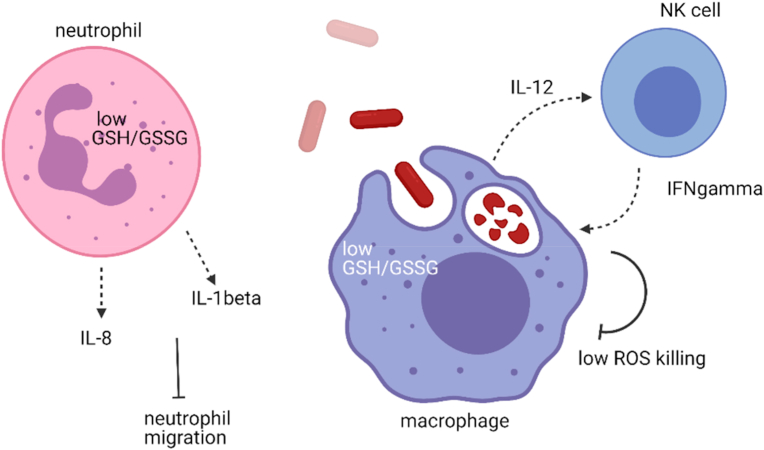
Low molecular weight (LMW) thiols contain reducing sulfhydryl groups that are important for maintaining antioxidant defense in the cell. Aside from the traditional roles of LMW thiols as redox regulators in bacteria, glutathione (GSH) has been reported to affect virulence and bacterial pathogenesis. The role of GSH in virulence is diverse, including the activation of virulence gene expression and contributing to optimal biofilm formation. GSH can also be converted to hydrogen sulfide (HS) which is important for the pathogenesis of certain bacteria. Besides GSH, some bacteria produce other LMW thiols such as mycothiol and bacillithiol that affect bacterial virulence. We discuss these newer reported functions of LMW thiols modulating bacterial pathogenesis either directly or indirectly and via modulation of the host immune system.
低分子量(LMW)硫醇含有还原巯基,对于维持细胞中的抗氧化防御至关重要。除了 LMW 硫醇在细菌中作为氧化还原调节剂的传统作用外,谷胱甘肽(GSH)已被报道影响毒力和细菌发病机制。GSH 在毒力中的作用多种多样,包括激活毒力基因表达并有助于最佳生物膜形成。GSH 还可以转化为硫化氢(HS),这对于某些细菌的发病机制很重要。除了 GSH 之外,一些细菌还产生其他 LMW 硫醇,如麦硫因和芽孢硫醇,它们影响细菌的毒力。我们讨论了这些较新报道的 LMW 硫醇调节细菌发病机制的功能,无论是直接还是间接的,以及通过调节宿主免疫系统。