London School of Economics and Political Science, London, UK.
Public Health Authority, Riyadh, Saudi Arabia.
BMC Public Health. 2021 Jun 5;21(1):1068. doi: 10.1186/s12889-021-11116-w.
Since early 2020, the Covid-19 pandemic has engulfed the world. Amidst the growing number of infections and deaths, there has been an emphasis of patients with non-communicable diseases as they are particularly susceptible to the virus. The objective of this literature review is to systematize the available evidence on the link between non-communicable diseases and Covid-19.
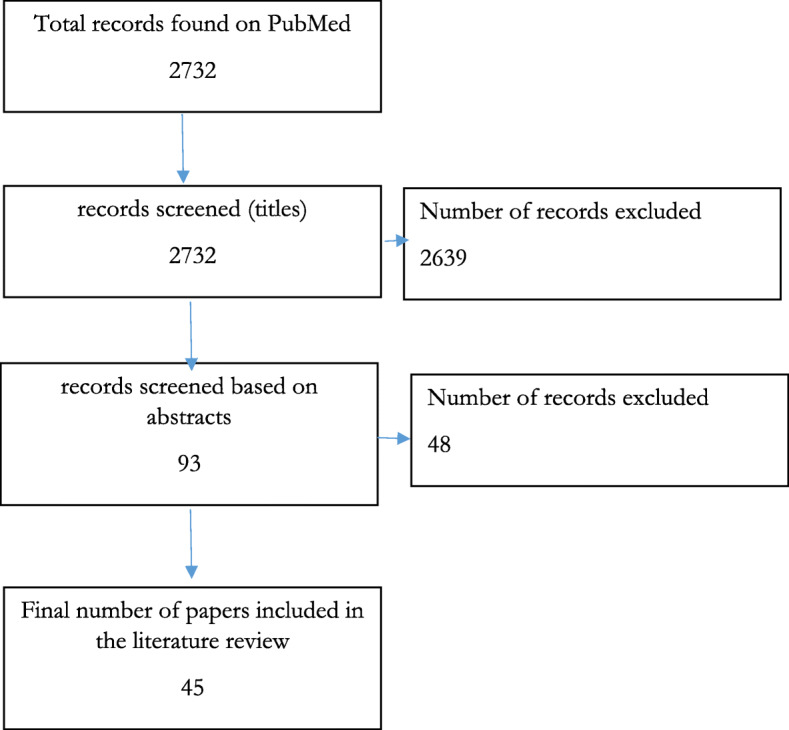
We have conducted a systematic review of the literature on Covid-19 and non-communicable diseases from December, 2019 until 15th of November, 2020. The search was done in PubMed and in doing so we used a variety of searching terms in order to isolate the final set of papers. At the end of the selection process, 45 papers were selected for inclusion in the literature review.
The results from the review indicate that patients with certain chronic illnesses such as diabetes, hypertension (and other cardiovascular diseases), chronic respiratory illnesses, chronic kidney and liver conditions are more likely to be affected by Covid-19. More importantly, once they do get infected by the virus, patients with chronic illnesses have a much higher likelihood of having worse clinical outcomes (developing a more severe form of the disease or dying) than an average patient. There are two hypothesized channels that explain this strong link between the chronic illnesses enumerated above and Covid 19: (i) increased ACE2 (angiotensin-converting enzyme 2) receptor expressions, which facilitates the entry of the virus into the host body; and (ii) hyperinflammatory response, referred to as "cytokine storm". Finally, the literature review does not find any evidence that diabetes or hypertension related medications exacerbate the overall Covid-19 condition in chronic illness patients.
Thus, the evidence points out to 'business as usual' disease management model, although with greater supervision. However, given the ongoing Covid-19 vulnerabilities among people with NCDs, prioritizing them for the vaccination process should also figure high on the agenda on health authorities.
自 2020 年初以来,新冠疫情席卷全球。随着感染和死亡人数的不断增加,患有非传染性疾病的患者尤其容易受到病毒的影响。本文献综述的目的是系统地整理有关非传染性疾病与新冠病毒之间联系的现有证据。
我们对 2019 年 12 月至 2020 年 11 月 15 日期间关于新冠病毒和非传染性疾病的文献进行了系统综述。在 PubMed 上进行了检索,并使用了各种搜索词来分离最终的论文集。在选择过程结束时,选择了 45 篇论文纳入文献综述。
综述结果表明,患有某些慢性疾病(如糖尿病、高血压(和其他心血管疾病)、慢性呼吸道疾病、慢性肾病和肝病)的患者更容易受到新冠病毒的影响。更重要的是,一旦他们感染了病毒,患有慢性疾病的患者比一般患者更有可能出现更严重的临床后果(发展为更严重的疾病或死亡)。有两种假设的机制可以解释上述慢性疾病与新冠病毒之间的紧密联系:(i)增加血管紧张素转换酶 2(ACE2)受体表达,从而促进病毒进入宿主身体;(ii)过度炎症反应,称为“细胞因子风暴”。最后,文献综述没有发现任何证据表明糖尿病或高血压相关药物会加重慢性疾病患者的整体新冠病毒病情。
因此,证据指向“照常”疾病管理模式,尽管需要加强监督。然而,鉴于患有非传染性疾病的人在新冠疫情期间仍然面临脆弱性,应优先为他们接种疫苗,这也应该成为卫生当局的重要议程。