Jungbauer Frederic, Hülse Roland, Lu Fei, Ludwig Sonja, Held Valentin, Rotter Nicole, Schell Angela
Department for Otorhinolaryngology, Head- and Neck-Surgery, University Medical Centre Mannheim, Mannheim, Germany.
Department for Neurology, University Medical Centre Mannheim, Mannheim, Germany.
Front Neurol. 2021 May 19;12:619545. doi: 10.3389/fneur.2021.619545. eCollection 2021.
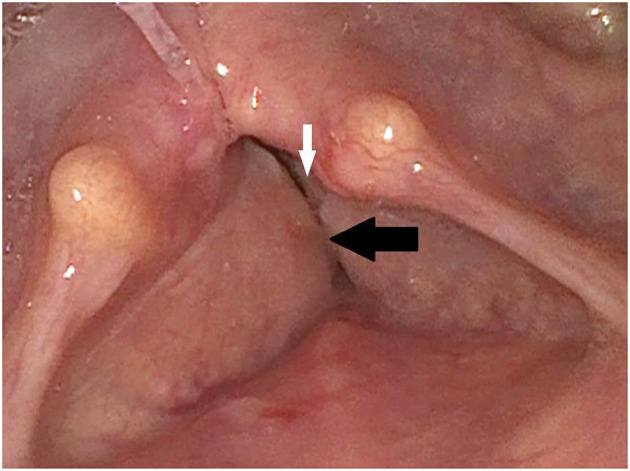
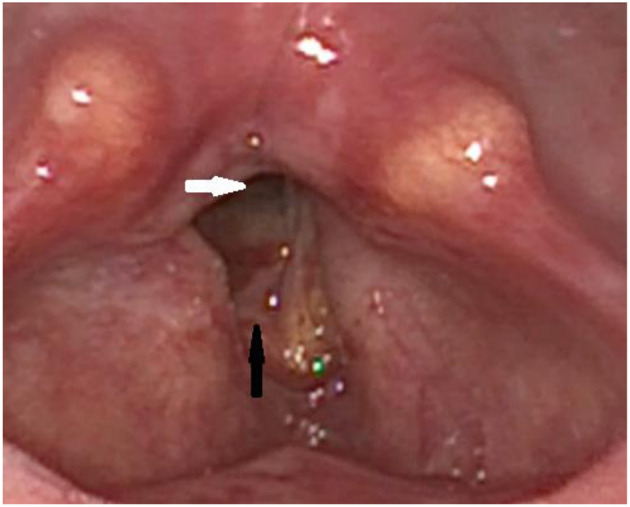
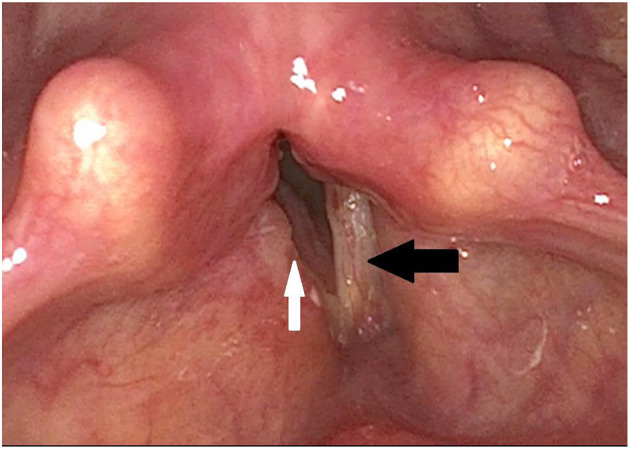
During the COVID-19 pandemic, adverse neurological effects have been described. In addition to unspecific neurological symptoms, cranial nerve deficits have appeared as part of SARS-CoV-2 infection. In this case report, we describe a 74-year-old patient who developed bilateral paralysis of the vocal cords some weeks following his dismissal in stable condition after COVID-19 pneumonia. After ruling out central lesions, peripheral tumors, and other possible causes, therapy was initiated with methylprednisolone, inhalations, and oxygen. The patient showed no improvement, so laterofixation after Lichtenberger was performed. The dyspnea worsened after several weeks, so a laser posterior cordectomy was performed with satisfactory outcome.
在新冠疫情期间,已发现有不良神经学影响。除了非特异性神经症状外,颅神经缺损已成为新冠病毒感染的一部分表现。在本病例报告中,我们描述了一名74岁患者,他在新冠肺炎后病情稳定出院几周后出现双侧声带麻痹。在排除中枢性病变、周围肿瘤及其他可能病因后,开始使用甲泼尼龙、吸入治疗和吸氧。患者无改善,因此进行了利希滕贝格法的侧方固定术。几周后呼吸困难加重,于是进行了激光后索切除术,结果令人满意。