Fuse Hiromu, Nakao Hiroyasu, Saga Yutaka, Fukatsu Arisa, Kondo Mio, Masaoka Shigeyuki, Mitsunuma Harunobu, Kanai Motomu
Graduate School of Pharmaceutical Sciences, The University of Tokyo 7-3-1 Bunkyo-ku Tokyo 113-0033 Japan
Department of Applied Chemistry, Graduate School of Engineering, Osaka University 2-1 Yamadaoka Suita Osaka 565-0871 Japan.
Chem Sci. 2020 Oct 12;11(44):12206-12211. doi: 10.1039/d0sc04114a.
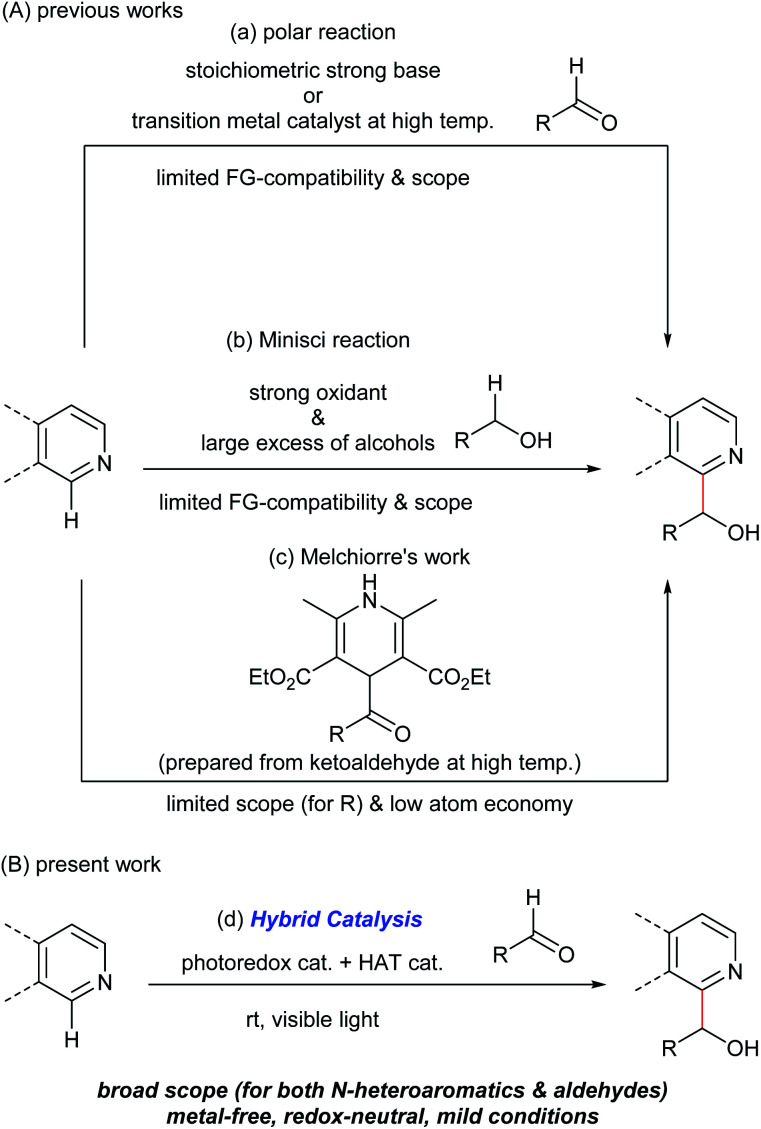
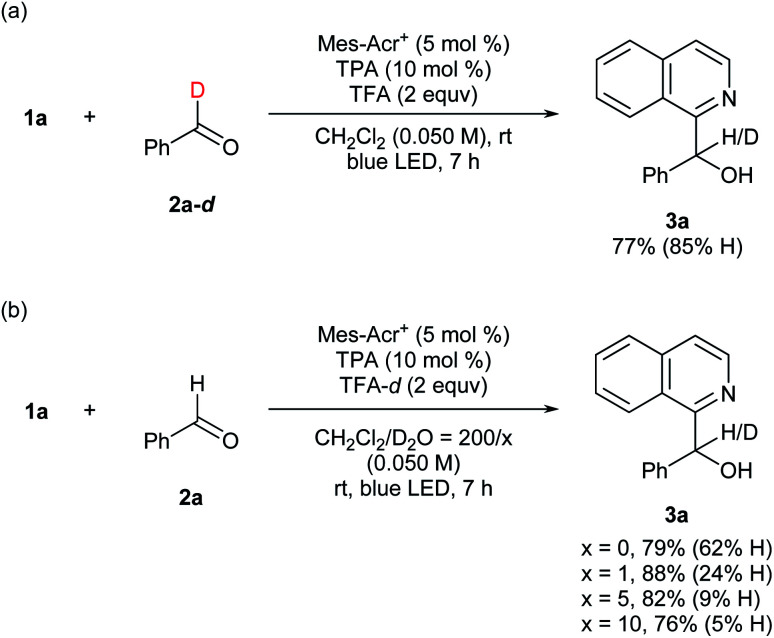
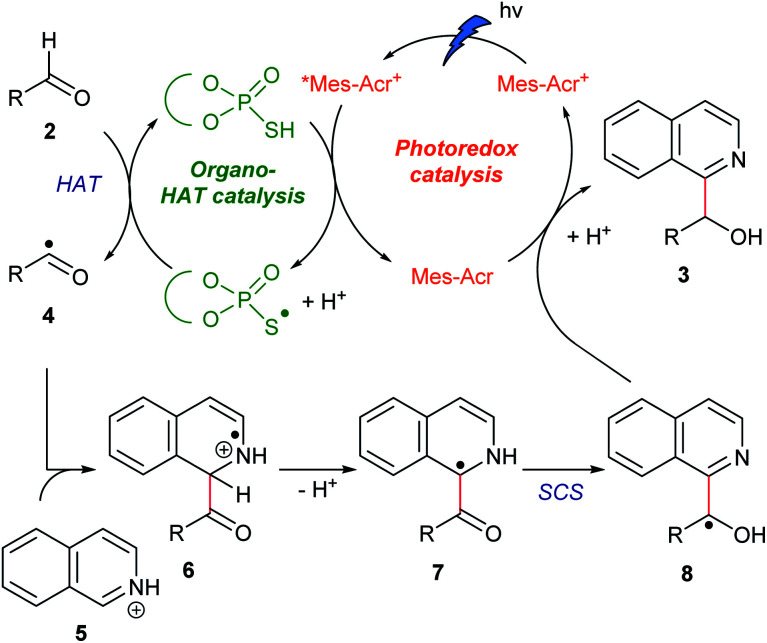
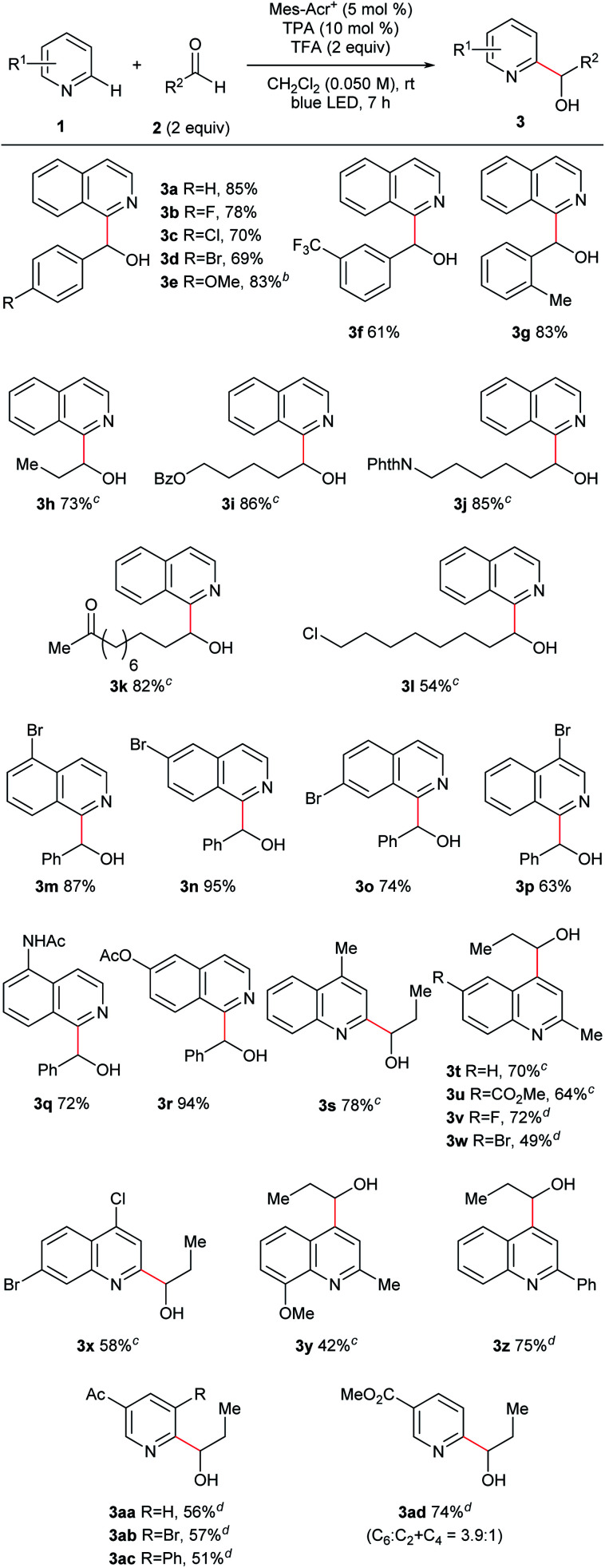
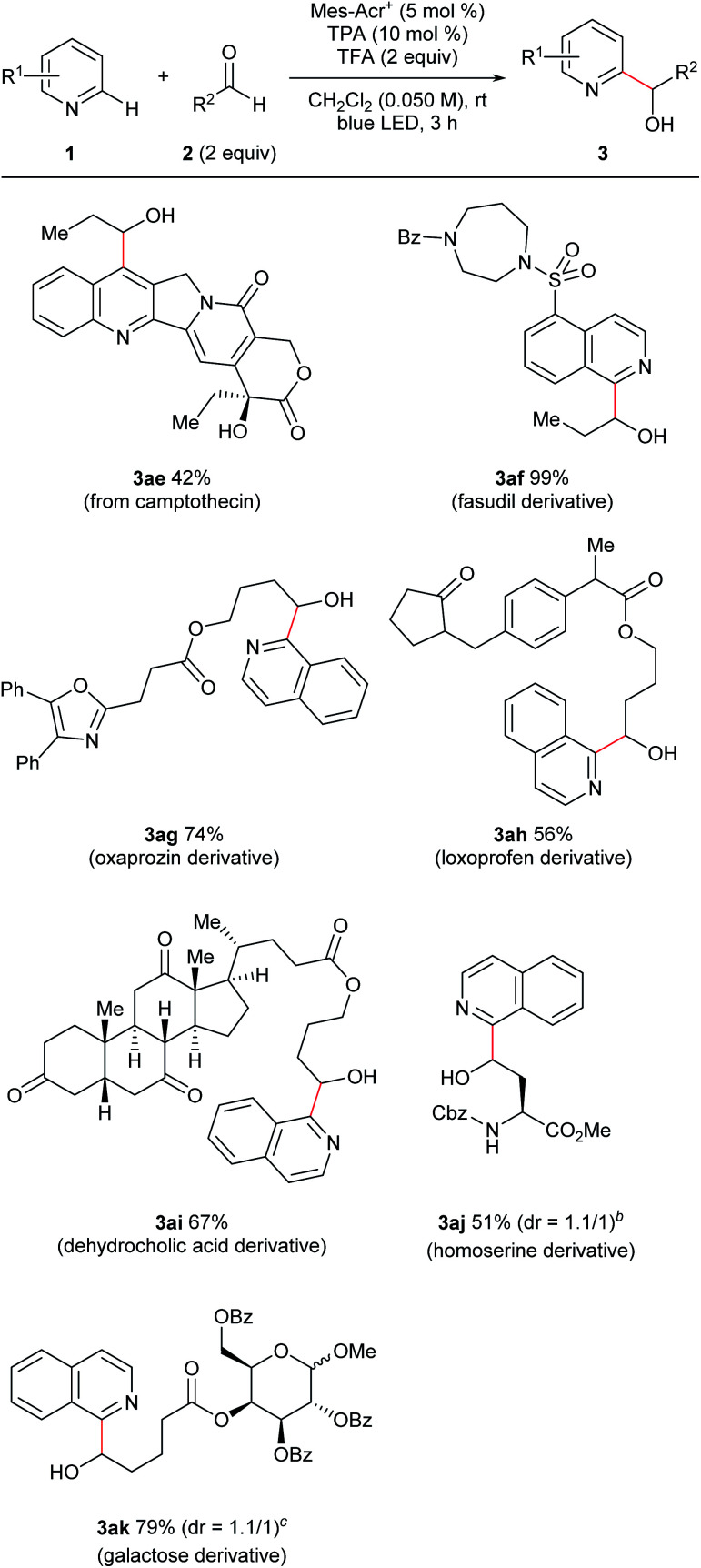
Hydroxyalkylation of -heteroaromatics with aldehydes was achieved using a binary hybrid catalyst system comprising an acridinium photoredox catalyst and a thiophosphoric acid organocatalyst. The reaction proceeded through the following sequence: (1) photoredox-catalyzed single-electron oxidation of a thiophosphoric acid catalyst to generate a thiyl radical, (2) cleavage of the formyl C-H bond of the aldehyde substrates by a thiyl radical acting as a hydrogen atom transfer catalyst to generate acyl radicals, (3) Minisci-type addition of the resulting acyl radicals to -heteroaromatics, and (4) a spin-center shift, photoredox-catalyzed single-electron reduction, and protonation to produce secondary alcohol products. This metal-free hybrid catalysis proceeded under mild conditions for a wide range of substrates, including isoquinolines, quinolines, and pyridines as -heteroaromatics, as well as both aromatic and aliphatic aldehydes, and tolerated various functional groups. The reaction was applicable to late-stage derivatization of drugs and their leads.
使用由吖啶鎓光氧化还原催化剂和硫代磷酸有机催化剂组成的二元混合催化剂体系,实现了杂芳烃与醛的羟烷基化反应。该反应按以下顺序进行:(1) 光氧化还原催化硫代磷酸催化剂的单电子氧化以生成硫自由基;(2) 作为氢原子转移催化剂的硫自由基裂解醛底物的甲酰基C-H键以生成酰基自由基;(3) 所得酰基自由基对杂芳烃进行Minisci型加成;(4) 自旋中心转移、光氧化还原催化的单电子还原和质子化以生成仲醇产物。这种无金属的混合催化在温和条件下对多种底物有效,包括作为杂芳烃的异喹啉、喹啉和吡啶,以及芳香族和脂肪族醛,并且能耐受各种官能团。该反应适用于药物及其先导化合物的后期衍生化。