Sutradhar Indorica, Ching Carly, Desai Darash, Suprenant Mark, Briars Emma, Heins Zachary, Khalil Ahmad S, Zaman Muhammad H
Department of Biomedical Engineering, Boston University, Boston, Massachusetts, USA.
Department of Bioinformatics, Boston University, Boston, Massachusetts, USA.
mSystems. 2021 Jun 29;6(3):e0036021. doi: 10.1128/mSystems.00360-21. Epub 2021 Jun 8.
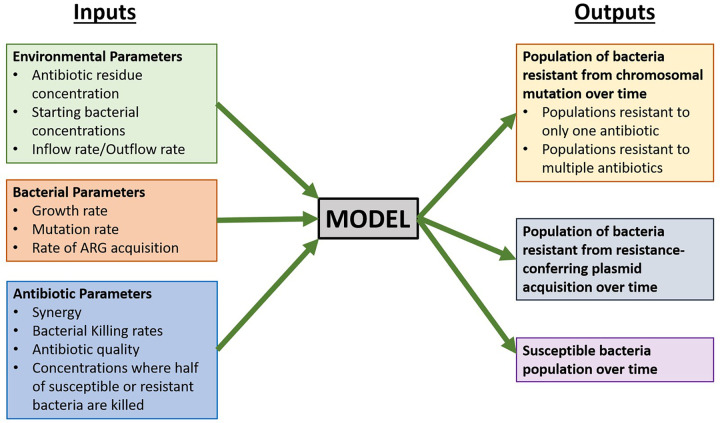
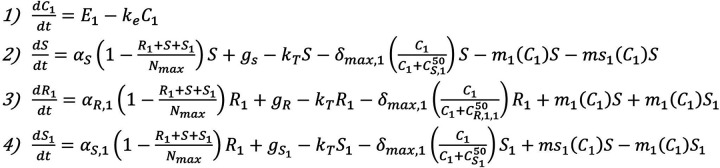
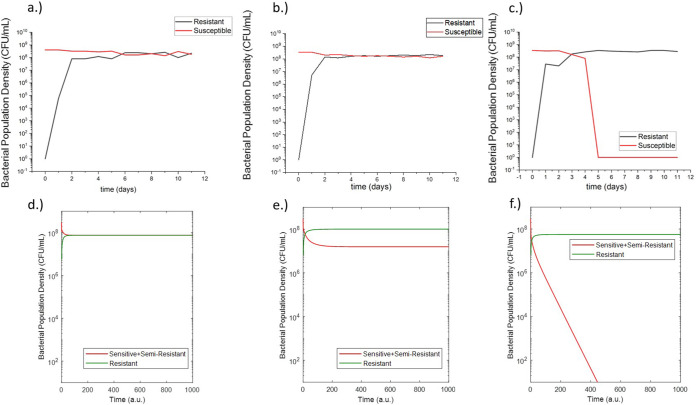
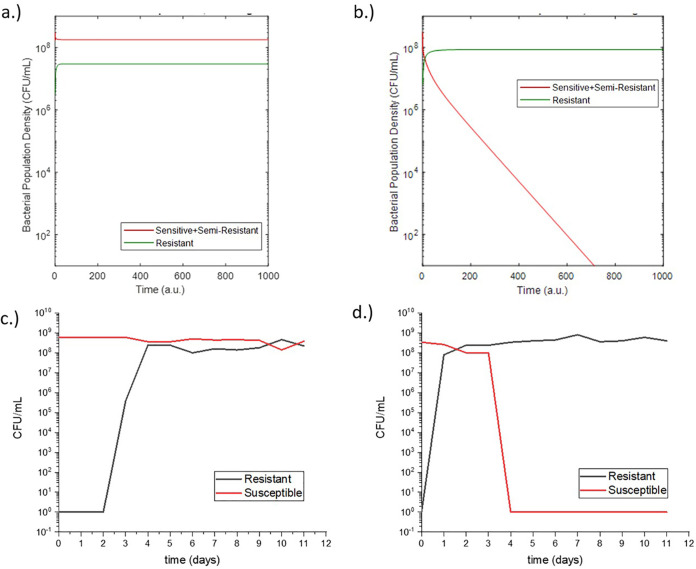
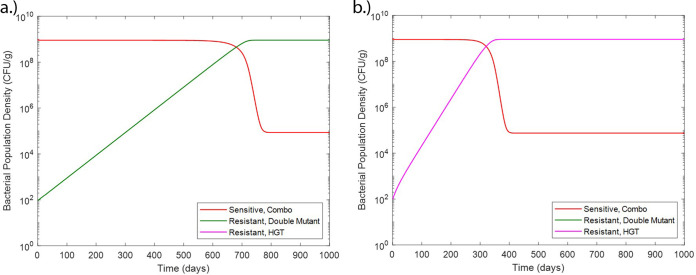
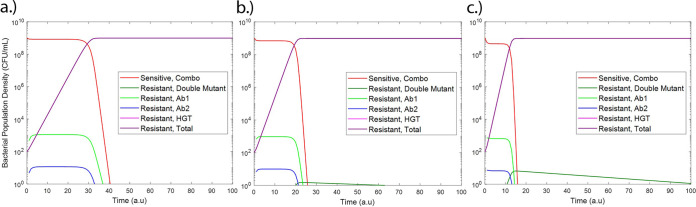
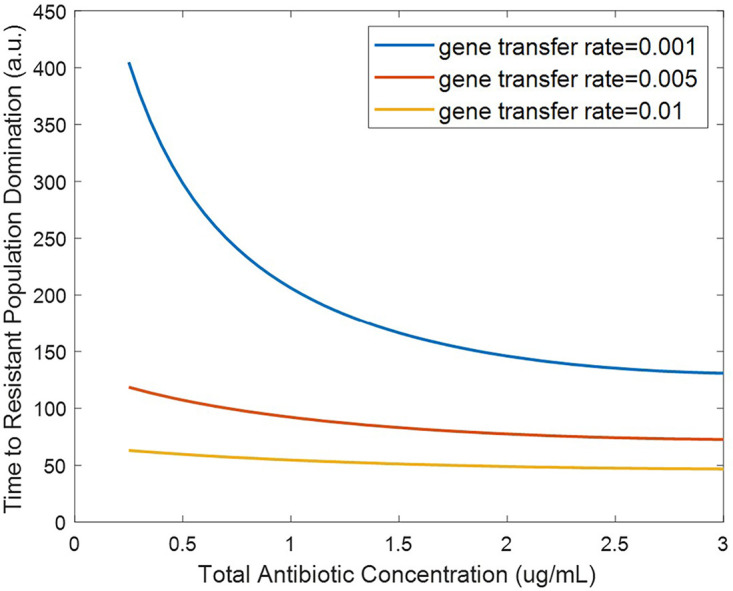
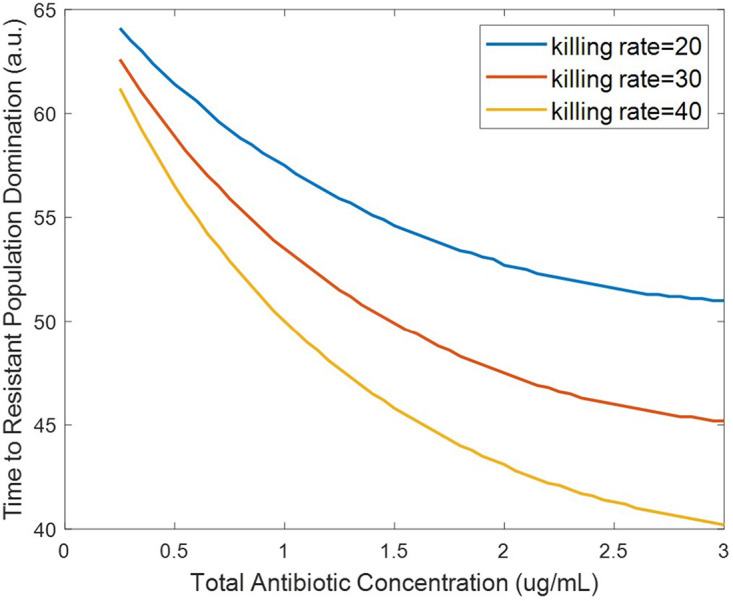
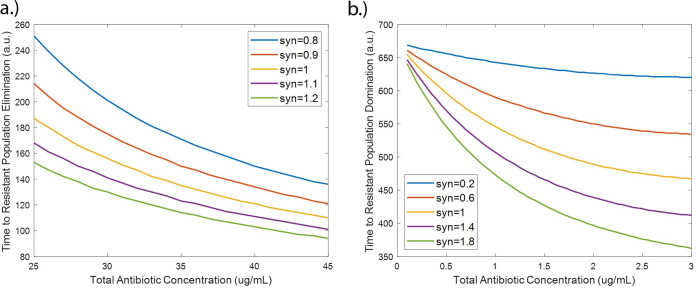
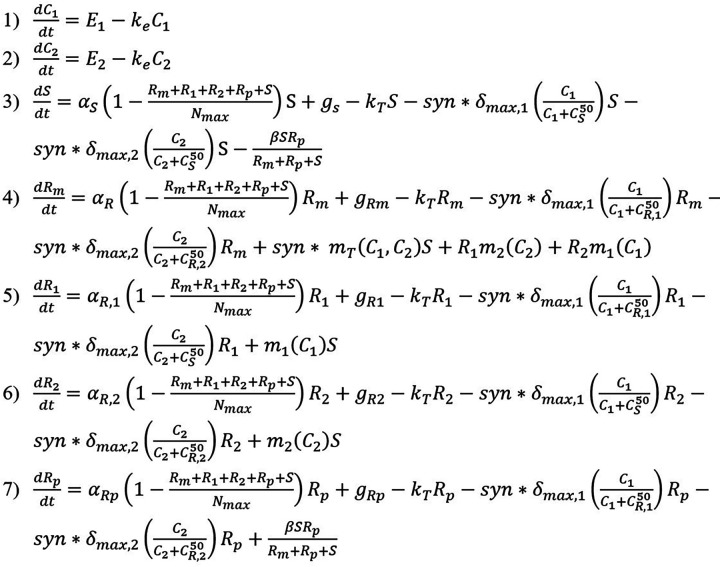
Although wastewater and sewage systems are known to be significant reservoirs of antibiotic-resistant bacterial populations and periodic outbreaks of drug-resistant infection, there is little quantitative understanding of the drivers behind resistant population growth in these settings. In order to fill this gap in quantitative understanding of the development of antibiotic-resistant infections in wastewater, we have developed a mathematical model synthesizing many known drivers of antibiotic resistance in these settings to help predict the growth of resistant populations in different environmental scenarios. A number of these drivers of drug-resistant infection outbreak, including antibiotic residue concentration, antibiotic interaction, chromosomal mutation, and horizontal gene transfer, have not previously been integrated into a single computational model. We validated the outputs of the model with quantitative studies conducted on the eVOLVER continuous culture platform. Our integrated model shows that low levels of antibiotic residues present in wastewater can lead to increased development of resistant populations and that the dominant mechanism of resistance acquisition in these populations is horizontal gene transfer rather than acquisition of chromosomal mutations. Additionally, we found that synergistic antibiotics at low concentrations lead to increased resistant population growth. These findings, consistent with recent experimental and field studies, provide new quantitative knowledge on the evolution of antibiotic-resistant bacterial reservoirs, and the model developed herein can be adapted for use as a prediction tool in public health policy making, particularly in low-income settings where water sanitation issues remain widespread and disease outbreaks continue to undermine public health efforts. The rate at which antimicrobial resistance (AMR) has developed and spread throughout the world has increased in recent years, and according to the Review on Antimicrobial Resistance in 2014, it is suggested that the current rate will lead to AMR-related deaths of several million people by 2050 (Review on Antimicrobial Resistance, , 2014). One major reservoir of resistant bacterial populations that has been linked to outbreaks of drug-resistant bacterial infections but is not well understood is in wastewater settings, where antibiotic pollution is often present. Using ordinary differential equations incorporating several known drivers of resistance in wastewater, we find that interactions between antibiotic residues and horizontal gene transfer significantly affect the growth of resistant bacterial reservoirs.
虽然已知废水和污水系统是抗生素耐药细菌群体的重要储存库,且耐药性感染会周期性爆发,但对于这些环境中耐药群体增长背后的驱动因素,人们在定量理解方面还很欠缺。为了填补在定量理解废水中抗生素耐药性感染发展情况方面的这一空白,我们开发了一个数学模型,综合了这些环境中许多已知的抗生素耐药性驱动因素,以帮助预测不同环境情景下耐药群体的增长。许多导致耐药性感染爆发的驱动因素,包括抗生素残留浓度、抗生素相互作用、染色体突变和水平基因转移,此前尚未被整合到一个单一的计算模型中。我们通过在eVOLVER连续培养平台上进行的定量研究验证了该模型的输出结果。我们的综合模型表明,废水中存在的低水平抗生素残留会导致耐药群体的增长增加,并且这些群体中耐药性获得的主要机制是水平基因转移,而非染色体突变的获得。此外,我们发现低浓度的协同抗生素会导致耐药群体增长增加。这些发现与最近的实验和实地研究一致,为抗生素耐药细菌储存库的演变提供了新的定量知识,并且本文开发的模型可适用于作为公共卫生政策制定中的预测工具,特别是在水卫生问题仍然普遍存在且疾病爆发继续破坏公共卫生努力的低收入环境中。近年来,抗菌药物耐药性(AMR)在全球范围内的发展和传播速度有所加快,根据《2014年抗菌药物耐药性综述》,有人提出当前的速度将导致到2050年有数百万人因AMR相关原因死亡(《2014年抗菌药物耐药性综述》)。与耐药细菌感染爆发有关但尚未得到充分理解的一个主要耐药细菌群体储存库存在于废水环境中,那里通常存在抗生素污染。通过使用包含废水中几个已知耐药驱动因素的常微分方程,我们发现抗生素残留与水平基因转移之间的相互作用显著影响耐药细菌储存库的增长。